


Wydawcy
Katalog tematyczny
- Archeologia (109)
- Ekonomia, finanse, business (13704)
- Filozofia (1445)
- Historia (3040)
- Języki i językoznawstwo (2356)
- Lifestyle, hobby i rozrywka (475)
- Medycyna (9704)
- Nauki humanistyczne (4)
- Nauki o Ziemi i środowisku (2638)
- Nauki ścisłe (20412)
- Astronomia (294)
- Biologia (5119)
- Chemia (6540)
- Chemia analityczna (361)
- Chemia fizyczna (346)
- Chemia nieorganiczna (137)
- Chemia organiczna (535)
- Krystalografia (27)
- Minerologia (46)
- Fizyka (3309)
- Matematyka (4574)
- Nauki ścisłe, ogólnie (503)
- Nauki społeczne (8486)
- Nauki techniczne (13450)
- Prawo (1696)
- Publikacje informacyjne i interdyscyplinarne (1288)
- Religia i wierzenia (917)
- Technika komputerowa (4067)
- Zdrowie, relacje międzyludzkie i rozwój osobisty (657)





Informacje szczegółowe o książce
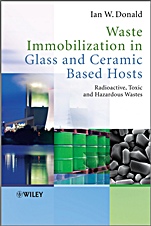
Waste Immobilization in Glass and Ceramic Based Hosts: Radioactive, Toxic and Hazardous Wastes
ISBN 9781444319378
Autor: Ian W. Donald
Wydawca: Wiley
Dostępność: 3-6 tygodni
Cena: 727,65 zł
Przed złożeniem zamówienia prosimy o kontakt mailowy celem potwierdzenia ceny.
ISBN13: |
9781444319378 |
ISBN10: |
144431937X |
Autor: |
Ian W. Donald |
Oprawa: |
Hardback |
Rok Wydania: |
2010-04-09 |
Ilość stron: |
526 |
Wymiary: |
250x178 |
Tematy: |
PN |
The problem of what to do with waste materials both radioactive and, more recently, non–radioactive, is an increasingly important environmental and political issue. Radioactive waste management practices vary worldwide but currently the most common method is to turn highly radioactive waste into a vitrified product, in order to render it passively safe before disposal. With mounting pressure on land–fill sites, and increased environmental concern, the issue of toxic and hazardous waste management must also be properly addressed.
This book brings together all aspects of waste immobilization, draws comparisons between the different types of wastes and treatments, and outlines where lessons learnt by the nuclear industry may be usefully applied in the treatment of non–radioactive wastes. A wide range of topics is covered, including vitrification techniques, ceramic and glass–ceramic wasteforms, novel hosts, toxic and hazardous wastes, influence of microbial activity, and the treatment of new generation wastestreams. Waste Immobilization in Glass and Ceramic Based Hosts provides an up–to–date reference source at this critical time, when the need for low carbon energy sources has brought nuclear power back to the forefront, and non–radioactive toxic and hazardous wastes pose an increasing threat to the environment.
Spis treści:
Preface page.
Acknowledgements.
List of Abbreviations.
1. Introduction.
1.1 Categories of Waste and Waste Generation in the Modern World.
1.1.1 Radioactive Wastes from Nuclear Power and Defence Operations.
1.1.2 Toxic and Hazardous Wastes.
1.1.3 Other Sources of Waste Material.
1.2 General Disposal Options.
1.3 Radiation Issues.
1.4 Waste Disposal and the Oklo Natural Nuclear Reactors.
1.5 Nuclear Accidents and the Lessons Learnt.
References.
2. Materials Toxicity and Biological Effects.
2.1 Metals
.
2.1.1 Beryllium, Barium and Radium.
2.1.2 Vanadium.
2.1.3 Chromium, Molybdenum and Tungsten.
2.1.4 Manganese, Technetium and Rhenium.
2.1.5 Platinum–Group Metals.
2.1.6 Nickel.
2.1.7 Copper, Silver and Gold.
2.1.8 Zinc, Cadmium and Mercury.
2.1.9 Aluminium and Thallium.
2.1.10 Tin and Lead.
2.1.11 Arsenic, Antimony and Bismuth.
2.1.12 Selenium, Tellurium and Polonium.
2.1.13 Thorium, Uranium, Neptunium, Plutonium and Americium.
2.2 Compounds.
2.3 Asbestos.
References.
3. Glass and Ceramic Based Systems and General Processing Methods.
3.1 Glass Formation.
3.1.1 Glass–Forming Ability.
3.1.2 Thermal Stability.
3.2 Types of Glass.
3.2.1 Silicate and Borosilicate Glasses.
3.2.2 Phosphate Glasses.
3.2.3 Rare Earth Oxide Glasses.
3.2.4 Alternative Glasses.
3.3 Ceramics.
3.4 Glass–Ceramics.
3.5 Glass and Ceramic Based Composite Systems.
3.6 Processing of Glass and Ceramic Materials.
3.6.1 Melting and Vitrifi cation.
3.6.2 Powder Processing and Sintering.
3.6.3 Hot Pressing.
3.6.4 Sol–Gel Processing.
3.6.5 Self–Propagating High Temperature Synthesis.
3.6.6 Microwave Processing.
References.
4. Materials Characterization.
4.1 Chemical Analysis.
4.2 Thermal Analysis.
4.3 Structural Analysis.
4.3.1 Optical and Electron Microscopy.
4.3.2 Energy Dispersive Spectroscopy.
4.3.3 X–ray and Neutron Diffraction.
4.3.4 Infra–Red and Raman Spectroscopy.
4.3.5 Mössbauer Spectroscopy.
4.3.6 Nuclear Magnetic Resonance.
4.4 Mechanical Properties.
4.4.1 Fracture Mechanics.
4.4.2 Flexural Strength of Materials.
4.4.3 Lifetime Behaviour.
4.5 Chemical Durability and Standardized Tests.
4.6 Radiation Stability.
4.7 Other Properties Relevant to Wasteforms.
4.8 Use of Nonradioactive Surrogates.
References.
5. Radioactive Wastes.
5.1 Sources and Waste Stream Comp
ositions.
5.1.1 Nuclear Reactor Spent Fuel Wastes.
5.1.2 Defence Wastes.
5.1.3 Surplus Materials.
5.1.4 Special or Unusual Categories of Radioactive Waste.
5.2 General Immobilization Options.
References.
6. Immobilization by Vitrification.
6.1 Vitrifi cation History and the Advancement of Melter Design.
6.1.1 Pot Processes.
6.1.2 Continuous Melting by Induction Furnace.
6.1.3 Joule–Heated Ceramic Melters.
6.1.4 Cold Crucible Induction Melters.
6.1.5 Plasma Arc/Torch Melters.
6.1.6 Microwave Processing.
6.1.7 In situ Melting.
6.1.8 Bulk Vitrifi cation.
6.1.9 Alternative Melting Techniques.
6.1.10 Vitrifi cation Incidents and the Lessons that have been Learnt.
6.2 Diffi cult Waste Constituents.
6.2.1 Molybdenum and Caesium.
6.2.2 Platinum Group Metals.
6.2.3 Technetium.
6.2.4 Chromium, Nickel and Iron.
6.2.5 Halides.
6.2.6 Sulphates.
6.2.7 Phosphates.
6.3 Effect of Specifi c Batch Additives on Melting Performance.
6.4 Types of Glass and Candidate Glass Requirements.
6.4.1 Silicate and Borosilicate Glass.
6.4.2 Phosphate Glasses.
6.4.3 Rare Earth Oxide Glasses.
6.4.4 Alternative Glasses.
6.5 Glass–Forming Ability.
6.6 Alternative Methods for Producing Glassy Wasteforms.
6.6.1 Sintered and Porous Glass.
6.6.2 Hot–Pressed Glass.
6.6.3 Microwave Sintering.
6.6.4 Self–Sustaining Vitrifi cation.
6.6.5 Plasma Torch Incineration and Vitrifi cation.
References.
7. Immobilization of Radioactive Materials as a Ceramic Wasteform.
7.1 Titanate and Zirconate Ceramics.
7.2 Phosphate Ceramics.
7.3 Aluminosilicate Ceramics.
7.4 Alternative Ceramics.
7.5 Cement Based Systems.
References.
8. Immobilization of Radioactive Materials as a Glass–Ceramic Wasteform.
8.1 Barium Aluminosilicate Glass–Ceramics.
8.2 Barium Titanium Silicate Glass–Ceramics.
8.3 Calcium Magnesiu
m Silicate Glass–Ceramics.
8.4 Calcium Titanium Silicate Glass–Ceramics.
8.5 Basaltic Glass–Ceramics.
8.6 Zirconolite Based Glass–Ceramics.
8.7 Alternative Silicate Based Glass–Ceramics.
8.8 Phosphate Based Glass–Ceramics.
References.
9. Novel Hosts for the Immobilization of Special or Unusual Categories of Radioactive Wastes.
9.1 Silicate Glasses.
9.2 Phosphate Glasses.
9.3 Alternative Vitrifi cation Routes.
9.4 Ceramic–Based Hosts.
9.5 Glass–Encapsulated Composite and Hybrid Systems.
9.6 Oxynitride Glasses.
9.7 Plutonium Disposition.
References.
10. Properties of Radioactive Wasteforms.
10.1 Thermal Stability.
10.2 Chemical Durability.
10.2.1 General Principles of Glass Durability.
10.2.2 Durability of Silicate Based Glasses in Water.
10.2.3 Durability of Silicate Based Glasses in Groundwaters and Repository Environments.
10.2.4 Durability of Phosphate Based Glasses.
10.2.5 Lessons to be Learnt from Archaeological Glasses.
10.2.6 Ceramic Durability.
10.2.7 Glass–Ceramic Durability.
10.2.8 Durability of Glass–Encapsulated Ceramic Hybrid Wasteforms.
10.2.9 Infl uence of Colloids.
10.3 Radiation Stability.
10.3.1 Glass Stability.
10.3.2 Ceramic Stability.
10.3.3 Glass–Encapsulated Ceramic Hybrid Stability.
10.4 Natural Analogues.
10.5 Mechanical Properties.
10.6 Alternative Properties.
References.
11. Structural and Modelling Studies.
11.1 Structural Studies.
11.1.1 Vitreous Wasteforms.
11.1.2 Ceramic Wasteforms.
11.2 Modelling Studies.
11.2.1 Modelling Techniques.
11.2.2 Vitreous Wasteforms.
11.2.3 Ceramic Wasteforms.
References.
12. Sources and Compositions of Nonradioactive Toxic and Hazardous Wastes, and Common Disposal Routes.
12.1 Incinerator Wastes.
12.2 Sewage and Dredging Sludges.
12.3 Zinc Hydrometallurgical and Red Mud Wa
stes.
12.4 Blast Furnace Slags and Electric Arc Furnace Dusts.
12.5 Alternative Metallurgical Wastes and Slags.
12.6 Metal Finishing and Plating Wastes.
12.7 Coal Ash and Fly Ash from Thermal Power Stations.
12.8 Cement Dust and Clay–Refi ning Wastes.
12.9 Tannery Industry Wastes.
12.10 Asbestos.
12.11 Medical Wastes.
12.12 Electrical and Electronic Wastes.
12.13 Alternative Wastes.
References.
13. Vitrifi cation of Nonradioactive Toxic and Hazardous Wastes.
13.1 Incinerator Wastes.
13.2 Sewage and Dredging Sludges.
13.3 Zinc Hydrometallurgical and Red Mud Wastes.
13.4 Blast Furnace Slags and Electric Arc Furnace Dusts.
13.5 Alternative Metallurgical Wastes and Slags.
13.6 Metal Finishing and Plating Wastes.
13.7 Coal Ash and Fly Ash from Thermal Power Stations.
13.8 Cement Dust, Clay–Refi ning and Tannery Industry Wastes.
13.9 Asbestos.
13.10 Medical Waste.
13.11 Electrical and Electronic Wastes.
13.12 Alternative Wastes.
13.13 Mixed Nonradioactive Hazardous Wastes.
13.14 Glass–Ceramics for Nonradioactive Waste Immobilization.
13.15 Commercial Hazardous Waste Vitrifi cation Facilities.
References.
14. Alternative Treatment Processes, and Characterization, Properties and Applications of Nonradioactive Wasteforms.
14.1 Alternatives to Vitrification.
14.2 Use of Alternative Waste Sources to Prepare New Materials.
14.3 Use of Waste Glass to Prepare New Materials.
14.4 Characterization, Properties and Applications of Nonradioactive Wasteforms.
14.4.1 Mechanical Properties.
14.4.2 Chemical Durability.
14.4.3 Structural and Modelling Studies.
14.4.4 Use of Less Hazardous or Nontoxic Surrogates.
14.5 Applications.
References.
15. Influence of Organic, Micro–Organism and Microbial Activity on Wasteform Integrity.
15.1 Micro–Organism Activity and Transport Mechanisms.
15.2 Repository Environments.
15.3 Repository Analogues.
15.4 Wasteforms.
References 462
16. Concluding Remarks, Comparisons between Radioactive and Nonradioactive Waste Immobilization, and Outlook for the Future.
16.1 Mixed Radioactive and Nonradioactive Wastes.
16.2 System and Wasteform Comparisons.
16.2.1 Treatment Facilities.
16.2.2 Wasteforms.
16.3 Immediate and Short–Term Future Outlook.
16.4 Medium and Longer Term Future Outlook.
16.4.1 Generation IV Nuclear Energy Systems.
16.4.2 Element Partitioning and Transmutation.
16.5 Choosing a Wasteform.
16.5.1 Wasteforms Studied in the Past and Short–Term Future Direction.
16.5.2 Alternative Wasteforms and Longer Term Future Direction.
16.6 Wasteform Characterization.
16.7 Standards, Regulatory Requirements, and Performance Assessments.
16.8 Overall Conclusions.
References.
Index.
Okładka tylna:
The problem of what to do with waste materials both radioactive and, more recently, non–radioactive, is an increasingly important environmental and political issue. Radioactive waste management practices vary worldwide but currently the most common method is to turn highly radioactive waste into a vitrified product, in order to render it passively safe before disposal. With mounting pressure on land–fill sites, and increased environmental concern, the issue of toxic and hazardous waste management must also be properly addressed.
This book brings together all aspects of waste immobilization, draws comparisons between the different types of wastes and treatments, and outlines where lessons learnt by the nuclear industry may be usefully applied in the treatment of non–radioactive wastes. A wide range of topics is covered, including vitrification techniques, ceramic and glass–ceramic wasteforms, novel hosts, toxic and hazardous wastes, influence of microbial activity, and the treatment of new generation wastestreams. Waste
Immobilization in Glass and Ceramic Based Hosts provides an up–to–date reference source at this critical time, when the need for low carbon energy sources has brought nuclear power back to the forefront, and non–radioactive toxic and hazardous wastes pose an increasing threat to the environment.
Koszyk
Książek w koszyku: 0 szt.
Wartość zakupów: 0,00 zł
Informacje


Kontakt
Gambit
Centrum Oprogramowania
i Szkoleń Sp. z o.o.
Al. Pokoju 29b/22-24
31-564 Kraków
Siedziba Księgarni
ul. Kordylewskiego 1
31-542 Kraków
+48 12 410 5991
+48 12 410 5987
+48 12 410 5989
Subskrypcje
Administratorem danych osobowych jest firma Gambit COiS Sp. z o.o. Na podany adres będzie wysyłany wyłącznie biuletyn informacyjny.
Autoryzacja płatności

Informacje na temat autoryzacji płatności poprzez PayU.

© Copyright 2012: GAMBIT COiS Sp. z o.o. Wszelkie prawa zastrzeżone.
Projekt i wykonanie: Alchemia Studio Reklamy