


Wydawcy
Katalog tematyczny
- Archeologia (109)
- Ekonomia, finanse, business (13704)
- Filozofia (1445)
- Historia (3040)
- Języki i językoznawstwo (2356)
- Lifestyle, hobby i rozrywka (475)
- Medycyna (9704)
- Nauki humanistyczne (4)
- Nauki o Ziemi i środowisku (2638)
- Nauki ścisłe (20412)
- Astronomia (294)
- Biologia (5119)
- Biochemia (575)
- Biologia człowieka (14)
- Biologia komórkowa (377)
- Biologia molekularna (398)
- Biologia rozwoju (130)
- Biologia, ogólnie (1277)
- Botanika (280)
- Hydrobiologia (92)
- Mikrobiologia (363)
- Mykologia (22)
- Zoologia (303)
- Chemia (6540)
- Fizyka (3309)
- Matematyka (4574)
- Nauki ścisłe, ogólnie (503)
- Nauki społeczne (8486)
- Nauki techniczne (13450)
- Prawo (1696)
- Publikacje informacyjne i interdyscyplinarne (1288)
- Religia i wierzenia (917)
- Technika komputerowa (4067)
- Zdrowie, relacje międzyludzkie i rozwój osobisty (657)





Informacje szczegółowe o książce
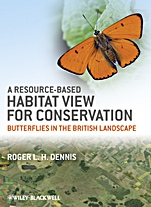
A Resource–Based Habitat View for Conservation: Butterflies in the British Landscape
ISBN 9781405199452
Autor: Roger L. H. Dennis
Wydawca: Wiley
Dostępność: 3-6 tygodni
Cena: 457,80 zł
Przed złożeniem zamówienia prosimy o kontakt mailowy celem potwierdzenia ceny.
ISBN13: |
9781405199452 |
ISBN10: |
1405199458 |
Autor: |
Roger L. H. Dennis |
Oprawa: |
Hardback |
Rok Wydania: |
2010-01-15 |
Ilość stron: |
420 |
Wymiary: |
256x189 |
Tematy: |
PS |
In A Resource–Based Habitat View for Conservation Roger Dennis introduces a novel approach to the understanding of habitats based on resources and conditions required by organisms and their access to them, a quantum shift from simplistic and ineffectual notions of habitats as vegetation units or biotopes. In drawing attention to what organisms actually use and need in landscapes, it focuses on resource composition, structure and connectedness, all of which describe habitat quality and underpin landscape heterogeneity. This contrasts with the current bipolar view of landscapes made up of habitat patches and empty matrix but illustrates how such a metapopulation approach of isolated patchworks can grow by adopting the new habitat viewpoint.
The book explores principles underlying this new definition of habitat, and the impact of habitat components on populations, species’ distributions, geographical ranges and range changes, with a view to conserving resources in landscapes for whole communities. It does this using the example of butterflies – the most alluring of insects, flagship organisms and key indicators of environmental health – in the British Isles, where they have been studied most intensively. The book forms essential reading for students, researchers and practitioners in ecology and conservation, particularly those concerned with managing sites and landscapes for wildlife.
Spis treści:
Foreword.
Preface.
Acknowledgements.
1. What is a habitat? An awkward question.
Definitions of habitat.
Distinguishing habitat from biotope and vegetation units.
2. A simple model for butterfly habitats.
Habitat model.
Key issues in the habitat model.
Qualifying resource outlets.
Consumables.
Utilities.
Conditions and conditioners.
Resource database.
3. Basic principles for butterfly habitats.
Describing variation in resources.
Resource var
iation in the habitat space.
Resource dynamics within habitats.
Habitats, butterfly resources and population status.
Resource dynamics, population status and life cycle strategies.
Resources, movements and dispersion patterns inside the habitat.
4. Exploiting individual resources.
Patterns and agents in resource use.
Some principles relating to single resource use.
Distribution of individuals in relation to the distribution of resources.
Distribution of individuals on single resource patches.
Placement of individual butterflies on single resource items.
Manipulation of the micro–landscape: micro–architecture.
Foraging: theory and practice.
5. Butterfly habitats: searching for order.
Biotope distinctions among British butterflies.
Ecological classification of British butterflies.
6. The habitat context for butterfly populations.
From populations to metapopulations.
Basic principles of metapopulations.
The link between structure and dynamics in metapopulations.
Empirical studies of butterfly metapopulations in Britain: habitat quality matters.
Metapopulations and a resource view of the matrix.
From metapopulations to an entire landscape approach.
7. Landscape influences on butterfly habitats.
Landscape–scale studies.
Landscape components and their influence on butterfly habitat distributions.
Influence of landscape and landform elements on butterfly habitats and resources.
Case examples of the impact of landscape features on butterfly resources.
Translating concepts from the habitat to a landscape scale.
Landscape–scale studies on butterflies.
Landscape modelling approaches.
8. Habitat issues in butterfly geographical ranges.
Components of geographical ranges.
Ecological factors underlying ranges and distributions.
Range changes before records.
Present and future distributions: climate and land use changes
.
9. Habitats in butterfly conservation.
Approaches to conservation and conserving butterflies.
The single site in butterfly conservation.
Multiple sites in single and multispecies approaches.
Guiding principles for landscape restoration.
Butterflies as indicators and flagship species.
Appendices.
1. Biodiversity Action Plan (BAP) status, legal protection and taxonomic relationships for British butterflies.
1a. Resident and recently extinct species.
1b. Rare migrants, introductions and/or long–extinct species.
1c. Taxonomic affinities of British butterflies.
2. Larval hostplants for British butterflies.
2a. Status of hostplants.
2b. Hostplant families, range of butterfly herbivory and hostplant phenology.
2c. Larval hostplant biotopes, phenology, growth forms, environments and life history strategies.
3. Nectar sources of British butterflies.
3a. Key flowering nectar plants used by butterfly species.
3b. Nectar plants supporting 10 or more butterfly species.
3c. Nectar plant families supporting six or more butterfly species.
3d. Nectar plants used by butterflies more often or less often than expected.
3e. Adult feeding: nectar and non–nectar sources.
4. Statistics on larval host use and adult feeding in British butterflies.
5. Utility resources and life history data on British butterflies.
5a. Adult environment.
5b. Egg environment.
5c. Larval environment.
5d. Pupal environment.
5e. Life history.
6. Adult and larval behaviour in British butterflies.
6a. Adult behaviour.
6b. Larval behaviour.
7. Biotopes for British butterflies.
References.
Index.
Nota biograficzna:
Roger Dennis was educated at Oswestry School, Shropshire and at Durham University where he was awarded a Scholarship, a Class 1 BA in Geography and where later he obtained his PhD in Human Biology. After a short p
ostdoctoral fellowship at Durham, he taught at The Manchester Grammar School until early retirement in 1993 following a spinal injury. Subsequently, he has received a succession of honorary research fellowships during which he has studied butterfly biogeography and ecology, producing over 175 publications. He is author of ‘The British Butterflies. Their Origin and Establishment’ (1977), ‘Butterflies and Climate Change’ (1993), joint author of ‘Butterflies on British and Irish Offshore Islands’ (1996) and edited ‘The Ecology of Butterflies in Britain’ (1992). He is currently an Honorary Visiting Professor at Staffordshire University and an Honorary Research Fellow at both NERC’s Centre for Ecology and Hydrology, Wallingford, and in the School of Life Sciences at Oxford Brookes University; he serves on the editorial board of four journals. In 2006, he received the Marsh Award for Lifetime Achievement in Lepidoptera Conservation. He lives in Cheshire with his wife Margaret and has one daughter, Pamela.
Okładka tylna:
In A Resource–Based Habitat View for Conservation Roger Dennis introduces a novel approach to the understanding of habitats based on resources and conditions required by organisms and their access to them, a quantum shift from simplistic and ineffectual notions of habitats as vegetation units or biotopes. In drawing attention to what organisms actually use and need in landscapes, it focuses on resource composition, structure and connectedness, all of which describe habitat quality and underpin landscape heterogeneity. This contrasts with the current bipolar view of landscapes made up of habitat patches and empty matrix but illustrates how such a metapopulation approach of isolated patchworks can grow by adopting the new habitat viewpoint.
The book explores principles underlying this new definition of habitat, and the impact of habitat components on popu
Koszyk
Książek w koszyku: 0 szt.
Wartość zakupów: 0,00 zł
Informacje


Kontakt
Gambit
Centrum Oprogramowania
i Szkoleń Sp. z o.o.
Al. Pokoju 29b/22-24
31-564 Kraków
Siedziba Księgarni
ul. Kordylewskiego 1
31-542 Kraków
+48 12 410 5991
+48 12 410 5987
+48 12 410 5989
Subskrypcje
Administratorem danych osobowych jest firma Gambit COiS Sp. z o.o. Na podany adres będzie wysyłany wyłącznie biuletyn informacyjny.
Autoryzacja płatności

Informacje na temat autoryzacji płatności poprzez PayU.

© Copyright 2012: GAMBIT COiS Sp. z o.o. Wszelkie prawa zastrzeżone.
Projekt i wykonanie: Alchemia Studio Reklamy