


Wydawcy
Katalog tematyczny
- Archeologia (109)
- Ekonomia, finanse, business (13704)
- Filozofia (1445)
- Historia (3040)
- Języki i językoznawstwo (2356)
- Lifestyle, hobby i rozrywka (475)
- Medycyna (9704)
- Nauki humanistyczne (4)
- Nauki o Ziemi i środowisku (2638)
- Geografia (299)
- Nauki o Ziemi (1661)
- Geologia (414)
- Hydrologia (237)
- Meteorologia i klimatologia (114)
- Paleontologia (33)
- Wulkanologia i sejsmologia (44)
- Planowanie przestrzenne (53)
- Środowisko (607)
- Nauki ścisłe (20412)
- Nauki społeczne (8486)
- Nauki techniczne (13450)
- Prawo (1696)
- Publikacje informacyjne i interdyscyplinarne (1288)
- Religia i wierzenia (917)
- Technika komputerowa (4067)
- Zdrowie, relacje międzyludzkie i rozwój osobisty (657)





Informacje szczegółowe o książce
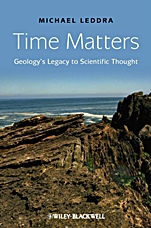
Time Matters: Geologys Legacy to Scientific Thought
ISBN 9781405199087
Autor: Michael Leddra
Wydawca: Wiley
Dostępność: 3-6 tygodni
Cena: 711,90 zł
Przed złożeniem zamówienia prosimy o kontakt mailowy celem potwierdzenia ceny.
ISBN13: |
9781405199087 |
ISBN10: |
1405199083 |
Autor: |
Michael Leddra |
Oprawa: |
Hardback |
Rok Wydania: |
2010-04-09 |
Ilość stron: |
288 |
Wymiary: |
239x165 |
Tematy: |
RB |
The development of the science of Geology has a long and fascinating history. As in many branches of science, the personalities and motives (not always honourable) of the key players have had a profound effect on the direction of research, and on the speed at which new ideas have evolved and have been disseminated.
Time Matters provides an invaluable insight into the background behind some of the key concepts we use in Earth science today. It shows the historical context in which these ideas were developed, the important contributions of individual scientists and thinkers, and how these ideas continue to shape our view of science and the world in which we live.
This book is written for anyone with an interest in geology and the history of science, but will be particularly valuable to university or high–school students beginning a study of earth science for the first time.
Spis treści:
Preface.
Acknowledgements.
Introduction.
1 Geological time.
1.1 Introduction.
1.2 The historical perspective.
1.2.1 The march of the scientists.
1.2.2 The atomic age.
1.3 Geological time and the age of Mother Earth.
2 Dating rocks.
2.1 Introduction.
2.2 The nature of stratigraphy and the principles of relative dating.
2.3 Biostratigraphy.
2.4 Radiometric dating.
2.4.1 Potassium.
2.4.2 Rubidium.
2.4.3 Uranium.
2.4.4 Carbon.
2.4.5 Mass spectrometer.
2.5 Dating by fi ssion tracks.
2.6 Magnetism.
2.6.1 Thermal remnant magnetism.
2.6.2 Depositional remnant magnetism.
2.6.3 Palaeo–magnetism and Polar wandering.
3 The origins of the geological time scale.
3.1 Introduction.
3.2 Jurassic.
3.3 Carboniferous.
3.4 Triassic.
3.5 Tertiary.
3.6 Cambrian.
3.7 Silurian.
3.8 Devonian.
3.9 Permian.
3.10 Mississippian.
3.11 Quaternary.
3.12 Ordovician.
3.13 Cretaceous.
3.14 Pennsylvanian.
3.15 Proterozoic
.
3.16 Archean and Hadean.
4 Plutonism versus Neptunism.
4.1 Introduction.
4.2 Neptunism.
4.3 Plutonism.
5 Uniformitarianism versus Catastrophism.
5.1 Introduction.
5.2 Catastrophism.
5.3 Diluvialism.
5.4 Uniformitarianism.
5.5 Mass extinctions.
5.6 Alternating warm and cold conditions.
5.7 Catastrophes and the nature of science.
5.8 Palaeogeography and Earth history.
6 Evolution.
6.1 Introduction.
6.2 Darwin and evolution.
6.3 Punctuated equilibrium and geographic speciation.
6.4 Intermediates – what are we looking for?
7 Evolution versus Creationism.
7.1 Introduction.
7.2 Fossils.
7.2.1 The Medieval view.
7.2.2 The 17th– and 18th–century view.
7.2.3 The 19th–century view.
7.2.4 Mantell versus Owen.
7.3 Famous Evolution versus Creation debates.
7.3.1 Huxley versus Wilberforce.
7.3.2 Huxley versus Gladstone.
7.3.3 The abolition of the equal time laws in America.
7.3.4 The nature of life and science, and Evolution versus Creationism.
7.4 Lagerstatten.
8 Continental Drift and Plate Tectonics.
8.1 Introduction.
8.2 Mountain building.
8.3 Isostasy.
8.4 Continental Drift.
8.5 Plate Tectonics.
9 What have we learnt?
Bibliography.
Index.
Nota biograficzna:
Mike Leddra worked as a cartographer before gaining a degree in geology and geography from King’s College, University of London, and a PhD in geology from University College, University of London. In 1993, he became a Senior Lecturer in Engineering and Environmental Geology at the University of Sunderland, where he also qualified as a secondary school geography teacher. He now runs his own education consultancy, Forefront Teaching Resources Ltd.
Okładka tylna:
The development of the science of Geology has a long and fascinating history. As in many branches of science, the personaliti
es and motives (not always honourable) of the key players have had a profound effect on the direction of research, and on the speed at which new ideas have evolved and have been disseminated.
Time Matters provides an invaluable insight into the background behind some of the key concepts we use in Earth science today. It shows the historical context in which these ideas were developed, the important contributions of individual scientists and thinkers, and how these ideas continue to shape our view of science and the world in which we live.
This book is written for anyone with an interest in geology and the history of science, but will be particularly valuable to university or high–school students beginning a study of earth science for the first time.
Koszyk
Książek w koszyku: 0 szt.
Wartość zakupów: 0,00 zł
Informacje


Kontakt
Gambit
Centrum Oprogramowania
i Szkoleń Sp. z o.o.
Al. Pokoju 29b/22-24
31-564 Kraków
Siedziba Księgarni
ul. Kordylewskiego 1
31-542 Kraków
+48 12 410 5991
+48 12 410 5987
+48 12 410 5989
Subskrypcje
Administratorem danych osobowych jest firma Gambit COiS Sp. z o.o. Na podany adres będzie wysyłany wyłącznie biuletyn informacyjny.
Autoryzacja płatności

Informacje na temat autoryzacji płatności poprzez PayU.

© Copyright 2012: GAMBIT COiS Sp. z o.o. Wszelkie prawa zastrzeżone.
Projekt i wykonanie: Alchemia Studio Reklamy