


Wydawcy
Katalog tematyczny
- Archeologia (109)
- Ekonomia, finanse, business (13704)
- Filozofia (1445)
- Historia (3040)
- Języki i językoznawstwo (2356)
- Lifestyle, hobby i rozrywka (475)
- Medycyna (9704)
- Nauki humanistyczne (4)
- Nauki o Ziemi i środowisku (2638)
- Nauki ścisłe (20412)
- Nauki społeczne (8486)
- Nauki techniczne (13450)
- Prawo (1696)
- Publikacje informacyjne i interdyscyplinarne (1288)
- Religia i wierzenia (917)
- Technika komputerowa (4067)
- Zdrowie, relacje międzyludzkie i rozwój osobisty (657)





Informacje szczegółowe o książce
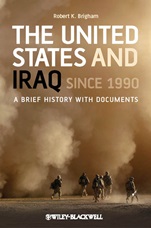
The United States and Iraq Since 1990: A Brief History with Documents
ISBN 9781405198998
Autor: Robert K. Brigham
Wydawca: Wiley
Dostępność: 3-6 tygodni
Cena: 178,50 zł
Przed złożeniem zamówienia prosimy o kontakt mailowy celem potwierdzenia ceny.
ISBN13: |
9781405198998 |
ISBN10: |
1405198990 |
Autor: |
Robert K. Brigham |
Oprawa: |
Paperback |
Rok Wydania: |
2013-07-23 |
Ilość stron: |
328 |
Wymiary: |
231x158 |
Tematy: |
HB |
The United States has been in conflict with Iraq for over twenty years and yet some of the most basic foreign policy decisions surrounding the country remain unclear and contested. Why did the US make such a vast commitment in an area it knew so little about? Why did the US have such a difficult time subduing Iraq militarily and what have been the regional and international consequences? Has a new U.S. counterinsurgency strategy produced a victory in Iraq as many supporters claim? This books answers these questions and more, providing a concise history of US policy in Iraq since 1990 and examining the ways in which it has evolved over the last two decades. This text advances a chronological narrative of American decision–making in Iraq, from the ways in which the end of the Cold War played a vital role in Washington’s efforts to create a new world order to the extent that tough economic sanctions heightened tensions between Iraq and the United States in the late 1990s. The author also examines US foreign policy alongside the changing domestic climate and investigates how America’s wars in Iraq have affected US politics. Arguing that the only way to clearly understand US policy toward Iraq is to see it in its proper historical context and within a transnational framework, this book is an important resource for those seeking a clear understanding of the conflict.
Preface xiii Acknowledgments xv Dramatis Personae xvii Maps xxii 1 The First Gulf War, 1990–1991 1 Chronology 1 George H.W. Bush and the New World Order 8 Iraq Invades Kuwait 10 Building the Coalition against Saddam 15 Operation Desert Storm 20 Documents: 29 Document 1–A, Excerpts from National Security Directive 26, “U.S. Policy Toward the Persian Gulf,” October 2, 1989 29 Document 1–B, Meeting between Saddam Hussein and U.S. Ambassador April Glaspie, excerpts from April Glaspie memorandum, July 25, 1990 31 Document 1–C, United Nations Resolution 660, August 2, 1990 33 Document 1–D, United Nations Resolution 678, November 29, 1990 34 Document 1–E, Excerpts from National Security Directive 54, January 15, 1991 35 Document 1–F, Excerpts from speech by Saddam Hussein, February 11, 1991, Iraqi News Agency–Baghdad Radio 37 2 Clinton and Containment, 1992–2001 39 Chronology 39 Containment Plus 52 Regime Change 54 Documents: 64 Document 2–A, Excerpts from United Nations Resolution 687, April 6, 1991 64 Document 2–B, Excerpts from “Intelligence Successes and Failures in Operations Desert Shield/Desert Storm,” U.S. House of Representatives, Committee on Armed Services, 103rd Congress, 1st session, August 1993 73 Document 2–C, Excerpts from the remarks of Anthony Lake, assistant to the president for national security affairs, “From Containment to Enlargement,” Johns Hopkins University, School of Advanced International Studies, Washington, D.C., September 21, 1993 74 Document 2–D, Remarks of the Honorable Ibrahim M. Al–Shaheen, deputy chairman of the Kuwaiti National Committee for P.O.W.s in Iraq, August 6, 2006, U.S. House Committee on International Relations, Subcommittee on Oversight and Investigations 80 Document 2–E, Letter dated May 5, 2001, from the permanent representative of Iraq to the United Nations addressed to the secretary general, United Nations, New York 81 Document 2–F, Text of President Clinton’s address to the Joint Chiefs of Staff and Pentagon staff, Washington, D.C., February 17, 1998 84 Document 2–G, Project for a New American Century, Statement of Principles, June 3, 1997 90 3 The Invasion of Iraq, 2003 93 Chronology 93 Connecting Terrorists to Iraq 96 The Bush Doctrine 100 The Legal Debate 109 The War Plan 111 The War Begins 114 Documents: 120 Document 3–A, Excerpts from George W. Bush’s State of the Union address, January 29, 2002 120 Document 3–B, Excerpts from “The National Security of the United States of America,” September 2002 122 Document 3–C, “The Problem of the Shia,” July 2002 123 Document 3–D, Unclassifi ed report to Congress on the acquisition of technology relating to weapons of mass destruction and advanced conventional munitions, July 1–December 2002 136 Document 3–E, Excerpts from H.J. 114, Joint Resolution to Authorize the Use of United States Armed Forces Against Iraq, 107th Congress, 2nd session, October 2, 2002 138 Document 3–F, “The Downing Street Memo,” from Matthew Rycroft, private secretary to Prime Minister Tony Blair, to David Manning, British ambassador to the United States, July 23, 2002 141 Document 3–G, Excerpts from U.S. Secretary of State Colin Powell’s presentation at the United Nations Security Council, February 6, 2003 144 Document 3–H, U.S. ambassador to the United Nations John Negroponte’s letter to Ambassador Mamady Traore, president of the United Nations Security Council, March 20, 2003 146 4 The Deadliest Fighting, 2003–2006 148 Chronology 148 The Battle of Fallujah 150 Human Rights and Abu Ghraib 156 The Coalition Provisional Authority 159 General Casey and the Iraqi Civil War 164 Documents: 172 Document 4–A, Excerpts from Coalition Provisional Authority briefi ng with General John Abizaid, commander, U.S. Central Command, and Lt. General Ricardo Sanchez, commander, CJTF–7, April 12, 2004 172 Document 4–B, Excerpts from memorandum for William J. Haynes II, general counsel of the Department of Defense, “Military Interrogation of Alien Unlawful Combatants Held Outside the United States,” March 14, 2003, U.S. Department of Justice, Offi ce of Legal Counsel 173 Document 4–C, Testimony of Secretary of Defense Donald H. Rumsfeld before the Senate and House Armed Services Committees, 7 May 2004 175 Document 4–D, Coalition Provisional Authority Order Number One: “De–Baathifi cation of Iraqi Security,” Coalition Provisional Authority, Baghdad, Iraq, May 16, 2003 181 Document 4–E, Excerpts from the Constitution of Iraq, October 2005, Iraqi News Agency 182 Document 4–F, Excerpts from “National Strategy for Victory in Iraq,” National Security Council, November 30, 2005 187 5 The Surge, 2006–2008 190 Chronology 190 A Change in Tactics 197 Surging in Iraq 202 Domestic Critics of the Surge 205 Documents: 214 Document 5–A, Excerpts from the Iraq Study Group Report, December 6, 2006 214 Document 5–B, Fred Kagan, “Choosing Victory,” January 5, 2007, American Enterprise Institute 217 Document 5–C, Excerpts from U.S. Army/Marine Corps Counterinsurgency Field Manual 220 Document 5–D, Excerpts from “Iraq First: The National Security Strategy of Iraq,” Republic of Iraq – the Cabinet 221 Document 5–E, Excerpts from President George W. Bush’s speech to the nation on the Iraq War, January 10, 2007 224 Document 5–F, Excerpts from Senator Barack Obama’s speech before the Chicago Council on Global Affairs, April 23, 2007 227 6 Obama’s War, 2009–2011 230 Chronology 230 The Planned Withdrawal 233 Human Rights Concerns in Iraq 238 Documents: 248 Document 6–A, Status of Forces Agreement, 2008 248 Document 6–B, Transcript of President Obama’s remarks, Camp Lejeune, North Carolina, February 27, 2009 266 Document 6–C, Excerpts from the Obama administration’s National Security Strategy, May 2010 274 Document 6–D, U.S. State Department, Bureau of Democracy, Human Rights, and Labor, excerpts from Annual Human Rights Report, Iraq–2011 275 Document 6–E, Speech at the White House by Prime Minister al–Maliki, December 21, 2011, Radio Free Iraq 277 Epilogue: The Future 280 List of Documents 284 Suggestions for Additional Reading 289 Index 292
Robert K. Brigham is the Shirley Ecker Boskey Professor of History and International Relations at Vassar College, USA. He is the author of numerous publications on American foreign relations including Iraq, Vietnam and the Limits of American Power (2008) and Is Iraq Another Vietnam? (2006).
Koszyk
Książek w koszyku: 0 szt.
Wartość zakupów: 0,00 zł
Informacje


Kontakt
Gambit
Centrum Oprogramowania
i Szkoleń Sp. z o.o.
Al. Pokoju 29b/22-24
31-564 Kraków
Siedziba Księgarni
ul. Kordylewskiego 1
31-542 Kraków
+48 12 410 5991
+48 12 410 5987
+48 12 410 5989
Subskrypcje
Administratorem danych osobowych jest firma Gambit COiS Sp. z o.o. Na podany adres będzie wysyłany wyłącznie biuletyn informacyjny.
Autoryzacja płatności

Informacje na temat autoryzacji płatności poprzez PayU.

© Copyright 2012: GAMBIT COiS Sp. z o.o. Wszelkie prawa zastrzeżone.
Projekt i wykonanie: Alchemia Studio Reklamy