


Wydawcy
Katalog tematyczny
- Archeologia (109)
- Ekonomia, finanse, business (13704)
- Filozofia (1445)
- Historia (3040)
- Języki i językoznawstwo (2356)
- Lifestyle, hobby i rozrywka (475)
- Medycyna (9704)
- Nauki humanistyczne (4)
- Nauki o Ziemi i środowisku (2638)
- Nauki ścisłe (20412)
- Nauki społeczne (8486)
- Edukacja (229)
- Kryminologia, opieka spełeczna (284)
- Obronność (10)
- Polityka (1389)
- Psychologia (777)
- Socjologia (410)
- Społeczeństwo i kultura (187)
- Nauki techniczne (13450)
- Prawo (1696)
- Publikacje informacyjne i interdyscyplinarne (1288)
- Religia i wierzenia (917)
- Technika komputerowa (4067)
- Zdrowie, relacje międzyludzkie i rozwój osobisty (657)





Informacje szczegółowe o książce
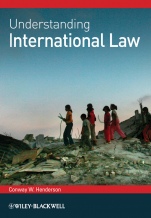
Understanding International Law
ISBN 9781405197656
Autor: Conway W. Henderson
Wydawca: Wiley
Dostępność: 3-6 tygodni
Cena: 213,15 zł
Przed złożeniem zamówienia prosimy o kontakt mailowy celem potwierdzenia ceny.
ISBN13: |
9781405197656 |
ISBN10: |
140519765X |
Autor: |
Conway W. Henderson |
Oprawa: |
Paperback |
Rok Wydania: |
2010-01-22 |
Ilość stron: |
486 |
Wymiary: |
245x170 |
Tematy: |
JPS |
Understanding International Law introduces students to the various aspects of international law and especially its relationship with global politics. Utilizing an approach that carefully balances politics and law, the book reflects on their interdependency and places an emphasis on an evolving international society largely structured by the rules of international law.
All of the major facets of international law are addressed, with topics including: the philosophical origins of international law; its sources, efficacy, and jurisdiction; diplomacy and arms limitations; international crimes and atrocities; human rights; non–state actors; environmental considerations; as well as reflections on the future of international law. Of particular value to students of politics and international relations, readers benefit from the author′s expertise in Political Science and International Law – as well as his thirty–five years of experience in presenting complex subject matter in a lively and accessible manner. The book contains enhanced pedagogy as well as a specially created companion website (www.wiley.com/go/internationallaw) providing students with additional resources to aid their learning, including links to case studies.
Spis treści:
List of Boxes.
Preface.
List of Abbreviations.
Part I Making the World More Lawful.
1 The Rise of International Law.
The Nature of International Law.
The Roles of International Law.
The Early Beginnings of International Law.
Dueling Philosophies.
Contending Modern Approaches.
Operating Conditions: What Helps and What Hinders?
Chapter Summary.
2 A World of Actors: A Question of Legal Standing.
Actors.
The State.
International Government Organizations.
Non–government Organizations.
Multinational Corporations.
Individuals.
Insurgents.
Ethnic Groups.
Terrorists.
Mercenaries and Private Military Com
panies.
Domestic Actors.
Chapter Summary.
3 The Sources of International Law: Creating Law without Government.
Customary Law.
Treaty Law.
The Role of Principles.
Judges and Publicists.
Other Sources.
The Scope of International Law.
Chapter Summary.
4 The Efficacy of International Law.
Legislating International Law.
Enforcing International Law.
Adjudicating International Law.
The Incorporation of International Law.
Can There Be a Future World Government?
Chapter Summary.
5 Jurisdiction: Domain over Places and Persons.
Territorial Jurisdiction.
Law of the Sea.
Airspace.
Outer Space.
Satellites.
The Polar Regions.
Nationality.
Dual Nationality.
Alien Status.
Sovereign Immunity and Act of State.
Extraterritoriality.
Extradition.
Chapter Summary.
Part II Making the World Safer.
6 Diplomacy in Pursuit of Peace.
A Brief History of Diplomacy.
The Rules of Diplomacy for States.
Two Special Issues concerning Embassies.
Rules for the Consular Relations of States.
The Peaceful Settlement of Disputes.
The Operating Conditions of Diplomacy.
The Rules of Diplomacy for IGOs.
The Special Case of the UN.
Chapter Summary.
7 Arms Limitations for a Less Violent World.
A Brief History of Arms Limitations.
Objectives of Arms Limitations.
Obstacles to Arms Limitations.
The Nuclear Regime.
The Biological Weapons Regime.
The Chemical Weapons Regime.
The Missile Control Regime.
The Conventional Weapons Regime.
Chapter Summary.
8 Law to Constrain Force.
A Brief History of the Laws Governing Force.
Evolution to UN Law.
Aggression.
Self–defense.
Self–defense in an Age of Terrorism.
Intervention.
Peacekeeping.
Today’s Salient Issues concerning the Laws of War.
Chapter Summary.
9 Core International Crimes: Atrocities That Shock the Conscience
of Humankind.
A Brief History of Core International Crimes.
Crimes Against Peace.
Crimes against Humanity.
Genocide.
The Most Notorious Episodes of Genocide.
Special Dimensions of Genocide.
War Crimes.
The Contributions of International Tribunals.
Chapter Summary.
Part III Making the World Better.
10 Human Rights: Freedom and Protection for Humankind.
A Brief History of the Human Rights Movement.
Civil and Political Rights.
Economic, Social, and Cultural Rights.
Group Rights.
A Human Rights Frontier?
Human Rights Regimes.
The Role of Non–state Actors.
Chapter Summary.
11 The Global Environment in Jeopardy.
A Brief History of Environmental Developments.
Atmosphere.
Water.
Soil.
Forests.
Wildlife.
The Environment and Human Rights.
Environmental Governance.
Chapter Summary.
12 Rules for Sharing the World′s Wealth.
A Brief History of Economic Relations.
Governance from the North.
Standardizing the Global Economy.
Intellectual Property Rights.
Commercial Arbitration.
Globalism versus Regionalism.
Governance of the South.
Four Economic Flows in the North–South Relationship.
Counter–productive Issues for the Global Economy: Organized Crime, Corruption, and the Pursuit of Non–economic Goals.
Chapter Summary.
Part IV Making the Future.
13 The Problems and Prospects of International Law.
Glossary of Terms.
Bibliography.
Index.
Nota biograficzna:
Conway W. Henderson is Professor Emeritus of Political Science who has taught courses in International Relations and International Law for more than three decades.
Okładka tylna:
Understanding International Law introduces students to the various aspects of international law and especially its relationship with global politics. Utilizing an approach that carefully balances p
olitics and law, the book reflects on their interdependency and places an emphasis on an evolving international society largely structured by the rules of international law.
All of the major facets of international law are addressed, with topics including: the philosophical origins of international law; its sources, efficacy, and jurisdiction; diplomacy and arms limitations; international crimes and atrocities; human rights; non–state actors; environmental considerations; as well as reflections on the future of international law. Of particular value to students of politics and international relations, readers benefit from the author′s expertise in Political Science and International Law – as well as his thirty–five years of experience in presenting complex subject matter in a lively and accessible manner. The book contains enhanced pedagogy as well as a specially created companion website (www.wiley.com/go/internationallaw) providing students with additional resources to aid their learning, including links to case studies.
Koszyk
Książek w koszyku: 0 szt.
Wartość zakupów: 0,00 zł
Informacje


Kontakt
Gambit
Centrum Oprogramowania
i Szkoleń Sp. z o.o.
Al. Pokoju 29b/22-24
31-564 Kraków
Siedziba Księgarni
ul. Kordylewskiego 1
31-542 Kraków
+48 12 410 5991
+48 12 410 5987
+48 12 410 5989
Subskrypcje
Administratorem danych osobowych jest firma Gambit COiS Sp. z o.o. Na podany adres będzie wysyłany wyłącznie biuletyn informacyjny.
Autoryzacja płatności

Informacje na temat autoryzacji płatności poprzez PayU.

© Copyright 2012: GAMBIT COiS Sp. z o.o. Wszelkie prawa zastrzeżone.
Projekt i wykonanie: Alchemia Studio Reklamy