


Wydawcy
Katalog tematyczny
- Archeologia (109)
- Ekonomia, finanse, business (13704)
- Filozofia (1445)
- Historia (3040)
- Języki i językoznawstwo (2356)
- Lifestyle, hobby i rozrywka (475)
- Medycyna (9704)
- Nauki humanistyczne (4)
- Nauki o Ziemi i środowisku (2638)
- Nauki ścisłe (20412)
- Nauki społeczne (8486)
- Edukacja (229)
- Kryminologia, opieka spełeczna (284)
- Obronność (10)
- Polityka (1389)
- Psychologia (777)
- Socjologia (410)
- Społeczeństwo i kultura (187)
- Nauki techniczne (13450)
- Prawo (1696)
- Publikacje informacyjne i interdyscyplinarne (1288)
- Religia i wierzenia (917)
- Technika komputerowa (4067)
- Zdrowie, relacje międzyludzkie i rozwój osobisty (657)





Informacje szczegółowe o książce
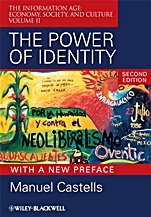
The Power of Identity
ISBN 9781405196871
Autor: Manuel Castells
Wydawca: Wiley
Dostępność: 3-6 tygodni
Cena: 192,15 zł
Przed złożeniem zamówienia prosimy o kontakt mailowy celem potwierdzenia ceny.
ISBN13: |
9781405196871 |
ISBN10: |
1405196874 |
Autor: |
Manuel Castells |
Oprawa: |
Paperback |
Rok Wydania: |
2009-11-27 |
Numer Wydania: |
2nd Edition, with a New Preface |
Ilość stron: |
584 |
Wymiary: |
229x152 |
Tematy: |
JB |
In this second volume of The Information Age trilogy, with an extensive new preface following the recent global economic crisis, Manuel Castells deals with the social, political, and cultural dynamics associated with the technological transformation of our societies, and with the globalization of the economy.
Spis treści:
List of Figures
List of Tables
List of Charts
Preface to the 2010 Edition of The Power of Identity
Preface and Acknowledgments 2003
Acknowledgments 1996
Our World, our Lives
1. Communal Heavens: Identity and Meaning in the Network Society
The Construction of Identity
God’s Heavens: Religious Fundamentalism and Cultural Identity
Umma versus Jahiliya: Islamic fundamentalism
God save me! American Christian fundamentalism
Nations and Nationalisms in the Age of Globalization: Imagined Communities or Communal Images?
Nations against the state: the breakup of the Soviet Union and the Commonwealth of Impossible
States (Sojuz Nevozmoznykh Gosudarstv)
Nations without a state: Catalunya
Nations of the information age
Ethnic Unbonding: Race, Class, and Identity in the Network Society
Territorial Identities: The Local Community
Conclusion: The Cultural Communes of the Information Age
2. The Other Face of the Earth: Social Movements against the New Global Order
Globalization, Informationalization, and Social Movements
Mexico’s Zapatistas: The First Informational Guerrilla Movement
Who are the Zapatistas?
The value structure of the Zapatistas: identity, adversaries, and goals
The communication strategy of the Zapatistas: the Internet and the media
The contradictory relationship between social movement and political institution
Up in Arms against the New World Order: The American Militia and the Patriot Movement
The militias and the Patriots: a multi–thematic information network
The Patriots’ banne
rs
Who are the Patriots?
The militia, the Patriots, and American society
The Lamas of Apocalypse: Japan’s Aum Shinrikyo
Asahara and the development of Aum Shinrikyo
Aum’s beliefs and methodology
Aum and Japanese society
Al–Qaeda, 9/11, and Beyond: Global Terror in the Name of God
The goals and values of al–Qaeda
The evolving process of al–Qaeda’s struggle
The mujahedeen and their support bases
The young lion of the global jihad: Osama bin Laden
From bin Laden to bin Mahfouz: financial networks, Islamic networks, terrorist networks
Networking and media politics: the organization, tactics, and strategy of al–Qaeda
9/11 and beyond: death or birth of a networked, global, fundamentalist movement?
‘‘No Globalization without Representation!’’: The Anti–globalization Movement
‘‘El pueblo desunido jamas sera vencido’’: the diversity of the anti–globalization movement
The values and goals of the movement against globalization
Networking as a political way of being
An informational movement: the theatrical tactics of anti–globalization militants
The movement in context: social change and institutional change
The Meaning of Insurgencies against the New Global Order
Conclusion: The Challenge to Globalization
3. The Greening of the Self: The Environmental Movement
The Creative Cacophony of Environmentalism: A Typology
The Meaning of Greening: Societal Issues and the Ecologists’ Challenge
Environmentalism in Action: Reaching Minds, Taming Capital, Courting the State, Tap–dancing with the Media
Environmental Justice: Ecologists’ New Frontier
4. The End of Patriarchalism: Social Movements, Family, and Sexuality in the Information Age
The Crisis of the Patriarchal Family
Women at Work
Sisterhood is Powerful: The Feminist Movement
American feminism: a
discontinuous continuity
Is feminism global?
Feminism: an inducive polyphony
The Power of Love: Lesbian and Gay Liberation Movements
Feminism, lesbianism, and sexual liberation movements in Taipei
Spaces of freedom: the gay community in San Francisco
Summing up: sexual identity and the patriarchal family
Family, Sexuality, and Personality in the Crisis of Patriarchalism
The incredibly shrinking family
The reproduction of mothering under the non–reproduction of patriarchalism
Body identity: the (re)construction of sexuality
Flexible personalities in a post–patriarchal world
The End of Patriarchalism?
5. Globalization, Identification, and the State: A Powerless State or a Network State?
Globalization and the State
The transnational core of national economies
A statistical appraisal of the new fiscal crisis of the state in the global economy
Globalization and the welfare state
Global communication networks, local audiences, uncertain regulators
A lawless world?
The Nation–state in the Age of Multilateralism
Global Governance and Networks of Nation–states
Identities, Local Governments, and the Deconstruction of the Nation–state
The Identification of the State
The Return of the State
The state, violence, and surveillance: from Big Brother to little sisters
American unilateralism and the new geopolitics
The Iraq War and its aftermath
The consequences of American unilateralism
The Crisis of the Nation–state, the Network State, and the Theory of the State
Conclusion: The King of the Universe, Sun Tzu, and the Crisis of Democracy
6. Informational Politics and the Crisis of Democracy
Introduction: The Politics of Society
Media as the Space of Politics in the Information Age
Politics and the media: the citizens’ connection
Show politics and political marketing: the American model
Is European politics being ‘&
#8216;Americanized’’?
viii CONTENTS
Bolivia’s electronic populism: compadre
Palenque and the coming of Jach’a Uru
Informational Politics in Action: The Politics of Scandal
The Crisis of Democracy
Conclusion: Reconstructing Democracy?
Conclusion: Social Change in the Network Society
Methodological Appendix
Summary of Contents of Volumes I and III
References
Index
Nota biograficzna:
Manuel Castells is Professor Emeritus of Sociology and Planning at the University of California, Berkeley. He is also University Professor and the Wallis Annenberg Chair in Communication Technology and Society at the University of Southern California, Los Angeles, and Professor of Sociology at the Open University of Catalonia in Barcelona. He is Distinguished Visiting Professor of Technology and Society at M.I.T., and Distinguished Visiting Professor of Internet Studies at Oxford University. He is the recipient of numerous academic awards, including the Guggenheim Fellowship, C. Wright Mills Award, the Robert and Helen Lynd Award from the American Sociological Association, and the Ithiel de Sola Pool Award from the American Political Science Association. He is a Fellow of the European Academy, a Fellow of the Spanish Royal Academy of Economics, and a Fellow of the British Academy. He has received 16 honorary doctorates from universities around the world. He has authored 23 books, among which are: the trilogy The Information Age: Economy, Society, and Culture, first published by Blackwell in 1996–8, which has been translated into 20 languages; and Communication Power (2009).
Okładka tylna:
In this second volume of The Information Age trilogy, with an extensive new preface following the recent global economic crisis, Manuel Castells deals with the social, political, and cultural dynamics associated with the technological transformation of our societies, and with
Koszyk
Książek w koszyku: 0 szt.
Wartość zakupów: 0,00 zł
Informacje


Kontakt
Gambit
Centrum Oprogramowania
i Szkoleń Sp. z o.o.
Al. Pokoju 29b/22-24
31-564 Kraków
Siedziba Księgarni
ul. Kordylewskiego 1
31-542 Kraków
+48 12 410 5991
+48 12 410 5987
+48 12 410 5989
Subskrypcje
Administratorem danych osobowych jest firma Gambit COiS Sp. z o.o. Na podany adres będzie wysyłany wyłącznie biuletyn informacyjny.
Autoryzacja płatności

Informacje na temat autoryzacji płatności poprzez PayU.

© Copyright 2012: GAMBIT COiS Sp. z o.o. Wszelkie prawa zastrzeżone.
Projekt i wykonanie: Alchemia Studio Reklamy