


Wydawcy
Katalog tematyczny
- Archeologia (109)
- Ekonomia, finanse, business (13704)
- Filozofia (1445)
- Historia (3040)
- Języki i językoznawstwo (2356)
- Lifestyle, hobby i rozrywka (475)
- Medycyna (9704)
- Nauki humanistyczne (4)
- Nauki o Ziemi i środowisku (2638)
- Nauki ścisłe (20412)
- Nauki społeczne (8486)
- Nauki techniczne (13450)
- Prawo (1696)
- Publikacje informacyjne i interdyscyplinarne (1288)
- Religia i wierzenia (917)
- Technika komputerowa (4067)
- Zdrowie, relacje międzyludzkie i rozwój osobisty (657)





Informacje szczegółowe o książce
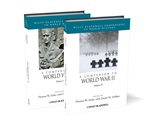
A Companion to World War II: 2 Volume Set
ISBN 9781405196819
Autor: Thomas W. Zeiler, Daniel M. DuBois
Wydawca: Wiley
Dostępność: 3-6 tygodni
Cena: 1 588,65 zł
Przed złożeniem zamówienia prosimy o kontakt mailowy celem potwierdzenia ceny.
ISBN13: |
9781405196819 |
ISBN10: |
1405196815 |
Autor: |
Thomas W. Zeiler, Daniel M. DuBois |
Oprawa: |
Hardback |
Rok Wydania: |
2012-12-07 |
Numer Wydania: |
2 Volume Set |
Ilość stron: |
1062 |
Wymiary: |
253x173 |
Tematy: |
HB |
Offering readers much more than a military history, this unparalleled collection of 58 state–of–the–field historiographic essays explores the widely varying contexts in which nations and transnational communities experienced World War II. In doing so, it provides insight into how the war linked nations, systems, and cultures, and sets the agenda for future research. A Companion to World War II introduces readers to the myriad factors influencing the war’s developments, examining the various theatres of operation, the diplomacy, economics, intelligence, and home front experiences of a host of nations including major neutrals. The essays include topics as diverse as American anti–Semitism, women in wartime, French–African soldiers, internal resistance in Nazi Germany, the war’s impact on the struggle for independence in India, and post–war planning, among others. The collection identifies scholarly and official debates – in the English–speaking community as well as in other languages – about the course of the war through historiographic analysis by established and emerging experts in their fields. It represents a major new contribution to the academic literature on an event of unparalleled centrality in world history.
I. Roots of War 1. Gerhard L. Weinberg, “How a Second World War Came” 2. Frédéric Dessberg, “The Versailles Peace Settlement and the Collective Security System” 3. John E. Moser, “The Great Depression” 4. Christopher O’Sullivan, “Colonialism in Asia” 5. R.J.B. Bosworth, “Visionaries of Expansion” 6. Alexander Hill, “Soviet War Effort: 1928–1941” II. Fighting the War 7. Brian P. Farrell, “Japanese Early Attack” 8. Gary R. Hess, “War and Empire: The Transformation of Southern Asia” 9. Maochun Yu, “CBI – An Historiographical Overview” 10. Robert M. Citino, “Fascist Assault, 1939–41” 11. Mark Edele, “Militaries Compared: Wehrmacht and Red Army, 1941–45” 12. Randall Wakelam, “The Bombers: The Strategic Bombing of Germany and Japan” 13. Olli Vehviläinen, “Scandinavian Campaigns” 14. Barbara Brooks Tomblin, “Naval War in the Mediterranean” 15. Ashley Jackson, “Ocean War” 16. Kevin Smith, “Maritime War: Combat, Management, and Memory” 17. Simon Davis, “The Middle East and the Second World War” 18. Christopher R. Gabel, “The Western Front: 1944–45” 19. Kenneth Slepyan, “Battle Fronts and Home Fronts: The War in the East from Stalingrad to Berlin” 20. Neil Gregor, “German Defeat” 21. Mark Roehrs, “Southwest Pacific” 22. Nicholas Evan Sarantakes, “The Military Occupations of World War II: A Historiography” 23. Richard B. Frank, “Ending the Pacific War: The New History” III. Multinational and Transnational Zones of Combat 24. Richard L. DiNardo, “Axis Coalition Building” 25. Talbot Imlay, “Strategies, Commands, and Tactics, 1939–41” 26. Earl J. Catagnus, “British and American Strategic Planning” 27. Mark Stoler, “Wartime Conferences” 28. Akira Iriye, “The U.S. War Against Japan: A Transnational Perspective” 29. James Schwoch, “World War II and Communications Technologies” 30. John Prados, “Of Spies and Strategems” 31. Isabelle Davion, “European Societies in War” 32. Neville Wylie, “Life in Plato’s Cave: Neutral Europe in the Second World War” 33. Stephan Lehnstaedt, “Resistance in Eastern Europe” 34. Patricia Kollander, “Boomerang Resistance: German Émigrés in the U.S. Military” 35. Judith A. Byfield, “Beyond Impact: Toward a New Historiography of Africa and World War II” 36. Raffael Scheck, “French African Soldiers in World War II” 37. Barton J. Bernstein, “Scientists and Nuclear Weapons in World War II: The Background, the Experience, and the Sometimes Contested Meanings and Analyses” 38. Sean Malloy, “Civilians in the Combat Zone: Anglo–American Strategic Bombing” 39. Jochen Boehler, “Race, Genocide, and Holocaust” 40. Yehuda Bauer, “Holocaust and Genocide Today” 41. Jacob Hamblin, “Environmental Dimensions of the Second World War” 42. D’Ann Campbell, “The Women of World War II” 43. Travis J. Hardy, “Transnational Civil Rights during World War II” 44. M. Todd Bennett, “Global Culture and World War II” IV. Homelands 45. Marietta Stankova, “The Balkans in the Origins of the Second World War” 46. Michael Peszke, “Poland’s Military in World War II” 47. Frank McDonough, “Resistance Inside Nazi Germany” 48. Julian Jackson, “Occupied France: The Vichy Regime, Collaboration, and Resistance” 49. Elena Agarossi, “The Italian Campaign” 50. Sarah Ellen Graham, “US Foreign Policy, the Grand Alliance, and the Struggle for Indian Independence During the Pacific War” 51. William H. Miller, “‘P’ Was for Plenty” 52. Edward G. Miller, “Generating American Combat Power in World War II” 53. Stephen H. Norwood, “American Anti–Semitism during World War II” V. Aftermath and Consequences 54. Christoph J.M. Safferling, “War Crimes in Europe” 55. Charles Whitham, “Anglo–American Post–War Planning” 56. Susanne Vees–Gulani, “The Cultural Legacy of the Second World War in Germany” 57. Marc Gallicchio, “World War II in Historical Memory” 58. Gerhard L. Weinberg, “The Place of World War II in Global History”
Thomas W. Zeiler is Professor of History and International Affairs at the University of Colorado, Boulder. The editor of the journal Diplomatic History and former president of the Society for Historians of American Foreign Relations, he is the author of Unconditional Defeat: Japan, America, and the End of World War II (2004), Ambassadors in Pinstripes: The Spalding World Baseball Tour and the Birth of the American Empire (2006), American Foreign Relations since 1600: A Guide to the Literature, Third Edition (2007), and Annihilation: A Global Military History of World War II (2010). Daniel M. DuBois is a doctoral candidate at the University of Colorado, Boulder. He is the assistant editor of the journal Diplomatic History .
“There is no doubt that, taken as a whole, the Companion is full of first–class, historiographical and bibliographical information and insights. . . Accordingly one can unreservedly recommend it to all University and Departmental libraries as a reliable work of reference on the state of research into the Second World War.” (Cercles, 1 December 2013) “This companion is destined to become a valuable contribution to the historiography of the war, and should find a welcome home in either the reference or general collection of any academic library. Summing Up. Essential. All academic levels/libraries.” ( Choice , 1 September 2013)
Koszyk
Książek w koszyku: 0 szt.
Wartość zakupów: 0,00 zł
Informacje


Kontakt
Gambit
Centrum Oprogramowania
i Szkoleń Sp. z o.o.
Al. Pokoju 29b/22-24
31-564 Kraków
Siedziba Księgarni
ul. Kordylewskiego 1
31-542 Kraków
+48 12 410 5991
+48 12 410 5987
+48 12 410 5989
Subskrypcje
Administratorem danych osobowych jest firma Gambit COiS Sp. z o.o. Na podany adres będzie wysyłany wyłącznie biuletyn informacyjny.
Autoryzacja płatności

Informacje na temat autoryzacji płatności poprzez PayU.

© Copyright 2012: GAMBIT COiS Sp. z o.o. Wszelkie prawa zastrzeżone.
Projekt i wykonanie: Alchemia Studio Reklamy