


Wydawcy
Katalog tematyczny
- Archeologia (109)
- Ekonomia, finanse, business (13704)
- Filozofia (1445)
- Historia (3040)
- Języki i językoznawstwo (2356)
- Lifestyle, hobby i rozrywka (475)
- Medycyna (9704)
- Nauki humanistyczne (4)
- Nauki o Ziemi i środowisku (2638)
- Nauki ścisłe (20412)
- Nauki społeczne (8486)
- Edukacja (229)
- Kryminologia, opieka spełeczna (284)
- Obronność (10)
- Polityka (1389)
- Psychologia (777)
- Socjologia (410)
- Społeczeństwo i kultura (187)
- Nauki techniczne (13450)
- Prawo (1696)
- Publikacje informacyjne i interdyscyplinarne (1288)
- Religia i wierzenia (917)
- Technika komputerowa (4067)
- Zdrowie, relacje międzyludzkie i rozwój osobisty (657)





Informacje szczegółowe o książce
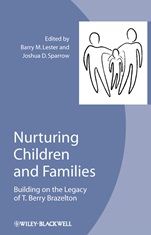
Nurturing Children and Families: Building on the Legacy of T. Berry Brazelton
ISBN 9781405196000
Autor: Barry M. Lester, Joshua D. Sparrow
Wydawca: Wiley
Dostępność: 3-6 tygodni
Cena: 505,05 zł
Przed złożeniem zamówienia prosimy o kontakt mailowy celem potwierdzenia ceny.
ISBN13: |
9781405196000 |
ISBN10: |
1405196009 |
Autor: |
Barry M. Lester, Joshua D. Sparrow |
Oprawa: |
Hardback |
Rok Wydania: |
2010-08-13 |
Ilość stron: |
416 |
Wymiary: |
236x155 |
Tematy: |
JC |
T. Berry Brazelton is one of the world’s foremost pediatricians, whose groundbreaking research has transformed the way we understand infants, children, and families. However, Brazelton’s legacy has reached well beyond his own domain. Building on the foundations he laid, experts from a wide range of fields including pediatrics, psychology, nursing, occupational therapy, and policy, here share their own pioneering work. The volume provides an overview of child development, outlining advancements in the field from the explosion of infant research in the 1960s to contemporary studies into the molecular basis for behavior. Furthermore, it demonstrates the extraordinary impact that this accumulated research has had on practice, policy, and society at large.
Nurturing Children and Families is a significant contribution to our understanding of children and families in the twenty–first century and will be welcomed by students, researchers, clinicians, and policymakers who wish to further build on Brazelton’s work.
Spis treści:
Introduction (Joshua Sparrow and Barry Lester).
A Tribute to T. Berry Brazelton: Excerpted remarks from Pioneering Change Symposium, November 15, 2008, in honor of Dr. Brazelton′s life′s work (Geoffrey Canada).
PART I: A SCIENTIFIC REVOLUTION IN BEHAVIORAL AND DEVELOPMENTAL RESEARCH.
I. Changing Paradigms.
1. Transforming the Research Landscape (Barry Lester).
2. Aligning Systems of Care with the Relational Imperative of Development: Building Community through Collaborative Consultation (Joshua Sparrow).
II. Advances in Understanding Fetal and Newborn Behavior.
3. Before Infant Assessment: Fetal Neurobehavior (Amy L. Salisbury).
4. The Development of the NBAS –– A Turning Point in Understanding the Newborn (J. Kevin Nugent).
5. Keys to Developing Early Parent–Child Relationships (Kat
hryn E. Barnard).
6. Prenatal Depression Effects on Neurobehavioral Dysregulation (Tiffany Field).
III. Self–Regulatory and Relational Processes.
7. A New Look at Parent–Infant Interaction: Infant Arousal Dynamics (Daniel N. Stern).
8. Infants and Mothers: Self– and Mutual Regulation and Meaning Making (Ed Tronick).
IV. Regression and Reorganization in Relational Models of Development.
9. Patterns of Instability and Change: Observations on Regression Periods in Typically Developing Infants (Mikeal Heimann).
10. The 4 WHY′S of Age Linked Regression Periods in Infancy (Frans X. Plooij).
V. Relational and Contextual Developmental Models.
11. An Ethical Framework for Educating Children with Special Needs and All Children (Stanley I. Greenspan).
12. Protective Environments in Africa and Elsewhere (Robert A. LeVine).
VI. Neuroscience Perspectives on Relational and Developmental Models.
13. A Neurobiological Perspective of the Work of Berry Brazelton (Allan N. Schore).
14. Hidden Regulators within the Mother–Infant Interaction (Myron Hofer).
15. Temperament as Sets of Preparedness (Jerome Kagan).
PART II: FROM THEORY TO PRACTICE: INNOVATIONS IN CLINICAL INTERVENTION.
VII. Preventive Interventions – Home visitation.
16. Touchpoints in a Nurse Visiting Program (Kristie Brandt and J. Michael Murphy).
17. The Nurse Family Partnership: Honoring T. Berry Brazelton (David L. Olds).
VIII. Early Interventions – the Care of Infants Born Pre–term.
18. Understanding the Preterm Infant (Heidelise Als).
19. Fueling Development by Enhancing Infant–Caregiver Relationships: Transformation in the Developmental Therapies (Rosemary Bigsby).
IX. Infant Mental Health and the Treatment of Early Trauma.
20. Infant Mental Health (Charles H
. Zeanah and Paula Doyle Zeanah).
21. Ghosts and Angels in the Nursery: Conflict and Hope in Raising Babies (Alicia Lieberman and William Harris).
22. Understanding and Helping Traumatized Infants and Families (Joy D. Osofsky and Howard J. Osofsky).
23. Child Maltreatment: The Research Imperative and the Exportation of Results to Clinical Contexts (Dante Ciccheti and Sheree L. Toth).
PART III: TRANSLATIONAL SCIENCE: IMPLICATIONS FOR PROFESSIONAL DEVELOPMENT, SYSTEMS OF CARE, AND POLICY.
X. Changing Practice and Improving Care through Professional Development.
24. Developing the Infant Mental Health Workforce: Opportunities, Challenges and Strengths for Translating Research to Professional Development and Practice (Libby Zimmerman).
25. The Touchpoints Approach for Early Childhood Care and Education Providers (Jayne Singer and John Hornstein).
26. Early Innovations in Behavioral/Developmental Pediatric Fellowship Training –– A Fresh Approach to Medical Professional Development (Constance H. Keefer).
XI. Innovating Change in Service Delivery, Systems of Care, and Policy.
27. The Birth of Child Life: Creating a Child–Friendly Hospital Environment (Myra D. Fox).
28. Improving Healthcare Service Delivery Systems and Outcomes with Relationship–based Nursing Practices (Ann C. Stadtler, Julie C. Novak, Joshua Sparrow).
29. Translating the Science of Early Childhood Development into Policy and Practice (Daniel Pedersen and Jack P. Shonkoff).
30. Placing Relationships at the Core of Early Care and Education Programs (Francine Jacobs, Mallary I. Swartz, Jessica Dym Bartlett, M. Ann Easterbrooks).
XII. Changing Ways of Being.
31. Respect and Healing (Sara Lawrence–Lightfoot).
Nota biograficzna:
Barry Lester, PhD. is Professor of Psychiatry, Professor of Pediatrics and founder and Director of the Brown Ce
nter for the Study of Children at Risk at Brown Medical School and Women and infants Hospital. Dr. Lester holds a PhD in developmental psychology and psychophysiology from Michigan State University. He completed a postdoctoral fellowship in pediatrics with Dr. Brazelton and was Director of Research at Brazelton’s Child Development Unit at Children’s Hospital and Harvard Medical School for 10 years. He has been at Brown for 23 years and is the author of over 200 scientific publications, the author of Why Is My Baby Crying, and editor of 15 books including Resilience In Children (Blackwell, 2007).
Joshua Sparrow, MD is Assistant Professor of Psychiatry at Harvard Medical School, Director, Special Initiatives, and member of the Touchpoints faculty, Brazelton Touchpoints Center and Supervisor, Inpatient Psychiatry, at Children’s Hospital, Boston. Dr. Sparrow holds an MD from Yale University. He did a psychiatry residency at Cambridge Hospital and child psychiatry fellowship at Mc Lean Hospital and is board certified in General and Child and Adolescent Psychiatry. Dr. Sparrow joined the Touchpoints faculty in 1999 and has published nine books with Dr. Brazelton including Volumes I and II of Touchpoints 0–3: Your Child’s Emotional and Behavioral Development.
Okładka tylna:
T. Berry Brazelton is one of the world’s foremost pediatricians, whose groundbreaking research has transformed the way we understand infants, children, and families. However, Brazelton’s legacy has reached well beyond his own domain. Building on the foundations he laid, experts from a wide range of fields including pediatrics, psychology, nursing, occupational therapy, and policy, here share their own pioneering work. The volume provides an overview of child development, outlining advancements in the field from the explosion of infant research in the 1960s to contemporary studies into the molecular basis for behavior. Furthermor
Koszyk
Książek w koszyku: 0 szt.
Wartość zakupów: 0,00 zł
Informacje


Kontakt
Gambit
Centrum Oprogramowania
i Szkoleń Sp. z o.o.
Al. Pokoju 29b/22-24
31-564 Kraków
Siedziba Księgarni
ul. Kordylewskiego 1
31-542 Kraków
+48 12 410 5991
+48 12 410 5987
+48 12 410 5989
Subskrypcje
Administratorem danych osobowych jest firma Gambit COiS Sp. z o.o. Na podany adres będzie wysyłany wyłącznie biuletyn informacyjny.
Autoryzacja płatności

Informacje na temat autoryzacji płatności poprzez PayU.

© Copyright 2012: GAMBIT COiS Sp. z o.o. Wszelkie prawa zastrzeżone.
Projekt i wykonanie: Alchemia Studio Reklamy