


Wydawcy
Katalog tematyczny
- Archeologia (109)
- Ekonomia, finanse, business (13704)
- Filozofia (1445)
- Historia (3040)
- Języki i językoznawstwo (2356)
- Lifestyle, hobby i rozrywka (475)
- Medycyna (9704)
- Chirurgia (272)
- Inne gałęzie medycyny (1871)
- Medycyna kliniczna (4187)
- Medycyna niekonwencjonalna (14)
- Medycyna przedkliniczna (269)
- Medycyna, ogólnie (1740)
- Medyczne służby pomocnicze (745)
- Studia medyczne (16)
- Weterynaria (548)
- Nauki humanistyczne (4)
- Nauki o Ziemi i środowisku (2638)
- Nauki ścisłe (20412)
- Nauki społeczne (8486)
- Nauki techniczne (13450)
- Prawo (1696)
- Publikacje informacyjne i interdyscyplinarne (1288)
- Religia i wierzenia (917)
- Technika komputerowa (4067)
- Zdrowie, relacje międzyludzkie i rozwój osobisty (657)





Informacje szczegółowe o książce
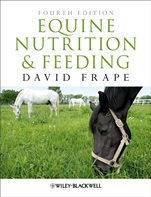
Equine Nutrition and Feeding
ISBN 9781405195461
Autor: David Frape
Wydawca: Wiley
Dostępność: 3-6 tygodni
Cena: 355,95 zł
Przed złożeniem zamówienia prosimy o kontakt mailowy celem potwierdzenia ceny.
ISBN13: |
9781405195461 |
ISBN10: |
1405195460 |
Autor: |
David Frape |
Oprawa: |
Paperback |
Rok Wydania: |
2010-06-18 |
Numer Wydania: |
4th Edition |
Ilość stron: |
512 |
Wymiary: |
246x189 |
Tematy: |
MZ |
Since the first edition of Equine Nutrition and Feeding was published in 1986, it has become the seminal work on the subject. It covers all the key topics that you need to know for your equine nutrition degree course. This comprehensive and clearly evidenced textbook covers how food is digested and nutrients are used in growing, working and breeding horses. It also explains the scientific basis for calculating nutrient and dietary requirements in an understandable manner, and shows you how to do these calculations. Special attention is also given to grassland and pasture, and to housing and diet–related diseases.
Additional, student–friendly features include:References to the most up–to–date information, including ‘Nutrient Requirements of Horses’, from the National Research Council (2007).Case histories to provide practical examples.Study questions at the end of each chapter to help you to revise.A comprehensive glossary of terms and abbreviations.
Changes to this Fourth Edition:Evidence base has been expanded, with 646 new research reports and papers being incorporated.Extensively revised to make navigation easier.A new section is dedicated to the weaning and growth of the foal.
This book is the essential text for any undergraduate and postgraduate student of equine nutrition, equine veterinary medicine, equine veterinary nursing or agricultural science. It is also used by equine nutritionists and horse owners.
Spis treści:
Foreword.
Introduction to the Fourth Edition.
Acknowledgements.
List of Abbreviations.
1 The Digestive System.
The mouth.
The stomach and small intestine.
The large intestine.
Study questions.
Further reading.
2 Utilization of the Products of Dietary Energy and Protein.
Carbohydrate, fat and protein as sources of energy, and the hormonal regulation of energy.
Energy metabolism.
Dietary protein.
Protein requirements for maintenance.
Amino acids.
Non–protein nitrogen.
Laminitis and energy intake.
Study questions.
Further reading.
3 The Roles of Major Minerals and Trace Elements.
Major minerals.
Trace elements.
Study questions.
Further reading.
4 Vitamin and Water Requirements.
Vitamin requirements.
Water requirements and fluid losses.
Study questions.
Further reading.
5 Ingredients of Horse Feeds.
Roughage.
‘Processed’ feeds.
Functions of hay and use of other bulky feeds.
Compounded nuts.
Coarse mixes.
Cereals.
Other lesser ingredients and by–products.
Fat supplements.
Protein concentrates.
Pre– and pro–biotics.
Dietary vitamin and mineral supplements.
Feed storage.
Natural and contaminant toxicants in feeds.
Feed additives.
Prohibited substances.
Study questions.
Further reading.
6 Estimating Nutrient Requirements.
Relationship of capacity for feed to body weight.
Concentrates and roughages.
Feed energy.
Digestible energy, protein and mineral requirements based on NRC (2007) recommendations.
Ration formulation using the DE and NE systems.
Energy and protein requirements based on INRA feed units.
Energy, protein, mineral and micronutrient feed values as determined by the INRA system.
Simple ration formulation.
Feed type, rate of intake, appetite, frequency and processing.
Shelf–life of feeds, feed contaminants and government regulations.
Study questions.
Further reading.
7 Feeding the Breeding Mare, Foal and Stallion.
The oestrous cycle and fertility.
Gestation.
Parturition.
Lactation.
Weaning procedure.
Feeding the orphan foal.
The stallion.
Study questions.
Further reading.
8 Growth.
Ideal conformation.
Birth weight and early growth.
Later growth and
conformational changes.
Effects of dietary composition.
Developmental orthopaedic disease.
Study questions.
Further reading.
9 Feeding for Performance and the Metabolism of Nutrients During Exercise.
Work and energy expenditure.
Energy substrates and their expenditure.
Training methods.
Muscle energy reserves and feeding before exercise.
The endocrine system.
The vascular and respiratory systems.
Results of exercise.
Blood acid–base balance.
Dietary base excess and ‘fixed’ dietary cation–anion balance.
Dietary protein requirements and exercise.
Feeding methods.
Study questions.
Further reading.
10 Grassland and Pasture Management.
Grassland types.
Pasture as an exercise area.
Nutritional productivity of pasture.
Nutrients required for pasture growth and development.
Sward height.
Intensity of stocking with horses and ruminants.
Grazing behaviour.
Supplements on pasture.
Safety of grazing areas.
Water supplies.
Silage and haylage and their safety.
Grassland improvement.
Tropical grassland and forages.
Poisonous plants.
Homeopathy.
Study questions.
Further reading.
11 Pests and Ailments Related to Grazing Area, Diet and Housing.
Arthropod parasites.
Worm infestations.
Protozoan parasites.
Ailments related to diet.
Pasture ailments.
Liver disease.
Chronic weight loss.
The mature sick or geriatric horse.
Muscle ailments.
Housing.
Study questions.
Further reading.
12 Laboratory Methods for Assessing Nutritional Status and Some Dietary Options.
Metabolic tests.
Diets for liver disease.
Diets for kidney disease.
Bone metabolism.
Other tests.
Procedures for determining causes of suspected nutritional problems.
Study questions.
Further reading.
Appendix A Example Calculation of Dietary Composition Required for a 400 kg Mare in the Fourth Month of
Lactation.
Appendix B Common Dietary Errors in Studs and Racing Stables.
Appendix C Chemical Composition of Feedstuffs Used for Horses.
Appendix D Estimates of Base Excess of a Diet and of Blood Plasma.
Estimate of BE of a diet from its fixed ion content.
Estimate of BE of blood plasma from its bicarbonate concentration.
Glossary.
References and Further Reading.
Conclusion.
Index.
Nota biograficzna:
David Frape BSc (Reading), PhD (Iowa), Dip Agric (Cantab), CBiol, FSB, FRCPath, RNutr, has published numerous papers and articles on equine nutrition. He is also a scientific consultant, a member of the Editorial Board of Equine Veterinary Journal, a member of the Laminitis Trust, and Editor of World Agriculture.
Okładka tylna:
Since the first edition of Equine Nutrition and Feeding was published in 1986, it has become the seminal work on the subject. It covers all the key topics that you need to know for your equine nutrition degree course. This comprehensive and clearly evidenced textbook covers how food is digested and nutrients are used in growing, working and breeding horses. It also explains the scientific basis for calculating nutrient and dietary requirements in an understandable manner, and shows you how to do these calculations. Special attention is also given to grassland and pasture, and to housing and diet–related diseases.
Additional, student–friendly features include:References to the most up–to–date information, including ‘Nutrient Requirements of Horses’, from the National Research Council (2007).Case histories to provide practical examples.Study questions at the end of each chapter to help you to revise.A comprehensive glossary of terms and abbreviations.
Changes to this Fourth Edition:Evidence base has been expanded, with 646 new research
reports and papers being incorporated.Extensively revised to make navigation easier.A new section is dedicated to the weaning and growth of the foal.
This book is the essential text for any undergraduate and postgraduate student of equine nutrition, equine veterinary medicine, equine veterinary nursing or agricultural science. It is also used by equine nutritionists and horse owners.
Koszyk
Książek w koszyku: 0 szt.
Wartość zakupów: 0,00 zł
Informacje


Kontakt
Gambit
Centrum Oprogramowania
i Szkoleń Sp. z o.o.
Al. Pokoju 29b/22-24
31-564 Kraków
Siedziba Księgarni
ul. Kordylewskiego 1
31-542 Kraków
+48 12 410 5991
+48 12 410 5987
+48 12 410 5989
Subskrypcje
Administratorem danych osobowych jest firma Gambit COiS Sp. z o.o. Na podany adres będzie wysyłany wyłącznie biuletyn informacyjny.
Autoryzacja płatności

Informacje na temat autoryzacji płatności poprzez PayU.

© Copyright 2012: GAMBIT COiS Sp. z o.o. Wszelkie prawa zastrzeżone.
Projekt i wykonanie: Alchemia Studio Reklamy