


Wydawcy
Katalog tematyczny
- Archeologia (109)
- Ekonomia, finanse, business (13704)
- Filozofia (1445)
- Historia (3040)
- Języki i językoznawstwo (2356)
- Lifestyle, hobby i rozrywka (475)
- Medycyna (9704)
- Nauki humanistyczne (4)
- Nauki o Ziemi i środowisku (2638)
- Nauki ścisłe (20412)
- Nauki społeczne (8486)
- Nauki techniczne (13450)
- Budownictwo lądowe (1045)
- Budownictwo komunikacyjne (9)
- Hydraulika (33)
- Konstrukcje budowlane (95)
- Mechanika konstrukcji (182)
- Przemysł budowlany (7)
- Chemia przemysłowa (2258)
- Elektronika i telekomunikacja (3287)
- Energetyka (1122)
- Inne nauki stosowane (363)
- Inżynieria biochemiczna (507)
- Inżynieria transportu (232)
- Mechanika i materiały (3316)
- Nauka o środowisku (321)
- Rolnictwo (507)
- Technika, ogólnie (475)
- Prawo (1696)
- Publikacje informacyjne i interdyscyplinarne (1288)
- Religia i wierzenia (917)
- Technika komputerowa (4067)
- Zdrowie, relacje międzyludzkie i rozwój osobisty (657)





Informacje szczegółowe o książce
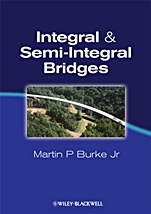
Integral and Semi–Integral Bridges
ISBN 9781405194181
Autor: Martin P Burke Jr
Wydawca: Wiley
Dostępność: 3-6 tygodni
Cena: 622,65 zł
Przed złożeniem zamówienia prosimy o kontakt mailowy celem potwierdzenia ceny.
ISBN13: |
9781405194181 |
ISBN10: |
1405194189 |
Autor: |
Martin P Burke Jr |
Oprawa: |
Hardback |
Rok Wydania: |
2009-07-10 |
Ilość stron: |
272 |
Wymiary: |
252x176 |
Tematy: |
TN |
The typical jointed highway bridge consists of single– and multiple–span bridges with movable roadway joints. Such jointed bridges, in one form or another, have been constructed for centuries. Unfortunately, due to the present demand for dry highway pavements throughout the winter seasons and the consequent use of deicing chemicals, jointed highway bridges have been exposed to serious metal corrosion and concrete deterioration. This durability problem has been so severe that integral bridges are becoming very popular alternatives. Unfortunately, although the elimination of bridge roadway joints solves bridge durability problems, it significantly increases the structural and analysis complexity since bridge superstructures are no longer as free to respond to superimposed loadings and environmental changes.
Integral and Semi–Integral Bridges describes these complexities and shows how they can be minimized to the extent that the great majority of existing jointed bridges can be either replaced with integral bridges or modified with the semi–integral bridge concept.
At present, there is little guidance and few design specifications or codes that govern the design and construction of integral bridges. Consequently, the recommendations provided in this book suggest methods that can be used to produce suitable bridges for various application situations.
Spis treści:
Introduction.
1 Integral Bridges.
2 Bridge Damage and the Pavement G/P Phenomenon.
3 Integral Bridges: Attributes and Limitations.
4 Design of Integral Bridges: A Practitioner’s Approach.
5 Genesis of Integral Bridges.
6 Cracking of Concrete Decks and other Problems with Integral–Type Bridges.
7 Land of no Special Computations.
8 Semi–Integral Bridges: Movements and Forces.
9 Emergence of Semi–Integral Bridges.
10 Elementalistic and Holistic Views for the Evaluation and Design of Structure Movement
Systems.
11 Awareness of Reality in Bridge Design.
Appendix 1 The Pavement G/P Phenomenon: The Neglected Aspect of Jointed Pavement Behavior.
Appendix 2 Glossary.
Appendix 3 Chapter Inset Image Captions
Nota biograficzna:
Martin P Burke Jr PE. Bgean his career at the Bureau of Bridges of the Ohio Department of Transportation where he remained as a career employee and served in all aspects of bridge engineering (design, construction, research, and inspection). After retiring from the Bureau as the Assistant Engineer of Bridges, he joined Burgess and Niple, Consulting Engineers and Architects, at its main office located in Columbus, Ohio. At Burgess and Niple, he served as a Staff Assistant and Technical Advisor for the Bridge Design Group. In that capacity, he was responsible for the conceptual design of major bridge projects, guiding the review of major bridge design, rehabilitation and construction projects, and guiding the inspection of major bridges. Subsequent to his retirement from Burgess and Niple, he established the firm of M. P. Burke Bridges, Inc.
Okładka tylna:
The typical jointed highway bridge consists of single– and multiple–span bridges with movable roadway joints. Such jointed bridges, in one form or another, have been constructed for centuries. Unfortunately, due to the present demand for dry highway pavements throughout the winter seasons and the consequent use of deicing chemicals, jointed highway bridges have been exposed to serious metal corrosion and concrete deterioration. This durability problem has been so severe that integral bridges are becoming very popular alternatives. Unfortunately, although the elimination of bridge roadway joints solves bridge durability problems, it significantly increases the structural and analysis complexity since bridge superstructures are no longer as free to respond to superimposed loadings and environmental changes.
Integral and Se
mi–Integral Bridges describes these complexities and shows how they can be minimized to the extent that the great majority of existing jointed bridges can be either replaced with integral bridges or modified with the semi–integral bridge concept.
At present, there is little guidance and few design specifications or codes that govern the design and construction of integral bridges. Consequently, the recommendations provided in this book suggest methods that can be used to produce suitable bridges for various application situations.
Koszyk
Książek w koszyku: 0 szt.
Wartość zakupów: 0,00 zł
Informacje


Kontakt
Gambit
Centrum Oprogramowania
i Szkoleń Sp. z o.o.
Al. Pokoju 29b/22-24
31-564 Kraków
Siedziba Księgarni
ul. Kordylewskiego 1
31-542 Kraków
+48 12 410 5991
+48 12 410 5987
+48 12 410 5989
Subskrypcje
Administratorem danych osobowych jest firma Gambit COiS Sp. z o.o. Na podany adres będzie wysyłany wyłącznie biuletyn informacyjny.
Autoryzacja płatności

Informacje na temat autoryzacji płatności poprzez PayU.

© Copyright 2012: GAMBIT COiS Sp. z o.o. Wszelkie prawa zastrzeżone.
Projekt i wykonanie: Alchemia Studio Reklamy