


Wydawcy
Katalog tematyczny
- Archeologia (109)
- Ekonomia, finanse, business (13704)
- Filozofia (1445)
- Historia (3040)
- Języki i językoznawstwo (2356)
- Lifestyle, hobby i rozrywka (475)
- Medycyna (9704)
- Nauki humanistyczne (4)
- Nauki o Ziemi i środowisku (2638)
- Nauki ścisłe (20412)
- Nauki społeczne (8486)
- Nauki techniczne (13450)
- Prawo (1696)
- Publikacje informacyjne i interdyscyplinarne (1288)
- Religia i wierzenia (917)
- Technika komputerowa (4067)
- Zdrowie, relacje międzyludzkie i rozwój osobisty (657)





Informacje szczegółowe o książce
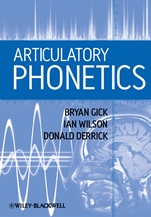
Articulatory Phonetics
ISBN 9781405193214
Autor: Bryan Gick, Ian Wilson, Donald Derrick
Wydawca: Wiley
Dostępność: 3-6 tygodni
Cena: 439,95 zł
Przed złożeniem zamówienia prosimy o kontakt mailowy celem potwierdzenia ceny.
ISBN13: |
9781405193214 |
ISBN10: |
1405193212 |
Autor: |
Bryan Gick, Ian Wilson, Donald Derrick |
Oprawa: |
Hardback |
Rok Wydania: |
2013-01-04 |
Ilość stron: |
272 |
Wymiary: |
252x178 |
Tematy: |
CF |
“Life has just become less lonely for Acoustic and Auditory Phonetics. Gick, Wilson & Derrick have given us a marvelous addition to the classroom, providing an authoritative description of speech articulation, an insightful and balanced guide to the theory of cognitive control of speech, and a highly readable introduction to the methods used in articulatory phonetics. All students of phonetics should study this book!” – Keith Johnson, University of California, Berkeley Articulatory Phonetics presents a concise and non–technical introduction to the physiological processes involved in producing sounds in human speech. With a primary focus on the basic anatomy and physiology of speech and how different kinds of speech sounds are made, the text serves as an ideal guide through this burgeoning area of research. The authors trace the path of the speech production system through to the point where simple vocal sounds are produced, covering the nervous system, muscles, respiration, and phonation. Subsequent chapters continue through the supralaryngeal system with focus on particular sounds of human speech, and introduce some of the more complex anatomical concepts of articulatory phonetics, including coarticulation and articulatory conflict. The most current methodologies, measurement tools, and theories are also addressed. Chapter–by–chapter exercises and a series of original illustrations take the mystery out of the anatomy, physiology, and measurement techniques relevant to speech research. A companion website at www.wiley.com/go/articulatoryphonetics includes exercises for each chapter, images including traces of MRI data and an answer key. Articulatory Phonetics offers non–specialists illuminating insights into this fast–growing field of phonetics.
List of Figures ix Acknowledgments xix Introduction xxi Part I Getting to Sounds 1 1 The Speech System and Basic Anatomy 3 1.1 The Speech Chain 3 1.1.1 The speech production chain 6 1.2 The Building Blocks of Articulatory Phonetics 7 1.2.1 Materials in the body 9 1.3 The Tools of Articulatory Phonetics 10 Exercises 12 References 13 2 Where It All Starts: The Central Nervous System 15 2.1 The Basic Units of the Nervous System 15 2.1.1 The action potential: how the nervous system communicates 18 2.2 The Central Nervous System 19 2.2.1 Speech areas in the brain 22 2.3 Measuring the Brain: fMRI, PET, EEG, MEG, TMS 27 Exercises 30 References 31 3 From Thought to Movement: The Peripheral Nervous System 33 3.1 The Peripheral Nervous System 33 3.1.1 Cranial nerves 34 3.1.2 Spinal nerves 36 3.2 How Muscles Move 38 3.3 Measuring Muscles: EMG 41 3.3.1 The speed of thought to movement 43 Exercises 45 References 46 4 From Movement to Flow: Respiration 47 4.1 Breathing Basics 47 4.1.1 Two principles for respiration 47 4.1.2 Lung volumes 48 4.1.3 Measuring lung volume 50 4.2 The Anatomy of Breathing 51 4.2.1 The lungs 51 4.2.2 The hard parts: bones and cartilages of respiration 53 4.2.3 Passive forces of breathing 57 4.2.4 Inspiratory muscles 57 4.2.5 Expiratory muscles 61 4.2.6 The respiratory cycle revisited 64 4.3 Measuring Airfl ow and Pressure: Pneumotachograph 66 4.4 Sounds 67 4.4.1 /h/ 67 4.4.2 Pitch and loudness 68 Exercises 68 References 69 5 From Flow to Sound 71 5.1 Intrinsic Laryngeal Anatomy 71 5.1.1 The hard parts 72 5.1.2 Intrinsic laryngeal muscles 74 5.2 Sounds: The Voice 78 5.2.1 Modal phonation 78 5.2.2 Theories of modal phonation 80 5.2.3 Pitch control 86 5.2.4 Voicelessness 89 5.3 Measuring the Vocal Folds: EGG 90 Exercises 91 References 94 Part II Articulating Sounds 97 6 Articulating Laryngeal Sounds 99 6.1 Extrinsic Laryngeal Anatomy 100 6.1.1 The hard parts 100 6.1.2 Extrinsic laryngeal muscles 101 6.2 Sounds 106 6.2.1 Non–modal phonation types 106 6.2.2 The glottalic airstream mechanism 114 6.3 Measuring Laryngeal Articulations: Endoscopy 118 Exercises 120 References 122 7 Articulating Velic Sounds 125 7.1 Anatomy of the Velum 125 7.1.1 The hard parts 126 7.1.2 Muscles of the velum 129 7.2 Sounds 134 7.2.1 The oral–nasal distinction: more on the VPP 134 7.2.2 Uvular constrictions: the oropharyngeal isthmus 136 7.3 Measuring the Velum: X–ray Video 138 Exercises 140 References 141 8 Articulating Vowels 143 8.1 The Jaw and Extrinsic Tongue Muscles 146 8.1.1 The hard parts 146 8.1.2 Jaw muscles 148 8.1.3 Extrinsic tongue muscles 152 8.2 Sounds: Vowels 154 8.2.1 High front vowels 156 8.2.2 High back vowels 156 8.2.3 Low vowels 157 8.2.4 ATR and RTR 159 8.3 Measuring Vowels: Ultrasound 160 Exercises 163 References 164 9 Articulating Lingual Consonants 167 9.1 The Intrinsic Tongue Muscles 167 9.1.1 The transversus and verticalis muscles 168 9.1.2 The longitudinal muscles 170 9.2 Sounds: Lingual Consonants 171 9.2.1 Degrees of constriction and tongue bracing 171 9.2.2 Locations of constriction 176 9.3 Measuring Lingual Consonants: Palatography and Linguography 180 Exercises 182 References 186 10 Articulating Labial Sounds 189 10.1 Muscles of the Lips and Face 192 10.1.1 The amazing OO 192 10.1.2 Other lip and face muscles 194 10.2 Sounds: Making Sense of [labial] 196 10.3 Measuring the Lips and Face: Point Tracking and Video 198 Exercises 202 References 203 11 Putting Articulations Together 205 11.1 Coordinating Movements 205 11.1.1 Context–sensitive models 207 11.1.2 Context–invariant models 207 11.1.3 Unifying theories 209 11.2 Coordinating Complex Sounds 210 11.2.1 Lingual–lingual sounds 211 11.2.2 Other complex sounds 216 11.3 Coarticulation 217 11.3.1 Articulatory overlap 218 11.3.2 Articulatory confl ict 219 11.3.3 Modeling coarticulation 220 11.4 Measuring the Whole Vocal Tract: Tomography 221 Exercises 225 References 225 Abbreviations Used in this Book 229 Muscles with Innervation, Origin, and Insertion 233 Index 243
Bryan Gick is Professor and Director of the Interdisciplinary Speech Research Laboratory at the University of British Columbia, and is a Senior Researcher at Haskins Laboratories. Dr. Gick’s work has been featured on NOVA, NPR Morning Edition, and BBC Radio’s “Naked Scientist”. He is the editor of The Oneida Creation Story as told by Demus Elm and Harvey Antone (with F. Lounsbury, 2000). Ian Wilson is Professor and Director of the CLR Phonetics Lab at the University of Aizu. Dr. Wilson was a regular in a 3–month English pronunciation television program aired on the “NHK World” channel. Donald Derrick is a Postdoctoral Fellow at the New Zealand Institute of Language, Brain and Behaviour in Christchurch, and the MARCS Institute in Sydney.
“This book is the perfect companion for all students in phonetics, speech sciences and speech pathologies and complements Keith Johnson’s Acoustic and Auditory Phonetics (3rd edition, 2011, Wiley–Blackwell) as introductory books to phonetic sciences.” ( International Journal of Language & Communication Disorders , 1 May 2013)
Koszyk
Książek w koszyku: 0 szt.
Wartość zakupów: 0,00 zł
Informacje


Kontakt
Gambit
Centrum Oprogramowania
i Szkoleń Sp. z o.o.
Al. Pokoju 29b/22-24
31-564 Kraków
Siedziba Księgarni
ul. Kordylewskiego 1
31-542 Kraków
+48 12 410 5991
+48 12 410 5987
+48 12 410 5989
Subskrypcje
Administratorem danych osobowych jest firma Gambit COiS Sp. z o.o. Na podany adres będzie wysyłany wyłącznie biuletyn informacyjny.
Autoryzacja płatności

Informacje na temat autoryzacji płatności poprzez PayU.

© Copyright 2012: GAMBIT COiS Sp. z o.o. Wszelkie prawa zastrzeżone.
Projekt i wykonanie: Alchemia Studio Reklamy