


Wydawcy
Katalog tematyczny
- Archeologia (109)
- Ekonomia, finanse, business (13704)
- Filozofia (1445)
- Historia (3040)
- Języki i językoznawstwo (2356)
- Lifestyle, hobby i rozrywka (475)
- Medycyna (9704)
- Nauki humanistyczne (4)
- Nauki o Ziemi i środowisku (2638)
- Nauki ścisłe (20412)
- Nauki społeczne (8486)
- Nauki techniczne (13450)
- Budownictwo lądowe (1045)
- Budownictwo komunikacyjne (9)
- Hydraulika (33)
- Konstrukcje budowlane (95)
- Mechanika konstrukcji (182)
- Przemysł budowlany (7)
- Chemia przemysłowa (2258)
- Elektronika i telekomunikacja (3287)
- Energetyka (1122)
- Inne nauki stosowane (363)
- Inżynieria biochemiczna (507)
- Inżynieria transportu (232)
- Mechanika i materiały (3316)
- Nauka o środowisku (321)
- Rolnictwo (507)
- Technika, ogólnie (475)
- Prawo (1696)
- Publikacje informacyjne i interdyscyplinarne (1288)
- Religia i wierzenia (917)
- Technika komputerowa (4067)
- Zdrowie, relacje międzyludzkie i rozwój osobisty (657)





Informacje szczegółowe o książce
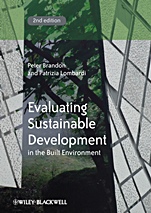
Evaluating Sustainable Development in the Built Environment
ISBN 9781405192583
Autor: Peter S. Brandon, Patrizia Lombardi
Wydawca: Wiley
Dostępność: 3-6 tygodni
Cena: 443,10 zł
Przed złożeniem zamówienia prosimy o kontakt mailowy celem potwierdzenia ceny.
ISBN13: |
9781405192583 |
ISBN10: |
1405192585 |
Autor: |
Peter S. Brandon, Patrizia Lombardi |
Oprawa: |
Hardback |
Rok Wydania: |
2010-10-28 |
Numer Wydania: |
2nd Edition |
Ilość stron: |
280 |
Wymiary: |
251x180 |
Tematy: |
TN |
Sustainable development remains one of the most important challenges facing all stakeholders in the built environment, yet few have addressed the question of measurement. If we can’t measure and assess sustainable development, then how do we know we have made progress? This question is fundamental to the subject of sustainable development in the built environment. There are literally hundreds of indicators and assessment methods for evaluating sustainable development, but these often conflict, are badly structured or do not have a common vocabulary.
The first edition of Evaluating Sustainable Development was extremely well received as it provided an introduction and insight to this important topic in a way that was easy to read and still comprehensive. The second edition, completely updated to reflect the significant advances and new insights that have been made since publication of the first edition, continues to provide guidance on the techniques that can be used to assess sustainable development in a rigorous manner, well illustrated with case studies and follow up references. It remains the ideal starting point for those trying to get a handle on the subject and for those who wish to examine a structured and systematic approach to the evaluation of sustainable development in the built environment.
Spis treści:
Preface.
1. Setting the context.
Revise Chapter to include all the developments since the last book was written together with an understanding of the importance of context.
2. Approaches to Evaluation.
General update required.
3. Time and Sustainability.
Update and extend the Chapter slightly.
4. Proposed Framework for Evaluating SD.
Update and expand to give more explanation framework. This is a key feature of the book as more people practice its structure.
5. Framework as a Structuring Tool: Case Studies.
Update and add new case studies.
6. Assessment Methods.
Update to includes critiqu
e of methods.
7. Indicators.
New Chapter: Includes critique of metrics and indicators currently used for measuring progress toward Sustainable Development.
8. Participation and democracy.
New Chapter: This is a new area which was not well developed in the original book and needs greater emphasis.
9. Towards Management Systems and Protocols.
Complete revision and expansion of the Chapter. It is hoped to find significant case studies of Sustainable Development Management which were not available for the original.
10. Future Issues.
Update the whole chapter to take into account the new thinking on sustainable development.
Index
Nota biograficzna:
Professor Peter Brandon is Director of Salford University ′Think Lab′ and Director of Strategic Programmes, School of Construction and Propoerty Management, University of Salford. Professor Patrizia Lombardi is a researcher and teacher in the City & Housing Department at the Polytechnic of Turin.
Okładka tylna:
Sustainable development remains one of the most important challenges facing all stakeholders in the built environment, yet few have addressed the question of measurement. If we can’t measure and assess sustainable development, then how do we know we have made progress? This question is fundamental to the subject of sustainable development in the built environment. There are literally hundreds of indicators and assessment methods for evaluating sustainable development, but these often conflict, are badly structured or do not have a common vocabulary.
The first edition of Evaluating Sustainable Development was extremely well received as it provided an introduction and insight to this important topic in a way that was easy to read and still comprehensive. The second edition, completely updated to reflect the significant advances and new insights that have been made since publication of the first edition, continues to provide gu
idance on the techniques that can be used to assess sustainable development in a rigorous manner, well illustrated with case studies and follow up references. It remains the ideal starting point for those trying to get a handle on the subject and for those who wish to examine a structured and systematic approach to the evaluation of sustainable development in the built environment.
Koszyk
Książek w koszyku: 0 szt.
Wartość zakupów: 0,00 zł
Informacje


Kontakt
Gambit
Centrum Oprogramowania
i Szkoleń Sp. z o.o.
Al. Pokoju 29b/22-24
31-564 Kraków
Siedziba Księgarni
ul. Kordylewskiego 1
31-542 Kraków
+48 12 410 5991
+48 12 410 5987
+48 12 410 5989
Subskrypcje
Administratorem danych osobowych jest firma Gambit COiS Sp. z o.o. Na podany adres będzie wysyłany wyłącznie biuletyn informacyjny.
Autoryzacja płatności

Informacje na temat autoryzacji płatności poprzez PayU.

© Copyright 2012: GAMBIT COiS Sp. z o.o. Wszelkie prawa zastrzeżone.
Projekt i wykonanie: Alchemia Studio Reklamy