


Wydawcy
Katalog tematyczny
- Archeologia (109)
- Ekonomia, finanse, business (13704)
- Filozofia (1445)
- Historia (3040)
- Języki i językoznawstwo (2356)
- Lifestyle, hobby i rozrywka (475)
- Medycyna (9704)
- Nauki humanistyczne (4)
- Nauki o Ziemi i środowisku (2638)
- Nauki ścisłe (20412)
- Nauki społeczne (8486)
- Edukacja (229)
- Kryminologia, opieka spełeczna (284)
- Obronność (10)
- Polityka (1389)
- Psychologia (777)
- Socjologia (410)
- Społeczeństwo i kultura (187)
- Nauki techniczne (13450)
- Prawo (1696)
- Publikacje informacyjne i interdyscyplinarne (1288)
- Religia i wierzenia (917)
- Technika komputerowa (4067)
- Zdrowie, relacje międzyludzkie i rozwój osobisty (657)





Informacje szczegółowe o książce
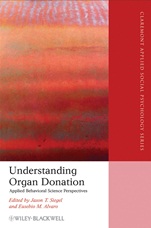
Understanding Organ Donation: Applied Behavioral Science Perspectives
ISBN 9781405192132
Autor: Jason T. Siegel, Eusebio M. Alvaro
Wydawca: Wiley
Dostępność: 3-6 tygodni
Cena: 609,00 zł
Przed złożeniem zamówienia prosimy o kontakt mailowy celem potwierdzenia ceny.
ISBN13: |
9781405192132 |
ISBN10: |
1405192135 |
Autor: |
Jason T. Siegel, Eusebio M. Alvaro |
Oprawa: |
Hardback |
Rok Wydania: |
2009-12-04 |
Ilość stron: |
392 |
Wymiary: |
238x163 |
Tematy: |
JC |
The worldwide need for transplantable organs continues to increase. Over 100,000 people are on the waiting list in America alone. This groundbreaking book introduces the realm of organ donation and provides wide–ranging examples of successful theory–based interventions across real–world situations.
With contributions from scholars and professionals actively working in this field, and reporting on the very latest developments, this volume provides a concrete example of how evidence–based, translational research functions in a real–world nascent field, with life or death outcomes.
Understanding Organ Donation is an invaluable resource for organ donor professionals, applied social psychologists, health psychologists, and policy–makers, as well as professors and students in health communication who are interested in theory–based research in real–world contexts.
Spis treści:
Preface (Jason T. Siegel and Eusebio M. Alvaro).
INTRODUCTION AND OVERVIEW.
Chapter 1: Applying Psychology to Health Behavior Interventions: Not Last Decade’s Approach (Stuart Oskamp).
Chapter 2: Organ Donation: An Overview of the Field (Mary Ganikos).
ORGAN DONOR INTERVENTIONS.
PART I: MEDIA AND COMMUNITY INTERVENTIONS.
Chapter 3: Where have we been and where to next: A review and synthesis of organ donation media campaigns (Eusebio M. Alvaro and Jason T. Siegel).
Chapter 4: The Effectiveness of Donate Life – African American Campaign in Minneapolis–St. Paul (David Radosevich, Susan Gunderson, Bill Tendle, Clarence Jones, and Susan Mau Larson).
Chapter 5: Organ Donation and Transplantation: A New Tradition of Sharing for Alaska Natives (Margaret D. Allen and Barbara Stillwater).
Chapter 6: First Person Consent Ohio Donor Registry: The Influence of the First Person Consent Registry on Increasing Organ Donation (Kimbe
rly Downing and Linda Jones).
Chapter 7: Improving Organ Donation in Chinese Communities in New York: Perspective from Consortium Partners (Paul L. Hebert, Julia Rivera, Kelly Eng, Regina Lee, Susan Seto–Yee).
Chapter 8: Intervention research with American Indian, Alaska Native and First Nations People: An Organ and Tissue Donation Exemplar (Nancy L. Fahrenwald).
PART II: ORGANIZATIONAL INTERVENTIONS.
Chapter 9: Behavioral research in hospital settings: The Family Communication Coordinator (FCC) Protocol and research applications in organ donation (Diane Dodd–McCue).
Chapter 10: Design and Evaluation of Worksite Promotions of Organ Donation: Real–world Challenges and Strategies to Address Them (Michael T. Quinn, Jackie Gnepp, G. Caleb Alexander, Diane Hollingsworth, Kate Grubbs O’Connor, Willa Lang, Joshua Klayman, and David Meltzer).
Chapter 11: Home Care Association of Louisiana (HCLA) Donate Life Workplace Partnership for Organ/Tissue Donation (Carolyn Johnson & Lawrence Webber).
Chapter 12: Promoting Organ Donation through College Student Campaigns (Thomas Hugh Feeley, Ashley E. Anker, Donald Vincent, and Carla R. Williams).
Chapter 13: Take Time to Talk: 3 Pilot Areas Show how little it Takes to Improve Communication between Recovery Professionals and Funeral Directors (Catherine Paykin, Gigi Politoski, and Linda Singleton–Driscoll).
Chapter 14: The Challenges of Conducting and Evaluating Organ Donation Campaigns (Susan Morgan).
PART III: BROAD PERSPECTIVES AND FUTURE DIRECTIONS.
Chapter 15: Community organizations and applied research: Project initiation, implementation, and dealing with those applied researchers (Sara Pace Jones and David Bosch).
Chapter 16: Evaluating the effects of community–based health interventions: Seeking impact and saving lives via organ and tissue donation promotion ef
forts (Robert Fischer).
Chapter 17: The value of qualitative studies of interpersonal conversations about health topics: A study of family discussions of organ donation as illustration (Anita Pomerantz).
Chapter 18: Ethically and Effectively Advancing Living Donation: How should it be done? (Amy D. Waterman and James R. Rodrigue).
Chapter 19: A card in hand: A donning recognition of factors for increasing donor registration (Jason T. Siegel, Eusebio M. Alvaro, and Zachary P Hohman).
Chapter 20: There’s no so practical… Theoretical Translations and Organ Donation (William D. Crano).
Nota biograficzna:
Jason T. Siegel is part of the Research Faculty at Claremont Graduate University’s School of Behavioral and Organizational Sciences. Dr. Siegel, Co–director of the Institute of Health Psychology and Prevention Science, has been researching organ–donation–related behavior for nearly a decade.
Eusebio M. Alvaro is a Research Faculty member at Claremont Graduate University’s School of Behavioral and Organizational Science where he is Co–Director of the Institute of Health Psychology and Prevention Science. He is a behavioral scientist conducting research on overcoming resistance to health behavior change.
Okładka tylna:
The worldwide need for transplantable organs continues to increase. Over 100,000 people are on the waiting list in America alone. This groundbreaking book introduces the realm of organ donation and provides wide–ranging examples of successful theory–based interventions across real–world situations.
With contributions from scholars and professionals actively working in this field, and reporting on the very latest developments, this volume provides a concrete example of how evidence–based, translational research functions in a real–world nascent field, with life or death outcom
es.
Understanding Organ Donation is an invaluable resource for organ donor professionals, applied social psychologists, health psychologists, and policy–makers, as well as professors and students in health communication who are interested in theory–based research in real–world contexts.
Koszyk
Książek w koszyku: 0 szt.
Wartość zakupów: 0,00 zł
Informacje


Kontakt
Gambit
Centrum Oprogramowania
i Szkoleń Sp. z o.o.
Al. Pokoju 29b/22-24
31-564 Kraków
Siedziba Księgarni
ul. Kordylewskiego 1
31-542 Kraków
+48 12 410 5991
+48 12 410 5987
+48 12 410 5989
Subskrypcje
Administratorem danych osobowych jest firma Gambit COiS Sp. z o.o. Na podany adres będzie wysyłany wyłącznie biuletyn informacyjny.
Autoryzacja płatności

Informacje na temat autoryzacji płatności poprzez PayU.

© Copyright 2012: GAMBIT COiS Sp. z o.o. Wszelkie prawa zastrzeżone.
Projekt i wykonanie: Alchemia Studio Reklamy