


Wydawcy
Katalog tematyczny
- Archeologia (109)
- Ekonomia, finanse, business (13704)
- Filozofia (1445)
- Historia (3040)
- Języki i językoznawstwo (2356)
- Lifestyle, hobby i rozrywka (475)
- Medycyna (9704)
- Nauki humanistyczne (4)
- Nauki o Ziemi i środowisku (2638)
- Nauki ścisłe (20412)
- Nauki społeczne (8486)
- Nauki techniczne (13450)
- Prawo (1696)
- Publikacje informacyjne i interdyscyplinarne (1288)
- Religia i wierzenia (917)
- Technika komputerowa (4067)
- Zdrowie, relacje międzyludzkie i rozwój osobisty (657)





Informacje szczegółowe o książce
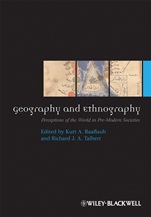
Geography and Ethnography: Perceptions of the World in Pre–Modern Societies
ISBN 9781405191463
Autor: Kurt A. Raaflaub, Richard J. A. Talbert
Wydawca: Wiley
Dostępność: 3-6 tygodni
Cena: 637,35 zł
Przed złożeniem zamówienia prosimy o kontakt mailowy celem potwierdzenia ceny.
ISBN13: |
9781405191463 |
ISBN10: |
1405191465 |
Autor: |
Kurt A. Raaflaub, Richard J. A. Talbert |
Oprawa: |
Hardback |
Rok Wydania: |
2010-01-22 |
Ilość stron: |
376 |
Wymiary: |
254x177 |
Tematy: |
HB |
Societies have typically reflected upon their place in the world in relation to the space in which they live, those who surround them, the universe, and divine forces that they believe determine their fate. In this fascinating volume, the editors bring together leading specialists who have analyzed the thoughts and records of a wide range of pre–modern societies from around the globe and across the ages. Some societies, like the Chinese, Greeks, and Arabs, have left extensive written cultural and scientific documentation. Others, as in India and Mesopotamia, used myth and epic for memory and understanding. Still others, such as the Incas and Aztecs, did not write, but their ideas and beliefs can be recovered from later narratives, as well as from their artwork, monuments, and shaping of the landscape. A wide range of common questions are examined, from evidence, interpretations, and methodology, to the way geographic and ethnographic concepts and views of the cosmos were developed and expressed. The resulting cross–cultural comparisons clearly describe the specific characteristics of these societies, how they differ and overlap. What emerges is a rich and astonishing variety of responses developed to meet universal challenges.
List of Figures. Notes on Contributors. Series Editor’s Preface. 1 Introduction ( Richard J. A. Talbert, University of North Carolina, Chapel Hill and Kurt A. Raaflaub, Brown University ). 2 Where the Black Antelope Roam: Dharma and Human Geography in India ( Christopher Minkowski, University of Oxford ). 3 Humans, Demons, Gods and Their Worlds: The Sacred and Scientific Cosmologies of India ( Kim Plofker, Union College in Schenectady NY ). 4 Structured Perceptions of Real and Imagined Landscapes in Early China ( Hsin–Mei Agnes Hsu, China Institute in New York ). 5 Nonary Cosmography in Ancient China ( John B. Henderson, Louisiana State University, Baton Rouge ). 6 Knowledge of Other Cultures in China’s Early Empires ( Michael Loewe, University of Cambridge, retired ). 7 The Mississippian Peoples’ Worldview ( Kathleen DuVal, University of North Carolina, Chapel Hill ). 8 Aztec Geography and Spatial Imagination ( Barbara E. Mundy, Fordham University ). 9 Inca Worldview ( Catherine Julien, Western Michigan University ). 10 Masters of the Four Corners of the Heavens: Views of the Universe in Early Mesopotamian Writings ( Piotr Michalowski, University of Michigan ). 11 The World and the Geography of Otherness in Pharaonic Egypt ( Gerald Moers, University of Göttingen ). 12 On Earth As in Heaven: The Apocalyptic Vision of World Geography from Urzeit to Endzeit According to the Book of Jubilees ( James M. Scott, Trinity Western University, British Columbia ). 13 I Know the Number of the Sand and the Measure of the Sea′: Geography and Difference in the Early Greek World ( Susan Guettel Cole, State University of New York, Buffalo ). 14 Continents, Climates, and Cultures: Greek Theories of Global Structure ( James Romm, Bard College ). 15 The Geographical Narrative of Strabo of Amasia ( Daniela Dueck, Bar Ilan University, Israel ). 16 The Roman Worldview: Beyond Recovery? ( Richard J. A. Talbert, University of North Carolina, Chapel Hill ). 17 The Medieval Islamic Worldview: Arabic Geography in Its Historical Context ( Adam J. Silverstein, University of Oxford ). 18 The Book of Curiosities : An Eleventh–Century Egyptian View of the Lands of the Infidels ( Emilie Savage–Smith, University of Oxford, St Cross College ). 19 Geography and Ethnography in Medieval Europe: Classical Traditions and Contemporary Concerns ( Natalia Lozovsky, Independent Scholar ). 20 Europeans Plot the Wider World, 1500–1750 ( David Buisseret, University of Texas at Arlington, retired ). Index.
Kurt A. Raaflaub is David Herlihy University Professor, and Professor of Classics and History, at Brown University. His numerous publications include The Discovery of Freedom (2004) and Origins of Democracy in Ancient Greece (2007, co–authored with Josiah Ober and Robert Wallace). He is also the editor of Social Struggles in Archaic Rome (Blackwell, 2005), and War and Peace in the Ancient World (Blackwell, 2007), and co–editor of A Companion to Archaic Greece (Wiley–Blackwell, 2009). Richard J.A. Talbert is William Rand Kenan, Jr, Professor of History and Classics at The University of North Carolina at Chapel Hill. He is the editor of the Barrington Atlas of the Greek and Roman World (2000), and co–editor of Space in the Roman World: Its Perception and Presentation (2004), as well as of Cartography in Antiquity and the Middle Ages: Fresh Perspectives, New Methods (2008). His major study Rome’s World: The Peutinger Map Reconsidered will appear in 2010.
"In sum, the editors, and the publisher, are to be congratulated on producing, a stimulating volume which provides expert guidance to many aspects of the foreign country which is the past." (Aestimatio: Critical Reviews in the History of Science, 2011) "The 20 papers originated in a workshop held at Brown University in March 2006 and fully reflect the series′ world focus and broad definition of ancient societies." ( CHOICE , July 2010)
Koszyk
Książek w koszyku: 0 szt.
Wartość zakupów: 0,00 zł
Informacje


Kontakt
Gambit
Centrum Oprogramowania
i Szkoleń Sp. z o.o.
Al. Pokoju 29b/22-24
31-564 Kraków
Siedziba Księgarni
ul. Kordylewskiego 1
31-542 Kraków
+48 12 410 5991
+48 12 410 5987
+48 12 410 5989
Subskrypcje
Administratorem danych osobowych jest firma Gambit COiS Sp. z o.o. Na podany adres będzie wysyłany wyłącznie biuletyn informacyjny.
Autoryzacja płatności

Informacje na temat autoryzacji płatności poprzez PayU.

© Copyright 2012: GAMBIT COiS Sp. z o.o. Wszelkie prawa zastrzeżone.
Projekt i wykonanie: Alchemia Studio Reklamy