


Wydawcy
Katalog tematyczny
- Archeologia (109)
- Ekonomia, finanse, business (13704)
- Filozofia (1445)
- Historia (3040)
- Języki i językoznawstwo (2356)
- Lifestyle, hobby i rozrywka (475)
- Medycyna (9704)
- Nauki humanistyczne (4)
- Nauki o Ziemi i środowisku (2638)
- Nauki ścisłe (20412)
- Nauki społeczne (8486)
- Nauki techniczne (13450)
- Prawo (1696)
- Publikacje informacyjne i interdyscyplinarne (1288)
- Religia i wierzenia (917)
- Technika komputerowa (4067)
- Zdrowie, relacje międzyludzkie i rozwój osobisty (657)





Informacje szczegółowe o książce
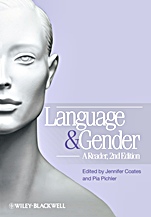
Language and Gender: A Reader
ISBN 9781405191449
Autor: Jennifer Coates, Pia Pichler
Wydawca: Wiley
Dostępność: 3-6 tygodni
Cena: 473,55 zł
Przed złożeniem zamówienia prosimy o kontakt mailowy celem potwierdzenia ceny.
ISBN13: |
9781405191449 |
ISBN10: |
1405191449 |
Autor: |
Jennifer Coates, Pia Pichler |
Oprawa: |
Hardback |
Rok Wydania: |
2011-03-04 |
Numer Wydania: |
2nd Edition |
Ilość stron: |
640 |
Wymiary: |
250x182 |
Tematy: |
CF |
The new edition of Language and Gender: A Reader responds to the wealth of research that has shaped the field since the book s initial publication in 1998. Coates and Pichler combine new research articles with foundational works, and they accordingly draw on research from all over the world including Brazil, China, and Japan as well as North America and Europe. The Reader discusses a wide range of topics including single and mixed–sex talk; language, gender and power; gendered talk in the public domain; and language, gender and sexuality.
The volume is divided into ten sections exploring gender differences in pronunciation and grammar; in conversational practice; power and dominance in mixed talk; same–sex talk; talk in the public domain; and debates on gender and power and on difference or dominance. There are two new sections, on language, gender, and sexuality; and on debates around the relevance of gender in spoken interaction. The Reader concludes by discussing new directions in language and gender research, including the concept of the Community of Practice, the significance of gender and language ideologies, and the influence of social constructionism on the field. The editors have kept the strongest features of the previous edition, while adding in twenty–three new and important pieces.
Coates and Pichler have assembled an invaluable resource that engages the reader with the research and asks what is next for this vibrant and wide–ranging field. Introducing students to key theoretical debates and demonstrating the variety of methodologies that can be applied to the study of language and gender, this unique collection is a vital resource for anyone exploring the issues of women s and men s talk.
Editors Note.
Transcription Conventions 1.
Transcription Conventions 2.
Sources.
Introduction.
Part I Gender Differences in Pronunciation and Grammar.
1 Yanyuwa: Men speak one way, women speak another (John Bradley).
2 Sex and Covert Prestige (Peter Trudgill).
3 Linguistic Variation and Social Function (Jenny Cheshire).
4 Girl–talk/Boy–talk: Sex Differences in Adolescent Speech (Edina Eisikovits).
5 Black Women in the Rural South: Conservative and Innovative (Patricia C. Nichols).
6 Gender and Sociolinguistic Variation (Penelope Eckert).
Part II Gender and Conversational Practice.
7 Complimenting A Positive Politeness Strategy (Janet Holmes).
8 Cooperation and Competition Across Girls Play Activities (Marjorie Harness Goodwin).
9 Expressions of Gender: An Analysis of Pupils Gendered Discourse Styles in Small Group Classroom Discussions (Julia Davies).
10 Gender and the Use of Exclamation Points in Computer–Mediated Communication: An Analysis of Exclamations Posted to Two Electronic Discussion Lists (Carol Waseleski).
Part III Gender, Power, and Dominance in Mixed Talk.
11 Women s Place in Everyday Talk: Reflections on Parent Child Interaction (Candace West and Don H. Zimmerman).
12 The Sounds of Silence: How Men Silence Women in Marital Relations (Victoria Leto DeFrancisco).
13 Talk Control: An Illustration from the Classroom of Problems in Analysing Male Dominance of Conversation (Joan Swann).
14 Participation in Electronic Discourse in a Feminist Field (Susan C. Herring, Deborah A. Johnson and Tamra DiBenedetto).
15 Zuiqian Deficient Mouth : Discourse, Gender and Domestic Violence in Urban China (Jie Yang).
Part IV Same–Sex Talk.
16 Gossip Revisited: Language in All–Female Groups (Jennifer Coates).
17 Why Be Normal? : Language and Identity Practices in a Community of Nerd Girls (Mary Bucholtz).
18 Hybrid or In Between Cultures: Traditions of Marriage in a Group of British Bangladeshi Girls (Pia Pichler).
19 Performing Gender Identity: Young Men s Talk and the Construction of Heterosexual Masculinity (Deborah Cameron).
20 Pushing at the Boundaries: The Expression of Alternative Masculinities (Jennifer Coates).
21 Playing the Straight Man: Displaying and Maintaining Male Heterosexuality in Discourse (Scott F. Kiesling).
Part V Women s Talk in the Public Domain.
22 Female Speakers of Japanese in Transition (Katsue Akiba Reynolds).
23 Governed by the Rules? The Female Voice in Parliamentary Debates (Sylvia Shaw).
24 Doing Femininity at Work: More than Just Relational Practice (Janet Holmes and Stephanie Schnurr).
25 Communities of Practice at Work: Gender, Facework and the Power of Habitus at an All–Female Police Station and a Feminist Crisis Intervention Center in Brazil (Ana Cristina Ostermann).
26 Trial Discourse and Judicial Decision–Making: Constraining the Boundaries of Gendered Identities (Susan Ehrlich).
Part VI Language, Gender, and Sexuality.
27 Lesbian Bar Talk in Shinjuku, Tokyo (Hideko Abe).
28 Boys Talk: Hindi, Moustaches and Masculinity in New Delhi (Kira Hall).
29 Queering Gay Men s English (William L. Leap).
30 Indexing Polyphonous Identity in the Speech of African American Drag Queens (Rusty Barrett).
31 Language and Sexuality in Spanish and English Dating Chats (Marisol del–Teso–Craviotto).
Part VII Theoretical Debates (1): Gender or Power?
32 Women s Language or Powerless Language ? (William M. O Barr and Bowman K. Atkins).
33 Are Powerless Communication Strategies the Japanese Norm? (Patricia J. Wetzel).
34 When the Doctor is a Lady : Power, Status and Gender in Physician Patient Encounters (Candace West).
Part VIII Theoretical Debates (2): Difference or Dominance?
35 A Cultural Approach to Male Female Miscommunication (Daniel N. Maltz and Ruth A. Borker).
36 Asymmetries: Women and Men Talking at Cross–Purposes (Deborah Tannen).
37 Selling the Apolitical (Senta Troemel–Ploetz).
Part IX Theoretical Debates (3): When is Gender Relevant?
38 Whose Text? Whose Context? (Emanuel A. Schegloff).
39 Gender Relevance in Talk–in–Interaction and Discourse (Ann Weatherall).
40 Yes, But Is It Gender? (Joan Swann).
Part X New Directions in Language and Gender Research.
41 Communities of Practice: Where Language, Gender, and Power All Live (Penelope Eckert and Sally McConnell Ginet).
42 Gender and Language Ideologies (Deborah Cameron).
43 Social Constructionism, Postmodernism and Feminist Sociolinguistics (Janet Holmes).
Index.
Jennifer Coates is Professor Emeritus of English Language and Linguistics at Roehampton University London. She is author of Women Talk (Wiley–Blackwell, 1996), Men Talk: Stories in the Making of Masculinities (Wiley–Blackwell, 2003), Women, Men and Language (3 rd edition, 2004), and The Sociolinguistics of Narrative (edited with Joanna Thornborrow, 2005). She was made a Fellow of the English Association in 2002.
Pia Pichler is Senior Lecturer in Linguistics at Goldsmiths, University of London. She is co–editor of Gender and Spoken Interaction (with Eva Eppler, 2009), and author of Talking Young Femininities (2009).
Overall, this new edition is successful. Readers familiar with the original version will hopefully find the changes warranted and in line with the goals outlined by the authors in their introduction. It remains a highly useful text for graduate and advanced undergraduate courses in language and gender and for
anyone interested in the historical and current theoretical and methodological approaches to research on gender and language. (Linguist, 27 August 2012)
Koszyk
Książek w koszyku: 0 szt.
Wartość zakupów: 0,00 zł
Informacje


Kontakt
Gambit
Centrum Oprogramowania
i Szkoleń Sp. z o.o.
Al. Pokoju 29b/22-24
31-564 Kraków
Siedziba Księgarni
ul. Kordylewskiego 1
31-542 Kraków
+48 12 410 5991
+48 12 410 5987
+48 12 410 5989
Subskrypcje
Administratorem danych osobowych jest firma Gambit COiS Sp. z o.o. Na podany adres będzie wysyłany wyłącznie biuletyn informacyjny.
Autoryzacja płatności

Informacje na temat autoryzacji płatności poprzez PayU.

© Copyright 2012: GAMBIT COiS Sp. z o.o. Wszelkie prawa zastrzeżone.
Projekt i wykonanie: Alchemia Studio Reklamy