


Wydawcy
Katalog tematyczny
- Archeologia (109)
- Ekonomia, finanse, business (13704)
- Filozofia (1445)
- Historia (3040)
- Języki i językoznawstwo (2356)
- Lifestyle, hobby i rozrywka (475)
- Medycyna (9704)
- Nauki humanistyczne (4)
- Nauki o Ziemi i środowisku (2638)
- Nauki ścisłe (20412)
- Nauki społeczne (8486)
- Nauki techniczne (13450)
- Budownictwo lądowe (1045)
- Budownictwo komunikacyjne (9)
- Hydraulika (33)
- Konstrukcje budowlane (95)
- Mechanika konstrukcji (182)
- Przemysł budowlany (7)
- Chemia przemysłowa (2258)
- Elektronika i telekomunikacja (3287)
- Energetyka (1122)
- Inne nauki stosowane (363)
- Inżynieria biochemiczna (507)
- Inżynieria transportu (232)
- Mechanika i materiały (3316)
- Nauka o środowisku (321)
- Rolnictwo (507)
- Technika, ogólnie (475)
- Prawo (1696)
- Publikacje informacyjne i interdyscyplinarne (1288)
- Religia i wierzenia (917)
- Technika komputerowa (4067)
- Zdrowie, relacje międzyludzkie i rozwój osobisty (657)





Informacje szczegółowe o książce
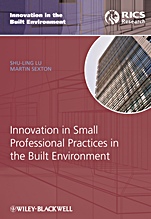
Innovation in Small Professional Practices in the Built Environment
ISBN 9781405191401
Autor: Shu–Ling Lu, Martin Sexton
Wydawca: Wiley
Dostępność: 3-6 tygodni
Cena: 622,65 zł
Przed złożeniem zamówienia prosimy o kontakt mailowy celem potwierdzenia ceny.
ISBN13: |
9781405191401 |
ISBN10: |
1405191406 |
Autor: |
Shu–Ling Lu, Martin Sexton |
Oprawa: |
Hardback |
Rok Wydania: |
2009-05-28 |
Ilość stron: |
240 |
Wymiary: |
252x179 |
Tematy: |
TN |
From the book’s Foreword by Trevor Mole, Managing Director, Property Tectonics; President of the European Association of Building Surveyors and Construction Experts:
‘Shu–Ling and Martin have built on their research work and that of others to produce an understandable and readable insight into innovation in small professional service firms. They have successfully unravelled the complex behavioural and organisational forces taking place and created a framework to help practitioners understand the issues and to fashion the right environment in which to foster innovation and deliver economic value.’
Small professional practices in the built environment are crucial to the success and long–term viability of the design, construction and property industries. This research–based book addresses the urgent need to better understand the nature and process of innovation in these important firms.
The authors offer an analysis of both why and how innovation is a key competitive factor for small professional practices in the built environment. As these practices are located in different business environments and behave in different ways to other types of industry firms, the context–specific methodology to design, implement and assess innovation in small professional practices presented in this book will appeal to researchers and practitioners in surveying and design.
Innovation in Small Professional Practices in the Built Environment makes a significant contribution to an underdeveloped area of innovation by offering new theoretical and practical insights and models grounded in results from a 22–month case study of a small professional practice.
Spis treści:
About the Authors.
Foreword by Trevor Mole.
Chapter 1 Introduction.
1.1 Background.
1.2 Research Problem.
1.3 Summary and Link.
Chapter 2 Key Issues from the Literature.
2.1 Introduc
tion.
2.2 Conceptualisation of Small Professional Practices.
2.3 Definitional Debate on Innovation.
2.4 Market– and Resource–Based View of Innovation.
2.5 Knowledge–Based View of Innovation.
2.6 Key Managerial Challenges for Innovation.
2.7 Key Research Questions.
2.8 Summary and Link.
Chapter 3 Knowledge–Based Innovation Model.
3.1 Introduction.
3.2 Description of Knowledge–Based Innovation Model.
3.3 Continuous Improvement Gap Analysis Framework.
3.4 Research Hypotheses.
3.5 Summary and Link.
Chapter 4 Case Study Methodology.
4.1 Introduction.
4.2 Overall Research Process.
4.3 Case Study Design.
4.4 Research Techniques: Qualitative Data Collection Techniques.
4.5 Research Techniques: Qualitative Data Analysis Techniques.
4.6 Validation – Triangulation Strategy.
4.7 Summary and Link.
Chapter 5 Case Study – Exploratory Phase.
5.1 Introduction.
5.2 Background of the Case Study Company.
5.3 Case Study Firm Perception of Knowledge, Innovation, HC, SC and RC.
5.4 Description of Identified Company Innovations.
5.5 Mode 1: Explorative Innovation Analysis.
5.6 Mode 2: Exploitative Innovation Analysis.
5.7 Summary and Link.
Chapter 6 Case Study – Action Research Phase.
6.1 Introduction.
6.2 Diagnosis.
6.3 Action Planning.
6.4 Action Taking.
6.5 Action Evaluation.
6.6 Specifying Learning.
6.7 Summary and Link.
Chapter 7 Discussion.
7.1 Introduction.
7.2 Types of Knowledge–Based Innovation.
7.3 Hypothesis 1: Knowledge–Based Resources.
7.4 Hypothesis 2: Capabilities.
7.5 Meta–Hypothesis: Knowledge Capital.
7.6 Summary and Link.
Chapter 8 Conclusions.
8.1 Introduction.
8.2 Contribution to Innovation Theory.
8.3 Comment on Research Problem.
8.4 Comment on Research Questions.
8.5 Key Limitations and Future Research.
8.6 Th
eoretical and Practical Implications.
8.7 Policy Implications.
References.
Appendices.
Appendix A: List of Company Documentation.
Appendix B: Cooperation Proposal.
Appendix C: Interview Cooperation Proposal.
Appendix D: Interview Protocol.
Appendix E: Company General Finding Report.
Index.
Nota biograficzna:
Dr Shu–Ling Lu, Lecturer, School of the Built Environment, University of Salford, United Kingdom.
Professor Martin Sexton, Professor of Construction Management and Innovation, School of Construction Management and Engineering, University of Reading, United Kingdom.
Koszyk
Książek w koszyku: 0 szt.
Wartość zakupów: 0,00 zł
Informacje


Kontakt
Gambit
Centrum Oprogramowania
i Szkoleń Sp. z o.o.
Al. Pokoju 29b/22-24
31-564 Kraków
Siedziba Księgarni
ul. Kordylewskiego 1
31-542 Kraków
+48 12 410 5991
+48 12 410 5987
+48 12 410 5989
Subskrypcje
Administratorem danych osobowych jest firma Gambit COiS Sp. z o.o. Na podany adres będzie wysyłany wyłącznie biuletyn informacyjny.
Autoryzacja płatności

Informacje na temat autoryzacji płatności poprzez PayU.

© Copyright 2012: GAMBIT COiS Sp. z o.o. Wszelkie prawa zastrzeżone.
Projekt i wykonanie: Alchemia Studio Reklamy