


Wydawcy
Katalog tematyczny
- Archeologia (109)
- Ekonomia, finanse, business (13704)
- Filozofia (1445)
- Historia (3040)
- Języki i językoznawstwo (2356)
- Lifestyle, hobby i rozrywka (475)
- Medycyna (9704)
- Nauki humanistyczne (4)
- Nauki o Ziemi i środowisku (2638)
- Nauki ścisłe (20412)
- Nauki społeczne (8486)
- Nauki techniczne (13450)
- Prawo (1696)
- Publikacje informacyjne i interdyscyplinarne (1288)
- Religia i wierzenia (917)
- Technika komputerowa (4067)
- Zdrowie, relacje międzyludzkie i rozwój osobisty (657)





Informacje szczegółowe o książce
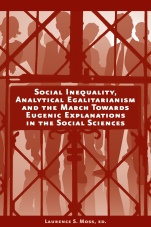
Social Inequality, Analytical Egalitarianism, and the March Towards Eugenic Explanations in the Social Sciences
ISBN 9781405191241
Autor: Laurence S. Moss
Wydawca: Wiley
Dostępność: 3-6 tygodni
Cena: 252,00 zł
Przed złożeniem zamówienia prosimy o kontakt mailowy celem potwierdzenia ceny.
ISBN13: |
9781405191241 |
ISBN10: |
1405191244 |
Autor: |
Laurence S. Moss |
Oprawa: |
Paperback |
Rok Wydania: |
2008-10-30 |
Ilość stron: |
300 |
Wymiary: |
232x159 |
Tematy: |
KC |
Among contemporary social scientists and especially those holding academic appointments, it is rare to find any advocates of eugenics. The implementation of the Nazi eugenic program against Jewish population and other ′undesirable′ groups in Germany, Poland, and later occupied territories, has discredited eugenic programs. The United Nations was created at the end of the World War II to help eliminate eugenic recipes and ethnic cleansing programs. Its major tools in this war against ethnic cleansing are naming the offending government and shaming that government until they stop their ethnic cleaning programs.
Professors Sandra J. Peart and David M. Levy created something of a sensation among historians when they published The ‘Vanity of the Philosopher’: From Equality to Hierarchy in Post–classical Economics. Peart and Levy helped break the conspiracy of silence centered about this disturbing use of social scientific ideas in economic policy making. Peart and Levy focused on the transition in the mid–19th century from classical school economics to post–classical or what is often called ′neoclassical′ economics. They explain the importance of ′analytic egalitarianism′ in economics and the sad consequences of moving away from this approach.
This book gathers together several essays by historians of economics who express varying reactions to the Peart–Levy thesis. Essays by Charles R. McCann and Andrew Farrant are supportive of the Peart–Levy thesis. J. Daniel Hammond demonstrates how a evangelical Christians carried forward ideas about natural equality in the 19th century. More critical reactions to the Peart–Levy thesis are included in papers by Kevin D. Hoover and Joseph Persky. In a short essay, ′Thinking About Analytical Egalitarianism,′ Peart and Levy offer a reaction to their critics.
This book ends with an important monograph by Professor Terenzio Ma
ccabelli. At the end of the 19th century, a number of writers tried to put racism on a scientific basis. Their thoughts and methods actually made their way into the more orthodox journal literature. Racial and eugenic arguments were used to explain and account for economic inequality. A scholarly index is included.
Spis treści:
PART I. Editor’s Introduction.
PART II. On the Peart and Levy Thesis.
Observations on The "Vanity of the Philosopher"—Charles R. McCann, Jr.
The "Vanity of the Philosopher": Analytical Egalitarianism, Associationist Psychology, and Eugenic Remaking?—Andrew Farrant.
In the Shadows of Vanity: Religion and the Debate Over Hierarchy—J. Daniel Hammond.
The Vanity of the Economist: A Comment on Peart and Levy’sThe "Vanity of the Philosopher"—Kevin D. Hoover.
Classical Equality: On the Content of Analytical Egalitarianism—Joseph Persky.
Thinking About Analytical Egalitarianism—David M. Levy and Sandra J. Peart.
PART III. Anthroposociology.
Social Anthropology in Economic Literature at the End of the 19th Century: Eugenic and Racial Explanations of Inequality—Terenzio Maccabelli.
Index
Nota biograficzna:
Laurence S. Moss is the editor of the American Journal of Economics and Sociology. He advocates the cross–fertilization of ideas in both economics and sociology by the choice of topics included in the journal as well as the methodologies employed. He was born in New York City and now lives in Brookline, Massachusetts. He is a Full Professor of Economics at Babson College in Wellesley, Massachusetts.
Okładka tylna:
Among contemporary social scientists and especially those holding academic appointments, it is rare to find any advocates of eugenics. The implementation of the Nazi eugenic program against Jewish population and other ′undesirable′ groups in Germany, Poland, and lat
er occupied territories, has discredited eugenic programs. The United Nations was created at the end of the World War II to help eliminate eugenic recipes and ethnic cleansing programs. Its major tools in this war against ethnic cleansing are naming the offending government and shaming that government until they stop their ethnic cleaning programs.
Professors Sandra J. Peart and David M. Levy created something of a sensation among historians when they published The ‘Vanity of the Philosopher’: From Equality to Hierarchy in Post–classical Economics. Peart and Levy helped break the conspiracy of silence centered about this disturbing use of social scientific ideas in economic policy making. Peart and Levy focused on the transition in the mid–19th century from classical school economics to post–classical or what is often called ′neoclassical′ economics. They explain the importance of ′analytic egalitarianism′ in economics and the sad consequences of moving away from this approach.
This book gathers together several essays by historians of economics who express varying reactions to the Peart–Levy thesis. Essays by Charles R. McCann and Andrew Farrant are supportive of the Peart–Levy thesis. J. Daniel Hammond demonstrates how a evangelical Christians carried forward ideas about natural equality in the 19th century. More critical reactions to the Peart–Levy thesis are included in papers by Kevin D. Hoover and Joseph Persky. In a short essay, ′Thinking About Analytical Egalitarianism,′ Peart and Levy offer a reaction to their critics.
This book ends with an important monograph by Professor Terenzio Maccabelli. At the end of the 19th century, a number of writers tried to put racism on a scientific basis. Their thoughts and methods actually made their way into the more orthodox journal literature. Racial and eugenic arguments were used to explain and account for economic ineq
uality. A scholarly index is included.
Koszyk
Książek w koszyku: 0 szt.
Wartość zakupów: 0,00 zł
Informacje


Kontakt
Gambit
Centrum Oprogramowania
i Szkoleń Sp. z o.o.
Al. Pokoju 29b/22-24
31-564 Kraków
Siedziba Księgarni
ul. Kordylewskiego 1
31-542 Kraków
+48 12 410 5991
+48 12 410 5987
+48 12 410 5989
Subskrypcje
Administratorem danych osobowych jest firma Gambit COiS Sp. z o.o. Na podany adres będzie wysyłany wyłącznie biuletyn informacyjny.
Autoryzacja płatności

Informacje na temat autoryzacji płatności poprzez PayU.

© Copyright 2012: GAMBIT COiS Sp. z o.o. Wszelkie prawa zastrzeżone.
Projekt i wykonanie: Alchemia Studio Reklamy