


Wydawcy
Katalog tematyczny
- Archeologia (109)
- Ekonomia, finanse, business (13704)
- Filozofia (1445)
- Historia (3040)
- Języki i językoznawstwo (2356)
- Lifestyle, hobby i rozrywka (475)
- Medycyna (9704)
- Nauki humanistyczne (4)
- Nauki o Ziemi i środowisku (2638)
- Nauki ścisłe (20412)
- Nauki społeczne (8486)
- Nauki techniczne (13450)
- Prawo (1696)
- Publikacje informacyjne i interdyscyplinarne (1288)
- Religia i wierzenia (917)
- Technika komputerowa (4067)
- Zdrowie, relacje międzyludzkie i rozwój osobisty (657)





Informacje szczegółowe o książce
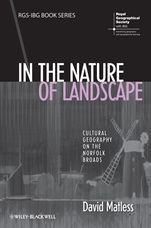
In the Nature of Landscape: Cultural Geography on the Norfolk Broads
ISBN 9781405190817
Autor: David Matless
Wydawca: Wiley
Dostępność: 3-6 tygodni
Cena: 368,55 zł
Przed złożeniem zamówienia prosimy o kontakt mailowy celem potwierdzenia ceny.
ISBN13: |
9781405190817 |
ISBN10: |
1405190817 |
Autor: |
David Matless |
Oprawa: |
Hardback |
Rok Wydania: |
2014-07-25 |
Ilość stron: |
296 |
Wymiary: |
235x152 |
Tematy: |
RG |
Landscape is a key topic for a range of academic disciplines, and a matter of strong popular cultural interest and policy concern. This book explores landscape as conceptual bridge for nature and culture, an arena for the co–constitution of society and ecology, a space for the encounter of body and world, a zone for the meeting of human and non–human. The title of the book conveys that it is in the nature of landscape to demand movement across these issues, with landscape performing through varied aesthetics and politics, and demanding an approach to study mixing theoretical analysis and historical and geographical understanding. Through individual chapters In the Nature of Landscape highlights five key themes for understanding cultures of landscape: spatio–temporal narratives of history and origin, conduct and the body, animal landscapes, spaces of experiment, and the spectres of erasure and destruction. The title alludes also to the complex relationship between the terms landscape and nature, an issue present throughout the book.
In the Nature of Landscape is the product of extensive empirical research, grounded in the concerns of cultural geography but shaped by work across the humanities and social sciences. Geographical characterisations of landscape as ‘duplicity’ (Daniels) and ‘tension’ (Wylie) are developed through landscape as site of conceptual, aesthetic and political negotiation, of conflicts resolved and unresolved. The book is premised upon the need to take geographical specificity seriously, and provides a demonstration of theory through depth empirical work on a specific twentieth century region, the Norfolk Broads, a wetland landscape in eastern England. This is a landscape itself often held to possess hybrid qualities, mixing land and water, subject to marine incursion, standing between ecological states. The single geographical focus makes this also a study in regional cultural landscape, a reemergent
theme in geography and related fields via work such as that of Lorimer in Cairngorm, Braun in western Canada and Pearson in Lincolnshire, and connecting to political geographic studies on regional identity by Paasi and others. If regional cultural landscape was a common focus in earlier geographical research, this book revisits the term following the thorough retheorising of each of its constituent terms, and seeks to establish it as a renewed theme for geographical research. In the Nature of Landscape then is a demonstration text for the practice of landscape theory. Throughout the text the argument combines theory, archival research, documentary and visual sources, oral history, and field study, landscape as a theme working between media and modes of enquiry. The book thereby presents a new direction in landscape study, and a model for future research.
Nota biograficzna:
David Matless is Professor of Cultural Geography in the School of Geography, University of Nottingham. He is the author of Landscape and Englishness (Reaktion, 1998), co–editor of The Place of Music (Guilford, 1998) and Geographies of British Modernity (Blackwell, 2003), and co–author of Writing the Rural (Paul Chapman, 1994). He edited the ‘Landscape’ section of the Handbook of Cultural Geography (Sage, 2003). He has published widely on issues of landscape and culture in academic journals including Transactions IBG, Body and Society, Cultural Geographies, History Workshop Journal, Journal of Design History, Social and Cultural Geography, Society and Space, and Journal of Historical Geography. Landscape and Englishness has sold over 2000 copies in hardback and paperback, was widely reviewed across a range of disciplines, and acclaimed as: ‘a convincing portrait of the changing meanings of the English landscape in the twentieth century’ (Times Literary Supplement); ‘likely to be one of the lasting achievements of the ‘new’ cult
ural geography’ (Progress in Human Geography); ‘essential reading for anyone interested in the predicaments of the present … an example of cultural history at its best’ (Journal of Historical Geography); ‘the best book so far on the interpretation of landscape in the middle years of the twentieth century’ (Architect’s Journal). The Norfolk Broads have been the focus for a number of articles by the author in outlets including Cultural Geographies, Social and Cultural Geography, Body and Society, and Journal of Historical Geography (with Laura Cameron), but the proposed book is not a collection of previously published material. While elements of articles will naturally be drawn upon, the book presents original argument and will be a new piece of writing throughout. It will be the author’s first research monograph since Landscape and Englishness.
Okładka tylna:
Landscape is a key topic for a range of academic disciplines, and a matter of strong popular cultural interest and policy concern. This book explores landscape as conceptual bridge for nature and culture, an arena for the co–constitution of society and ecology, a space for the encounter of body and world, a zone for the meeting of human and non–human. The title of the book conveys that it is in the nature of landscape to demand movement across these issues, with landscape performing through varied aesthetics and politics, and demanding an approach to study mixing theoretical analysis and historical and geographical understanding. Through individual chapters In the Nature of Landscape highlights five key themes for understanding cultures of landscape: spatio–temporal narratives of history and origin, conduct and the body, animal landscapes, spaces of experiment, and the spectres of erasure and destruction. The title alludes also to the complex relationship between the terms landscape and nature, an issue present throughout th
e book.
In the Nature of Landscape is the product of extensive empirical research, grounded in the concerns of cultural geography but shaped by work across the humanities and social sciences. Geographical characterisations of landscape as ‘duplicity’ (Daniels) and ‘tension’ (Wylie) are developed through landscape as site of conceptual, aesthetic and political negotiation, of conflicts resolved and unresolved. The book is premised upon the need to take geographical specificity seriously, and provides a demonstration of theory through depth empirical work on a specific twentieth century region, the Norfolk Broads, a wetland landscape in eastern England. This is a landscape itself often held to possess hybrid qualities, mixing land and water, subject to marine incursion, standing between ecological states. The single geographical focus makes this also a study in regional cultural landscape, a reemergent theme in geography and related fields via work such as that of Lorimer in Cairngorm, Braun in western Canada and Pearson in Lincolnshire, and connecting to political geographic studies on regional identity by Paasi and others. If regional cultural landscape was a common focus in earlier geographical research, this book revisits the term following the thorough retheorising of each of its constituent terms, and seeks to establish it as a renewed theme for geographical research. In the Nature of Landscape then is a demonstration text for the practice of landscape theory. Throughout the text the argument combines theory, archival research, documentary and visual sources, oral history, and field study, landscape as a theme working between media and modes of enquiry. The book thereby presents a new direction in landscape study, and a model for future research.
Koszyk
Książek w koszyku: 0 szt.
Wartość zakupów: 0,00 zł
Informacje


Kontakt
Gambit
Centrum Oprogramowania
i Szkoleń Sp. z o.o.
Al. Pokoju 29b/22-24
31-564 Kraków
Siedziba Księgarni
ul. Kordylewskiego 1
31-542 Kraków
+48 12 410 5991
+48 12 410 5987
+48 12 410 5989
Subskrypcje
Administratorem danych osobowych jest firma Gambit COiS Sp. z o.o. Na podany adres będzie wysyłany wyłącznie biuletyn informacyjny.
Autoryzacja płatności

Informacje na temat autoryzacji płatności poprzez PayU.

© Copyright 2012: GAMBIT COiS Sp. z o.o. Wszelkie prawa zastrzeżone.
Projekt i wykonanie: Alchemia Studio Reklamy