


Wydawcy
Katalog tematyczny
- Archeologia (109)
- Ekonomia, finanse, business (13704)
- Filozofia (1445)
- Historia (3040)
- Języki i językoznawstwo (2356)
- Lifestyle, hobby i rozrywka (475)
- Medycyna (9704)
- Nauki humanistyczne (4)
- Nauki o Ziemi i środowisku (2638)
- Nauki ścisłe (20412)
- Nauki społeczne (8486)
- Nauki techniczne (13450)
- Prawo (1696)
- Publikacje informacyjne i interdyscyplinarne (1288)
- Religia i wierzenia (917)
- Technika komputerowa (4067)
- Zdrowie, relacje międzyludzkie i rozwój osobisty (657)





Informacje szczegółowe o książce
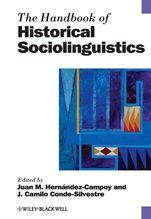
The Handbook of Historical Sociolinguistics
ISBN 9781405190688
Autor: Juan Manuel Hernández–Campoy, Juan Camilo Conde–Silvestre
Wydawca: Wiley
Dostępność: 3-6 tygodni
Cena: 859,95 zł
Przed złożeniem zamówienia prosimy o kontakt mailowy celem potwierdzenia ceny.
ISBN13: |
9781405190688 |
ISBN10: |
140519068X |
Autor: |
Juan Manuel Hernández–Campoy, Juan Camilo Conde–Silvestre |
Oprawa: |
Hardback |
Rok Wydania: |
2012-03-30 |
Ilość stron: |
704 |
Wymiary: |
249x179 |
Tematy: |
CF |
Great strides have been made in recent years in our understanding of the relationship between language and society when we introduce a consideration of its historical dimension. The Handbook of Historical Sociolinguistics reflects our current state of knowledge in this rapidly expanding interdisciplinary field of study. The collection represents an up–to–date, in–depth exploration of the extent to which sociolinguistic theoretical models, methods, findings, and expertise can be applied to the process of reconstructing a language′s past in order to account for diachronic linguistic changes and developments. Organized into five distinct sections, essays address various topics in origins and theoretical assumptions; methods for the sociolinguistic study of the history of languages; linguistic and socio–demographic variables; historical dialectology, language contact and diffusion; and attitudes to language. Written by an international team of leading scholars, this groundbreaking collection of readings provides an important contribution to linguistic theory that reflects current knowledge of the nature of language change and diffusion while paving the way for future research.
Plates x Figures x Maps xii Tables xiii Notes on Contributors xv Preface xxvii Teresa Fanego Introduction 1 J. Camilo Conde–Silvestre & Juan M. Hernández–Campoy Part I Origins and Theoretical Assumptions 9 1 Diachrony vs Synchrony: the Complementary Evolution of Two (Ir)reconcilable Dimensions 11 Jean Aitchison 2 Historical Sociolinguistics: Origins, Motivations, and Paradigms 22 Terttu Nevalainen and Helena Raumolin–Brunberg 3 Social History and the Sociology of Language 41 Robert McColl Millar Part II Methods for the Sociolinguistic Study of the History of Languages 61 4 The Application of the Quantitative Paradigm to Historical Sociolinguistics: Problems with the Generalizability Principle 63 Juan M. Hernández–Campoy and Natalie Schilling 5 The Uniformitarian Principle and the Risk of Anachronisms in Language and Social History 80 Alexander Bergs 6 The Use of Linguistic Corpora for the Study of Linguistic Variation and Change: Types and Computational Applications 99 Pascual Cantos 7 Editing the Medieval Manuscript in its Social Context 123 Nila Vázquez and Teresa Marqués–Aguado 8 Medical, Official, and Monastic Documents in Sociolinguistic Research 140 Laura Esteban–Segura 9 The Use of Private Letters and Diaries in Sociolinguistic Investigation 156 Stephan Elspass 10 The Use of Literary Sources in Historical Sociolinguistic Research 170 K. Anipa 11 Early Advertising and Newspapers as Sources of Sociolinguistic Investigation 191 Carol Percy Part III Linguistic and Socio–demographic Variables 211 12 Orthographic Variables 213 Hanna Rutkowska and Paul Rössler 13 Phonological Variables 237 Anna Hebda 14 Grammatical Variables 253 Anita Auer and Anja Voeste 15 Lexical–Semantic Variables 271 Joachim Grzega 16 Pragmatic Variables 293 Andreas H. Jucker and Irma Taavitsainen 17 Class, Age, and Gender–based Patterns 307 Agnieszka Kielkiewicz–Janowiak 18 The Role of Social Networks and Mobility in Diachronic Sociolinguistics 332 Juan Camilo Conde–Silvestre 19 Race, Ethnicity, Religion, and Castes 353 Rajend Mesthrie Part IV Historical Dialectology, Language Contact, Change, and Diffusion 367 20 The Teleology of Change: Functional and Non–Functional Explanations for Language Variation and Change 369 Paul T. Roberge 21 Internally– and Externally–Motivated Language Change 387 Raymond Hickey 22 Lexical Diffusion and the Regular Transmission of Language Change in its Sociohistorical Context 408 Brian D. Joseph 23 The Timing of Language Change 427 Mieko Ogura 24 Innovation Diffusion in Sociohistorical Linguistics 451 David Britain 25 Historical Dialectology: Space as a Variable in the Reconstruction of Regional Dialects 465 Anneli Meurman–Solin 26 Linguistic Atlases: Empirical Evidence for Dialect Change in the History of Languages 480 Roland Kehrein 27 Historical Sociolinguistic Reconstruction Beyond Europe: Case Studies from South Asia and Fiji 501 Matthew Toulmin 28 Multilingualism, Code–switching, and Language Contact in Historical Sociolinguistics 520 Herbert Schendl 29 The Impact of Migratory Movements on Linguistic Systems: Transplanted Speech Communities and Varieties from a Historical Sociolinguistic Perspective 534 Daniel Schreier 30 Convergence and Divergence in World Languages 552 Roger Wright Part V Attitudes to Language 569 31 Sociolinguistics and Ideologies in Language History 571 James Milroy 32 Language Myths 585 Richard J. Watts 33 Linguistic Purism 607 Nils Langer and Agnete Nesse 34 The Reconstruction of Prestige Patterns in Language History 626 Anni Sairio and Minna Palander–Collin 35 Written Vernaculars in Medieval and Renaissance Times 639 Catharina Peersman Index 655
Juan Manuel Hernández–Campoy is Professor in Sociolinguistics at the University of Murcia, Spain, where he teaches undergraduate courses on English Sociolinguistics, Dialectology, and the History of English, as well as sociolinguistic research methods for postgraduate students. His books include Style–Shifting in Public (with J.A. Cutillas–Espinosa, 2012), Diccionario de Sociolingüística (with P. Trudgill, 2007), Metodología de la Investigación Sociolingüística (with M. Almeida, 2005), and Geolingüística (1999). Juan Camilo Conde–Silvestre is Professor in English Historical Linguistics at the University of Murcia, Spain, where he teaches on the History of the English Language and Research Methods in Language Variation and Change. His books include Sociolinguistica Histórica (2007), Sociolinguistics and the History of English (with J.M. Hernández–Campoy, 2005) and Variation and Linguistic Change in English (with J.M. Hernández–Campoy, 1999).
“In this respect, the Handbook represents both an excellent summary of the state of the art in historical sociolinguistics and a good starting point for further research.” ( Linguistlist , 1 April 2013)
Koszyk
Książek w koszyku: 0 szt.
Wartość zakupów: 0,00 zł
Informacje


Kontakt
Gambit
Centrum Oprogramowania
i Szkoleń Sp. z o.o.
Al. Pokoju 29b/22-24
31-564 Kraków
Siedziba Księgarni
ul. Kordylewskiego 1
31-542 Kraków
+48 12 410 5991
+48 12 410 5987
+48 12 410 5989
Subskrypcje
Administratorem danych osobowych jest firma Gambit COiS Sp. z o.o. Na podany adres będzie wysyłany wyłącznie biuletyn informacyjny.
Autoryzacja płatności

Informacje na temat autoryzacji płatności poprzez PayU.

© Copyright 2012: GAMBIT COiS Sp. z o.o. Wszelkie prawa zastrzeżone.
Projekt i wykonanie: Alchemia Studio Reklamy