


Wydawcy
Katalog tematyczny
- Archeologia (109)
- Ekonomia, finanse, business (13704)
- Filozofia (1445)
- Historia (3040)
- Języki i językoznawstwo (2356)
- Lifestyle, hobby i rozrywka (475)
- Medycyna (9704)
- Nauki humanistyczne (4)
- Nauki o Ziemi i środowisku (2638)
- Nauki ścisłe (20412)
- Nauki społeczne (8486)
- Nauki techniczne (13450)
- Prawo (1696)
- Publikacje informacyjne i interdyscyplinarne (1288)
- Religia i wierzenia (917)
- Technika komputerowa (4067)
- Zdrowie, relacje międzyludzkie i rozwój osobisty (657)





Informacje szczegółowe o książce
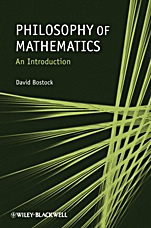
Philosophy of Mathematics: An Introduction
ISBN 9781405189910
Autor: David Bostock
Wydawca: Wiley
Dostępność: 3-6 tygodni
Cena: 200,55 zł
Przed złożeniem zamówienia prosimy o kontakt mailowy celem potwierdzenia ceny.
ISBN13: |
9781405189910 |
ISBN10: |
1405189916 |
Autor: |
David Bostock |
Oprawa: |
Paperback |
Rok Wydania: |
2009-02-06 |
Ilość stron: |
344 |
Wymiary: |
229x152 |
Tematy: |
HP |
In this new introduction to the philosophy of mathematics, David Bostock guides the reader through the basic ideas on the nature of mathematics that have played a major part in the development of philosophy from antiquity to the present.
The chapters proceed historically, beginning with the earliest serious views on the interpretation of mathematics, due to Plato and Aristotle. They then move quickly through the middle ages and the early moderns, but continue with extended discussions of Kant, Mill, and Frege. Later chapters explore the main schools of thought at the start of the twentieth century, i.e. the movements known as logicism, formalism, intuitionism, and what may be called predicativism. These chapters also discuss more modern variations on the same basic themes. Finally the book concludes with a discussion of the most recent debates between realists and nominalists. The emphasis throughout is not simply to describe, but to offer a critical appraisal of, the views discussed. The result is an engaging, clear, and remarkably comprehensive panorama of the major issues in the field.
The book assumes no prior knowledge of mathematics, beyond what is commonly taught in schools, and only a minimal exposure to standard philosophical terminology. It is aimed at undergraduates in philosophy and mathematics, but will also provide an important new perspective on the subject for more experienced readers.
Spis treści:
Introduction.
Part I: Plato versus Aristotle:.
A. Plato.
1. The Socratic Background.
2. The Theory of Recollection.
3. Platonism in Mathematics.
4. Retractions: the Divided Line in Republic VI (509d−511e).
B. Aristotle.
5. The Overall Position.
6. Idealizations.
7. Complications.
8. Problems with Infinity.
C. Prospects.
Part II: From Aristotle to Kant:.
1. Medieval Times.
2. Descartes.
3. Locke, Berkeley, Hume.
4. A Remark on Conceptualism.
5. Kant: the P
roblem.
6. Kant: the Solution.
Part III: Reactions to Kant:.
1. Mill on Geometry.
2. Mill versus Frege on Arithmetic.
3. Analytic Truths.
4. Concluding Remarks.
Part IV: Mathematics and its Foundations:.
1. Geometry.
2. Different Kinds of Number.
3. The Calculus.
4. Return to Foundations.
5. Infinite Numbers.
6. Foundations Again.
Part V: Logicism:.
1. Frege.
2. Russell.
3. Borkowski/Bostock.
4. Set Theory.
5. Logic.
6. Definition.
Part VI: Formalism:.
1. Hilbert.
2. Gödel.
3. Pure Formalism.
4. Structuralism.
5. Some Comments.
Part VII: Intuitionism:.
1. Brouwer.
2. Intuitionist Logic.
3. The Irrelevance of Ontology.
4. The Attack on Classical Logic.
Part VIII: Predicativism:.
1. Russell and the VCP.
2. Russell’s Ramified Theory and the Axiom of Reducibility.
3. Predicative Theories after Russell.
4. Concluding Remarks.
Part IX: Realism versus Nominalism:.
A. Realism.
1. Gödel.
2. Neo–Fregeans.
3. Quine and Putnam.
B. Nominalism.
4. Reductive Nominalism.
5. Fictionalism.
6. Concluding Remarks.
References.
Index
Nota biograficzna:
David Bostock has been a Fellow and Tutor in Philosophy at Merton College, and Lecturer in Philosophy at the University of Oxford. His recent publications include Intermediate Logic (1997), Aristotle’s Ethics (2000), and Space, Time, Matter, and Form: Essays on Aristotle′s Physics (2006).
Okładka tylna:
In this new introduction to the philosophy of mathematics, David Bostock guides the reader through the basic ideas on the nature of mathematics that have played a major part in the development of philosophy from antiquity to the present.
The chapters proceed historically, beginning with the earliest serious views on the interpretatio
n of mathematics, due to Plato and Aristotle. They then move quickly through the middle ages and the early moderns, but continue with extended discussions of Kant, Mill, and Frege. Later chapters explore the main schools of thought at the start of the twentieth century, i.e. the movements known as logicism, formalism, intuitionism, and what may be called predicativism. These chapters also discuss more modern variations on the same basic themes. Finally the book concludes with a discussion of the most recent debates between realists and nominalists. The emphasis throughout is not simply to describe, but to offer a critical appraisal of, the views discussed. The result is an engaging, clear, and remarkably comprehensive panorama of the major issues in the field.
The book assumes no prior knowledge of mathematics, beyond what is commonly taught in schools, and only a minimal exposure to standard philosophical terminology. It is aimed at undergraduates in philosophy and mathematics, but will also provide an important new perspective on the subject for more experienced readers.
Koszyk
Książek w koszyku: 0 szt.
Wartość zakupów: 0,00 zł
Informacje


Kontakt
Gambit
Centrum Oprogramowania
i Szkoleń Sp. z o.o.
Al. Pokoju 29b/22-24
31-564 Kraków
Siedziba Księgarni
ul. Kordylewskiego 1
31-542 Kraków
+48 12 410 5991
+48 12 410 5987
+48 12 410 5989
Subskrypcje
Administratorem danych osobowych jest firma Gambit COiS Sp. z o.o. Na podany adres będzie wysyłany wyłącznie biuletyn informacyjny.
Autoryzacja płatności

Informacje na temat autoryzacji płatności poprzez PayU.

© Copyright 2012: GAMBIT COiS Sp. z o.o. Wszelkie prawa zastrzeżone.
Projekt i wykonanie: Alchemia Studio Reklamy