


Wydawcy
Katalog tematyczny
- Archeologia (109)
- Ekonomia, finanse, business (13704)
- Filozofia (1445)
- Historia (3040)
- Języki i językoznawstwo (2356)
- Lifestyle, hobby i rozrywka (475)
- Medycyna (9704)
- Nauki humanistyczne (4)
- Nauki o Ziemi i środowisku (2638)
- Nauki ścisłe (20412)
- Nauki społeczne (8486)
- Nauki techniczne (13450)
- Prawo (1696)
- Publikacje informacyjne i interdyscyplinarne (1288)
- Religia i wierzenia (917)
- Technika komputerowa (4067)
- Zdrowie, relacje międzyludzkie i rozwój osobisty (657)





Informacje szczegółowe o książce
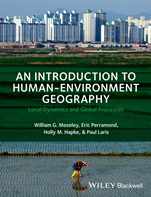
An Introduction to Human–Environment Geography: Local Dynamics and Global Processes
ISBN 9781405189316
Autor: William G. Moseley, Eric Perramond, Holly M. Hapke, Paul Laris
Wydawca: Wiley
Dostępność: 3-6 tygodni
Cena: 197,40 zł
Przed złożeniem zamówienia prosimy o kontakt mailowy celem potwierdzenia ceny.
ISBN13: |
9781405189316 |
ISBN10: |
1405189312 |
Autor: |
William G. Moseley, Eric Perramond, Holly M. Hapke, Paul Laris |
Oprawa: |
Paperback |
Rok Wydania: |
2013-08-23 |
Ilość stron: |
416 |
Wymiary: |
243x191 |
Tematy: |
RG |
“A first of its kind, and in my opinion a complete winner. An introductory textbook that presents, in an engaging and accessible style, geography’s unique approach to environmental issues. Highly recommended.” Judith Carney , UCLA “A long–overdue textbook that is at once comprehensible while remaining accessible. The authors have done an impressive job with a clarity that is refreshing and engaging. This book provides students with a guide to this dynamic sub–field, including features such as clear chapter objectives, critical questions, and ‘ice–breakers,’ and demonstrates how to address important and complex issues in the contemporary world.” Antoinette WinklerPrins , Johns Hopkins University The myriad ways that humans interact with their surroundings in the natural world has consequences that are both positive and negative. An Introduction to Human–Environment Geography offers an engaging and unique view of the spatial relationships between humans and their environment across geographical locations around the world. This introductory level text presents the rich tapestry of theoretical approaches to the tradition and demonstrates how these may be productively applied to understand human–environment interactions. Introducing many of the fundamental concepts and major theoretical traditions within human–environment geography, the book explores various thematic issues within the field – such as population, food and agriculture, and water resources. It carefully balances exposure to the theoretical underpinnings of human–environment geography with the inclusion of a variety of real–world policy questions and illustrative field–notes contributed by prominent nature–society geographers. An engaging and student–friendly introduction, it offers rich and rewarding insights into a tradition of growing importance in the twenty–first century world.
Notes on the Authors ix Preface and Acknowledgments xi Part I: Fundamentals of Human–Environment Geography 1 1 Introduction: A Geographic Perspective on Human–Environment Interactions 3 2 The Politics of Nature 31 3 The Biophysical Environment 47 Part II: Contemporary Perspectives in Human–Environment Geography 87 4 Cultural and Political Ecology: Local Human–Environment Interactions in a Global Context 89 5 Environmental History 111 6 Hazards Geography and Human Vulnerability 137 7 Environmental Justice: The Uneven Distribution of People, Pollution, and Environmental Opportunity 157 Part III: Thematic Issues in Human–Environment Geography 189 8 Climate, Atmosphere, and Energy 191 9 The Population–Consumption–Technology Nexus 227 10 Agriculture and Food Systems 255 11 Biodiversity, Conservation, and Protected Areas 285 12 Water Resources and Fishing Livelihoods 309 Part IV: Bridging Theory and Practice 341 13 Geographic Research 343 14 Conclusion: Making a Difference 375 Index 389
William G. Moseley is Professor in the Department of Geography at Macalester College, St. Paul, Minnesota. He is the author of over 60 peer–reviewed articles and book chapters, as well as four edited volumes. Eric Perramond is Associate Professor in both the Environmental Science and Southwest Studies programs at the Colorado College. He is the author of Political Ecologies of Cattle Ranching in Northern Mexico: Private Revolutions (2010) and a former Fulbright–García Robles fellow to Mexico. Holly M. Hapke is Associate Professor in the Department of Geography at East Carolina University. She has published articles in various journals and is a contributing author to World Regional Geography: Global Patterns, Local Lives, 5th edition (2010). Paul Laris is Professor and Chair of the Department of Geography at California State University, Long Beach.
Koszyk
Książek w koszyku: 0 szt.
Wartość zakupów: 0,00 zł
Informacje


Kontakt
Gambit
Centrum Oprogramowania
i Szkoleń Sp. z o.o.
Al. Pokoju 29b/22-24
31-564 Kraków
Siedziba Księgarni
ul. Kordylewskiego 1
31-542 Kraków
+48 12 410 5991
+48 12 410 5987
+48 12 410 5989
Subskrypcje
Administratorem danych osobowych jest firma Gambit COiS Sp. z o.o. Na podany adres będzie wysyłany wyłącznie biuletyn informacyjny.
Autoryzacja płatności

Informacje na temat autoryzacji płatności poprzez PayU.

© Copyright 2012: GAMBIT COiS Sp. z o.o. Wszelkie prawa zastrzeżone.
Projekt i wykonanie: Alchemia Studio Reklamy