


Wydawcy
Katalog tematyczny
- Archeologia (109)
- Ekonomia, finanse, business (13704)
- Filozofia (1445)
- Historia (3040)
- Języki i językoznawstwo (2356)
- Lifestyle, hobby i rozrywka (475)
- Medycyna (9704)
- Nauki humanistyczne (4)
- Nauki o Ziemi i środowisku (2638)
- Geografia (299)
- Nauki o Ziemi (1661)
- Geologia (414)
- Hydrologia (237)
- Meteorologia i klimatologia (114)
- Paleontologia (33)
- Wulkanologia i sejsmologia (44)
- Planowanie przestrzenne (53)
- Środowisko (607)
- Nauki ścisłe (20412)
- Nauki społeczne (8486)
- Nauki techniczne (13450)
- Prawo (1696)
- Publikacje informacyjne i interdyscyplinarne (1288)
- Religia i wierzenia (917)
- Technika komputerowa (4067)
- Zdrowie, relacje międzyludzkie i rozwój osobisty (657)





Informacje szczegółowe o książce
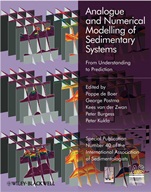
Analogue and Numerical Modelling of Sedimentary Systems: From Understanding to Prediction
ISBN 9781405189309
Autor: Poppe de Boer, George Postma, Kees van der Zwan, Peter Burgess, Peter Kukla
Wydawca: Wiley
Dostępność: 3-6 tygodni
Cena: 662,55 zł
Przed złożeniem zamówienia prosimy o kontakt mailowy celem potwierdzenia ceny.
ISBN13: |
9781405189309 |
ISBN10: |
1405189304 |
Autor: |
Poppe de Boer, George Postma, Kees van der Zwan, Peter Burgess, Peter Kukla |
Oprawa: |
Hardback |
Rok Wydania: |
2008-11-27 |
Ilość stron: |
328 |
Wymiary: |
277x224 |
Tematy: |
RB |
Understanding basin–fill evolution and the origin of stratal architectures has traditionally been based on studies of outcrops, well and seismic data, studies of and inferences on qualitative geological processes, and to a lesser extent based on quantitative observations of modern and ancient sedimentary environments. Insight gained on the basis of these studies can increasingly be tested and extended through the application of numerical and analogue forward models.
Present–day stratigraphic forward modelling follows two principle lines: 1) the deterministic process–based approach, ideally with resolution of the fundamental equations of fluid and sediment motion at all scales, and 2) the stochastic approach. The process–based approach leads to improved understanding of the dynamics (physics) of the system, increasing our predictive power of how systems evolve under various forcing conditions unless the system is highly non–linear and hence difficult or perhaps even impossible to predict. The stochastic approach is more direct, relatively simple, and useful for study of more complicated or less–well understood systems. Process–based models, more than stochastic ones, are directly limited by the diversity of temporal and spatial scales and the very incomplete knowledge of how processes operate and interact on the various scales.
The papers included in this book demonstrate how cross–fertilization between traditional field studies and analogue and numerical forward modelling expands our understanding of Earth–surface systems.
Spis treści:
Preface. P.L. de Boer, G. Postma, C.J. van der Zwan, P.M. Burgess and P. Kukla.
1. Numerical simulation of the syn– to postdepositional history of a prograding carbonate platform: the Rosengarten, Middle Triassic, Dolomites, Italy. A. Emmerich, R. Tscherny, T. Bechstädt, C. Büker, U.A. Glasmacher, R. Littke and R
. Zühlke.
2. Fine–scale forward modelling of a Devonian patch reef, Canning Basin, Western Australia. C.–A. Hasler, E.W. Adams, R.A. Wood and J. A. D. Dickson.
3. Structural, reverse basin and forward stratigraphic modelling of the Southern Cantabrian Basin, NW Spain. Z. Veselovsky, T. Bechstädt and R. Zühlke.
4. Numerical modelling of alluvial deposits: recent developments. J. Bridge.
5. Process–based stochastic modelling: meandering channelized reservoirs. S. Lopez, I. Cojan, J. Rivoirard and A. Galli.
6. Simulation of tidal flow and circulation patterns in the Early Miocene (Upper Marine Molasse) of the Alpine foreland basin. U. Bieg, M.P. Süss and J. Kuhlemann.
7. Predicting discharge and sediment flux of the Po River, Italy since the Last Glacial Maximum. A.J. Kettner and J.P.M. Syvitski.
8. Impact of discharge, sediment flux and sea–level change on stratigraphic architecture of river–valley–delta–shelf systems. G. Postma and A–P. van den Berg van Saparoea.
9. Grain–size sorting of river–shelf–slope sediments during glacial–interglacial cycles: modelling grain–size distribution and interconnectedness of coarse–grained bodies. X. D. Meijer.
10. Modelling the preservation of sedimentary deposits on passive continental margins during glacial–interglacial cycles. X. D. Meijer, G. Postma, P.A. Burrough and P.L. de Boer.
11. Modelling source rock distribution and quality variations: the OF–Mod approach. U. Mann and J. Zweigel.
12. Spatial data templates: combining simple models of physical processes with stochastic noise to yield stable, archetypal landforms. P.A. Burrough.
13. Models that talk back. J.C. Tipper.
Index
Okładka tylna:
Understanding basin–fill evolution and the origin of stratal archit
ectures has traditionally been based on studies of outcrops, well and seismic data, studies of and inferences on qualitative geological processes, and to a lesser extent based on quantitative observations of modern and ancient sedimentary environments. Insight gained on the basis of these studies can increasingly be tested and extended through the application of numerical and analogue forward models.
Present–day stratigraphic forward modelling follows two principle lines: 1) the deterministic process–based approach, ideally with resolution of the fundamental equations of fluid and sediment motion at all scales, and 2) the stochastic approach. The process–based approach leads to improved understanding of the dynamics (physics) of the system, increasing our predictive power of how systems evolve under various forcing conditions unless the system is highly non–linear and hence difficult or perhaps even impossible to predict. The stochastic approach is more direct, relatively simple, and useful for study of more complicated or less–well understood systems. Process–based models, more than stochastic ones, are directly limited by the diversity of temporal and spatial scales and the very incomplete knowledge of how processes operate and interact on the various scales.
The papers included in this book demonstrate how cross–fertilization between traditional field studies and analogue and numerical forward modelling expands our understanding of Earth–surface systems.
Koszyk
Książek w koszyku: 0 szt.
Wartość zakupów: 0,00 zł
Informacje


Kontakt
Gambit
Centrum Oprogramowania
i Szkoleń Sp. z o.o.
Al. Pokoju 29b/22-24
31-564 Kraków
Siedziba Księgarni
ul. Kordylewskiego 1
31-542 Kraków
+48 12 410 5991
+48 12 410 5987
+48 12 410 5989
Subskrypcje
Administratorem danych osobowych jest firma Gambit COiS Sp. z o.o. Na podany adres będzie wysyłany wyłącznie biuletyn informacyjny.
Autoryzacja płatności

Informacje na temat autoryzacji płatności poprzez PayU.

© Copyright 2012: GAMBIT COiS Sp. z o.o. Wszelkie prawa zastrzeżone.
Projekt i wykonanie: Alchemia Studio Reklamy