


Wydawcy
Katalog tematyczny
- Archeologia (109)
- Ekonomia, finanse, business (13704)
- Filozofia (1445)
- Historia (3040)
- Języki i językoznawstwo (2356)
- Lifestyle, hobby i rozrywka (475)
- Medycyna (9704)
- Nauki humanistyczne (4)
- Nauki o Ziemi i środowisku (2638)
- Nauki ścisłe (20412)
- Astronomia (294)
- Biologia (5119)
- Chemia (6540)
- Chemia analityczna (361)
- Chemia fizyczna (346)
- Chemia nieorganiczna (137)
- Chemia organiczna (535)
- Krystalografia (27)
- Minerologia (46)
- Fizyka (3309)
- Matematyka (4574)
- Nauki ścisłe, ogólnie (503)
- Nauki społeczne (8486)
- Nauki techniczne (13450)
- Prawo (1696)
- Publikacje informacyjne i interdyscyplinarne (1288)
- Religia i wierzenia (917)
- Technika komputerowa (4067)
- Zdrowie, relacje międzyludzkie i rozwój osobisty (657)





Informacje szczegółowe o książce
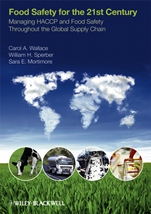
Food Safety for the 21st Century: Managing HACCP and Food Safety Throughout the Global Supply Chain
ISBN 9781405189118
Autor: Carol A. Wallace, William H. Sperber, Sara E. Mortimore
Wydawca: Wiley
Dostępność: 3-6 tygodni
Cena: 854,70 zł
Przed złożeniem zamówienia prosimy o kontakt mailowy celem potwierdzenia ceny.
ISBN13: |
9781405189118 |
ISBN10: |
1405189118 |
Autor: |
Carol A. Wallace, William H. Sperber, Sara E. Mortimore |
Oprawa: |
Hardback |
Rok Wydania: |
2010-11-26 |
Ilość stron: |
352 |
Wymiary: |
252x180 |
Tematy: |
PN |
The HACCP (Hazard Analysis and Critical Control Points) system is still recognised internationally as the most effective way to produce safe food throughout the supply chain, but a HACCP system cannot operate in a vacuum. It requires prerequisite programmes to be in place and it can be highly affected by, or dependent upon, other major considerations such as animal, plant, human and environmental health, food security and food defence.
This book aims to:
· provide a practical and up–to–date text covering the essentials of food safety management in the global supply chain, giving the reader the knowledge and skills that they need to design, implement and maintain a world–class food safety programme.
· build on existing texts on HACCP and food safety, taking the next step forward in the evolution of HACCP and providing a text that is relevant to all sectors and sizes of food businesses throughout the world.
· share practical food safety experience, allowing development of best–practice approaches. This will allow existing businesses to improve their systems and enable businesses that are new to HACCP and food safety management requirements in both developed and developing countries to build on existing knowledge for more rapid application of world–class food safety systems.
· educate practitioners such that they will be able to use their judgement in decision–making and to influence those who make food policy and manage food operations.
It is directed at scientists and managers in the food industry (manufacturing and foodservice); regulators and educators in the field of food safety; and students of food science and technology.
Spis treści:
Introduction.
Origins and development of Food Safety Management.
Historical Perspectives and Evolution of HACCP.
Development of Food Safety Regulation (inc. Codex & NACMCF).
Part I: Concepts of Food Safety.
1. Ov
erview of a World–class Food Safety Programme.
– What is a world–class food safety programme?.
– HACCP Principles.
– Definitions & Scope.
– Linkage to other food quality management systems.
– Current Approaches (FSOs, Risk Assessment, SMEs).
2. Lessons learned from HACCP successes and failures – if HACCP works so well why do we still have foodborne illness?.
– Introduction.
– Benefits of a food safety programme.
– Barriers.
– Reasons for failure.
– Cost of a food safety programme.
– Difficulties with HACCP application to the entire supply chain.
– Roles and responsibilities for food safety assurance.
.
Part II: Foodborne Hazards and their control.
3. How to Recognise Food Safety Hazards.
– What is a food safety hazard.
– What is not a food safety hazard, e.g. spoilage, regulatory.
– Biological – inc Epidemiology and morbidity.
– Chemical – inc allergen statistics and recalls.
– Physical.
– Why is this knowledge important?.
4. How to design safety into a food product.
– Formulation and Intrinsic control factors.
– Use of experimental design and analysis/predictive modelling.
5. How to design a safe food process.
6. How to design and formalize a comprehensive Prerequisite Programme.
– Safe Facility.
– Management Practices.
– Upgrade, formalise, enhance awareness.
– Implement.
– Maintain & verification.
Part III: Systematic Food Safety Management.
7. Preparing for a food safety programme.
– Commitment (Management).
– Roles & Responsibilities.
– Training and Education.
– Resource Requirements.
– Assemble the food safety team.
– Gap analysis.
– Prioritisation and planning.
8. Developing a HACCP Plan.
&
#8211; Introduction.
– Codex preliminary steps.
– Applying HACCP Principles.
– How to do it, step by step.
– Validation.
9. Implementing a HACCP system.
– Implementation activities.
– Resourcing and handover.
– Review and Upgrade.
– Making it work 24/7.
10. Maintaining a Food Safety Programme.
– Responsibility.
– HACCP System Elements.
– Prerequisite Programme elements.
– Refresher and Update training/education.
– Formal verification – audit , etc.
– Formal Review.
– Changes in products/processes.
– New Hazard info.
– Regulatory Changes.
– Incident Management.
– Ongoing management issues, including commitment and food safety culture
Nota biograficzna:
Sara .E. Mortimore, Vice President Quality and Regulatory Affairs, Land O′Lakes, Saint Paul, Minnesota, USA
Carol A. Wallace, University of Central Lancashire, UK
William H. Sperber, Cargill, USA
Okładka tylna:
The HACCP (Hazard Analysis and Critical Control Points) system is still recognised internationally as the most effective way to produce safe food throughout the supply chain, but a HACCP system cannot operate in a vacuum. It requires prerequisite programmes to be in place and it can be highly affected by, or dependent upon, other major considerations such as animal, plant, human and environmental health, food security and food defence.
This book aims to:
· provide a practical and up–to–date text covering the essentials of food safety management in the global supply chain, giving the reader the knowledge and skills that they need to design, implement and maintain a world–class food safety programme.
· build on existing texts on HACCP and food safety, taking the next step forward in the evolution of HACCP and providing a text that is relevant to
all sectors and sizes of food businesses throughout the world.
· share practical food safety experience, allowing development of best–practice approaches. This will allow existing businesses to improve their systems and enable businesses that are new to HACCP and food safety management requirements in both developed and developing countries to build on existing knowledge for more rapid application of world–class food safety systems.
· educate practitioners such that they will be able to use their judgement in decision–making and to influence those who make food policy and manage food operations.
It is directed at scientists and managers in the food industry (manufacturing and foodservice); regulators and educators in the field of food safety; and students of food science and technology.
Koszyk
Książek w koszyku: 0 szt.
Wartość zakupów: 0,00 zł
Informacje


Kontakt
Gambit
Centrum Oprogramowania
i Szkoleń Sp. z o.o.
Al. Pokoju 29b/22-24
31-564 Kraków
Siedziba Księgarni
ul. Kordylewskiego 1
31-542 Kraków
+48 12 410 5991
+48 12 410 5987
+48 12 410 5989
Subskrypcje
Administratorem danych osobowych jest firma Gambit COiS Sp. z o.o. Na podany adres będzie wysyłany wyłącznie biuletyn informacyjny.
Autoryzacja płatności

Informacje na temat autoryzacji płatności poprzez PayU.

© Copyright 2012: GAMBIT COiS Sp. z o.o. Wszelkie prawa zastrzeżone.
Projekt i wykonanie: Alchemia Studio Reklamy