


Wydawcy
Katalog tematyczny
- Archeologia (109)
- Ekonomia, finanse, business (13704)
- Filozofia (1445)
- Historia (3040)
- Języki i językoznawstwo (2356)
- Lifestyle, hobby i rozrywka (475)
- Medycyna (9704)
- Nauki humanistyczne (4)
- Nauki o Ziemi i środowisku (2638)
- Nauki ścisłe (20412)
- Nauki społeczne (8486)
- Edukacja (229)
- Kryminologia, opieka spełeczna (284)
- Obronność (10)
- Polityka (1389)
- Psychologia (777)
- Socjologia (410)
- Społeczeństwo i kultura (187)
- Nauki techniczne (13450)
- Prawo (1696)
- Publikacje informacyjne i interdyscyplinarne (1288)
- Religia i wierzenia (917)
- Technika komputerowa (4067)
- Zdrowie, relacje międzyludzkie i rozwój osobisty (657)





Informacje szczegółowe o książce
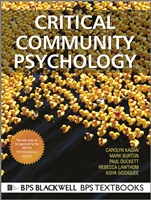
Critical Community Psychology
ISBN 9781405188845
Autor: Carolyn Kagan, Mark Burton, Paul Duckett, Rebecca Lawthom, Asiya Siddiquee
Wydawca: Wiley
Dostępność: 3-6 tygodni
Cena: 389,55 zł
Przed złożeniem zamówienia prosimy o kontakt mailowy celem potwierdzenia ceny.
ISBN13: |
9781405188845 |
ISBN10: |
1405188847 |
Autor: |
Carolyn Kagan, Mark Burton, Paul Duckett, Rebecca Lawthom, Asiya Siddiquee |
Oprawa: |
Paperback |
Rok Wydania: |
2011-04-08 |
Ilość stron: |
396 |
Wymiary: |
249x192 |
Tematy: |
JC |
At last, an exciting newtextbook on community psychology that is informed by contemporarydebates within critical psychology. It provides a refreshingand well–written overview of both theoretical and practical issuesaround psychological work in a range of community settings. Filledwith examples and reflections on practice drawn from years ofexperience, the book is a modern handbook for communityscholar–activists. Michael Murray, Professor of Social & Health Psychology, KeeleUniversity
Psychology and psychologists are all too often disengaged fromthe very real challenges facing modern societies. This bookprovides a timely and powerful nudgeto contribute our various skills and approachesto improve and enhance local and global communities. Itdeserves to be widely read by students and professionalsalike . Roger Ingham, Professor of Health and Community Psychology,University of Southampton
This important new bookencapsulates an enormous range of helpful concepts and practicaltools within the field of community psychology that link localaction with more ambitious social and political change. It draws on a wealth ofshared experience in critical community psychology praxis and is anessential resource for all community based professionals workingwith excluded or marginalised communities . Steve Melluish, University of Leicester
Community psychology is continuouslydeveloping in various parts of the world. Interest in communitypsychology, and its potential as a distinct approach, is growingand evolving in parallel with social development, changes inwelfare and governmental priorities.
Critical Community Psychology isthe work of a group of academic community psychologists with manyyears of experience working, teaching and thinking together. Theyhave developed a clear and effective method for bringing togetherthe theory and practice of community psychology, which has becomefirmly grounded in time and place. Thisbook aims to provide students of different community–basedprofessions, working in a range of applied settings, with not onlythe theories, values and principles of community psychology, butalso with the practical guidance that will underpin their communitypsychological work. Highlights include:
· Clear learning objectives, highlightingthe theoretical content, research issues and practice dilemmas tobe covered.
· Caseexamples of community psychology in action, including criticalquestions to encourage reflection and reflexivity on the part ofthe reader .
· Activity questions focusing on boththeoretical and practical issues to be used as both class exercisesand independent study.
· A distinctive approach that questionsmany of the assumptions and approaches of mainstream psychologicalapproaches.
Thisbook would be attractive to undergraduate and postgraduate studentsand practitioners of community psychology world–wide, as well asstudents and practitioners of other forms of applied orprofessional psychology and different community practices.Additional resources for instructors are available at www.wiley.com/college/kagan
Carolyn Kagan, Paul Duckett, RebeccaLawthom and Asiya Siddiquee are all based in the Department ofPsychology and the Research Institute for Health and Social Changeat Manchester Metropolitan University. Mark Burton has avisiting position with Manchester Metropolitan University and is amanager in health and social services inManchester.
1 Introduction 1
Critical community psychology in Manchester 2
Why Manchester? 3
Learning through action and action through learning 5
Action learning 7
Action research 7
Language, discourse and representation 9
What do we mean by critical′? 12
Orientation to the book 13
PART I: THINK! 15
2 What is critical community psychology? 17
The nature and origins of community psychology 18
Definitions 21
The emergence of community psychology in different parts
of the world 24
Key themes in critical community psychology 28
From prevention to liberation 29
Global trends and critical community psychology 30
Think global, act local? 32
Localism as a philosophy 32
Sharing experiences, strategies and programmes 33
Being part of a wider movement 33
The role of social movements 34
Social justice and a just society 35
Core values underpinning a critical community
psychology 36
Social justice 37
Stewardship 38
Community 38
Conclusion 39
3 Core elements of a critical community psychology 41
Elements of critical community psychology 42
The ecological metaphor 42
Adaptation 44
Cycling of resources 44
Interdependence 44
Succession 44
Unintended consequences 45
Non–linearity 45
Fields and edges 46
Nesting 46
Ecological design 47
The systems perspective 47
Multiple levels of analysis 48
The person–in–context 49
An ontology of individual and society 50
The person–situation formula 50
Person–situation level elements of analysis 51
Role–rule contexts 51
Group dynamics 52
Leadership 53
Community–society level elements of analysis 54
Society and the individual 55
Facing the nature of oppression and liberation, immersion in thelived
experiences of people oppressed by the social system 56
A dialectical relationship between people and systems:
conscientisation 58
Working together 59
Interdisciplinarity 59
Agency, power and collective action 59
Participation 59
Prefigurative action 60
Core principles underlying a critical community psychology 62
Diversity 62
Innovation 62
Liberation 63
Commitment 63
Critical reflection 63
Humility 63
Conclusions 67
4 The contested nature of community 69
What is community? 71
Theory descriptions of community 73
Dimensions of community: Sentiment, social structure and space74
Sentiment 74
Psychological sense of community 75
The cultural and symbolic sense of community 76
Space 79
Social structure 81
Multi–dimensional communities 83
Power and community 84
Social exclusion 85
Conclusions 87
5 Community as social ties 89
Social ties 90
Affection 91
Interdependence 91
Coercion 92
Theory prescriptions for community 93
Ties of affection and co–operation: Community as social capital94
Ties of coercion: Community as ghetto 98
The ghetto walls 100
Social boundaries: benign or benevolent? 102
Community and social policy 103
Nature of participation 104
Conclusion 110
Critical disruption of Think! 111
Critically disrupting the challenge to individualism 111
Critically disrupting our history of community psychology 113
Resources for Part One 117
PART II: ACT! 121
6 Problem definition 123
Social issues 125
Need 126
Positionality and problem definition 130
Whose need? 131
Getting to know the community 132
Community audit 132
Community profiling 133
Use of statistics 137
Observation 137
Community walks 138
Making contact and gaining entry in the community 139
Problem situations as human systems 141
Stakeholders and stakeholder analyses 151
Conclusion 153
7 Action planning 155
Decision making 156
Stakeholder analysis and action planning 160
Boundary critique: towards value–based decision making 161
Fourth generation evaluation 168
Participatory appraisal of needs and development of action169
Strengths, weaknesses, opportunities and threats 170
Force fi eld analysis 171
Option appraisal 174
Compromise 175
Visioning 176
Mixing methods 178
Complex decision making: Polarity management 179
8 Action 1: furtherance of critical consciousness andcreation
of new forms of social settings 183
Action for change 184
Strategies of critical community psychological action 186
Furtherance of critical consciousness (conscientisation) 186
Problematisation 188
Experiential learning 191
Capacitation′ 195
Deideologisation 197
Creation of new forms of social relations and settings 198
Multi–dimensional nature of social situations 198
Behaviour settings 200
New or alternative social settings 202
The radical nature of alternative social settings 206
9 Action 2: Development of alliances, andaccompaniment,
advocacy and analysis of policy 209
Making links, the development of alliances and counter systems210
Processes of making links and working together 210
Communities of interest or communities of practice 213
Alliances and coalitions 213
Partnerships 216
Working at the ecological edge 217
Alliances, new social settings and connecting with social movements222
Accompaniment, advocacy and analysis of policy 224
Accompaniment 224
Skills needed for accompaniment 227
Knowledge and accompaniment 228
Advocacy 228
Analysis of policy 234
Policy implementation 236
Policy analysis 237
Conclusions 240
Critical disruption of Act! 241
Chronic uncertainty 242
Work ethic 243
Resources for Part Two 245
PART III: REFLECT! 249
10 Evaluation 251
Purpose of evaluation 252
Principles of evaluation 253
Evaluation frameworks 255
Politics of evaluation 256
What is to be evaluated? 261
Theory of change′ perspectives on evaluation 262
Realistic or realist perspectives on evaluation 263
Capacity building for evaluation 268
Participation and evaluation 270
Participation and empowerment in evaluation 271
Resistance to involvement as a barrier to participation
in evaluation 274
Skills for evaluation 276
Conclusions 278
11 Change, influence and power 279
The nature of social change 280
Incremental or radical change 283
Linear and non–linear change 284
Stage approaches to change 285
Strategic change 286
Resistance to change 287
Action research as change 290
Social movements, power and ideology 291
Social influence 292
Social change tactics 294
Social power, powerlessness and empowerment 294
Taxonomy of power 295
The social structure of social power 298
Power analysis 300
12 Roles, skills and reflections on learning
for community psychologists 303
Roles for facilitating change 304
Facilitation roles 304
Educational roles 304
Representational roles 305
Technical roles 306
Skills for facilitating change 307
Interpersonal communication skills 308
Social problem solving skills 308
Organisation skills 309
Research skills 309
The context of community psychological action 310
Reflexivity as part of practice 314
Constraints on working as a community psychologist
and spaces for resistance 316
Ethical issues 319
Risk 320
Power (again) 322
Prefigurative learning 323
The case for and against community psychology 323
Community psychology as oppression or liberation 325
Conclusion 327
Critical disruption of Reflect! 329
Evaluation and the audit culture 329
Auditing skills 331
Critical disruption of critical reflection 333
Resources for Part Three 335
13 Critical disruption: Does critical communitypsychology
have an adequate praxis? 337
A new context: extreme and globalised oppression 340
Rethinking the amelioration–transformation distinction 341
References 343
Index 369
All the authors are members of the largest community psychologyteam in Europe, practising and researching community psychology andteaching undergraduate and postgraduate courses in communitypsychology at Manchester Metropolitan University.
Mark Burton, Visiting Professor of Health and Disabilityat Manchester Metropolitan University and Head of the ManchesterLearning Disability Partnership: I have a background in bothpsychological research and clinical psychology, and have worked forthe last 20 years in services for intellectually disabled people asa development manager, using a community psychological approach toinform this work, which is carried out by myself and by colleagueswith both psychological and non–psychological backgrounds. I havealso participated in the work of a variety of non governmentalorganisations and campaigning groups. I have taught courses onsocial theory and psychological practice, organisational and socialchange, action research and aspects of community clinicalpsychology both at postgraduate level and outside the Universitycontext.
Paul Duckett, Senior Lecturer, is a communitypsychologist who works in the fields of disability, mental healthand unemployment. I work alongside disabled people including peoplewith mental health difficulties and people with learningdifficulties. I am interested in exploring ways of promotingstudent mental health and promoting the integration of a socialjustice perspective in psychological teaching, research andpractice. In addition I have published in the areas of criminal(in)justice, children′s wellbeing and social critiques of war.
Carolyn Kagan, Professor of Community Social Psychologyat Manchester Metropolitan University: I am a communitypsychologist with a background in social psychology, counsellingpsychology and social work. I am a founding co–editor of theinternational journal, Community, Work and Family (published byCARFAX, now Taylor and Francis). I have worked for 25 years onprojects in the community, with disabled people, their families andservices and with people living in poverty. Much of my work hasbeen action oriented, with projects extending over several years,and I have been involved with the establishment of new projects andnew forms of community organisation. I teach Community psychologyto both undergraduates and postgraduates, and have developed thefirst UK Masters programme in Community Psychology. I havesupervised and examined MSc and PhD theses in community psychologyin the UK and Australia. I convened and chaired the 1999 UKCommunity Psychology Conference in January 1999 and am a regularcontributor to UK and European community psychologyconferences.
Rebecca Lawthom, Principal Lecturer. My researchinterests centre on gender and feminism, particularly in workplacesettings. I am also interested in working with other non dominantgroups, including disabled people, and in relation to socialinclusion approaches. Ihave a particular interest in the concept of′communities of practice′ and am currently exploring its utility inrelation to narrative work and to different forms ofcreativity.
Asiya Siddiquee, Lecturer. I am a community psychologistwith a particular interest in critical perspectives on establishedforms of both quantitative and qualitative research. My recentdoctoral work was ′A Community Psychology Approach to Investigatingthe Impact of the Internet′, and as part of this I examined theimpact of the Internet on refugee women, ethnic minorities,community development workers and the health sectorI am currentlyapplying action research processes to explore issues such asmarginalisation and the use of the digital technologies, and ampart of an international community psychology virtual network.
Other, newly appointed members of the team may also contributeto the book. For example Professor Dan Goodley (expertise– criticaldisability studies) and Jenny Fisher (expertise – communitydevelopment).
Koszyk
Książek w koszyku: 0 szt.
Wartość zakupów: 0,00 zł
Informacje


Kontakt
Gambit
Centrum Oprogramowania
i Szkoleń Sp. z o.o.
Al. Pokoju 29b/22-24
31-564 Kraków
Siedziba Księgarni
ul. Kordylewskiego 1
31-542 Kraków
+48 12 410 5991
+48 12 410 5987
+48 12 410 5989
Subskrypcje
Administratorem danych osobowych jest firma Gambit COiS Sp. z o.o. Na podany adres będzie wysyłany wyłącznie biuletyn informacyjny.
Autoryzacja płatności

Informacje na temat autoryzacji płatności poprzez PayU.

© Copyright 2012: GAMBIT COiS Sp. z o.o. Wszelkie prawa zastrzeżone.
Projekt i wykonanie: Alchemia Studio Reklamy