


Wydawcy
Katalog tematyczny
- Archeologia (109)
- Ekonomia, finanse, business (13704)
- Filozofia (1445)
- Historia (3040)
- Języki i językoznawstwo (2356)
- Lifestyle, hobby i rozrywka (475)
- Medycyna (9704)
- Nauki humanistyczne (4)
- Nauki o Ziemi i środowisku (2638)
- Nauki ścisłe (20412)
- Nauki społeczne (8486)
- Nauki techniczne (13450)
- Budownictwo lądowe (1045)
- Chemia przemysłowa (2258)
- Elektronika i telekomunikacja (3287)
- Energetyka (1122)
- Inne nauki stosowane (363)
- Inżynieria biochemiczna (507)
- Inżynieria transportu (232)
- Mechanika i materiały (3316)
- Nauka o środowisku (321)
- Rolnictwo (507)
- Technika, ogólnie (475)
- Prawo (1696)
- Publikacje informacyjne i interdyscyplinarne (1288)
- Religia i wierzenia (917)
- Technika komputerowa (4067)
- Zdrowie, relacje międzyludzkie i rozwój osobisty (657)





Informacje szczegółowe o książce
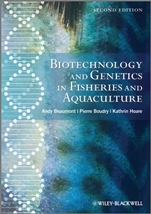
Biotechnology and Genetics in Fisheries and Aquaculture
ISBN 9781405188579
Autor: Andy Beaumont, Pierre Boudry, Kathryn Hoare
Wydawca: Wiley
Dostępność: 3-6 tygodni
Cena: 662,55 zł
Przed złożeniem zamówienia prosimy o kontakt mailowy celem potwierdzenia ceny.
ISBN13: |
9781405188579 |
ISBN10: |
140518857X |
Autor: |
Andy Beaumont, Pierre Boudry, Kathryn Hoare |
Oprawa: |
Hardback |
Rok Wydania: |
2010-04-13 |
Numer Wydania: |
2nd Edition |
Ilość stron: |
214 |
Wymiary: |
251x186 |
Tematy: |
TV |
The use of genetic and biotechnological techniques in fisheries and aquaculture has expanded massively since the publication of the successful and popular first edition of this book in 2003.
Following the structure of the first edition, this carefully revised and updated new edition includes much new information of vital importance to those working in the fisheries and aquaculture industries. As well as the inclusion of a new chapter covering the emerging fields of genomics, transcriptomics, proteomics and metabolomics, this exciting new edition provides much new and enhanced information on all major areas of importance in this field, including the following: conservation genetics, forensic applications, identification of animals to family level, genome mapping, disease identification, the use of triploidy in reducing the genetic impact of escapees, and the use of GMOs in the industry.
With so much new information included, the addition of a further well known and respected co–author and many new better quality illustrations, this second edition of Biotechnology and Genetics in Fisheries and Aquaculture will be of great use as a reference to upper level students studying fisheries, aquaculture, genetics, biotechnology, aquatic and biological sciences. Personnel working in the fish farming and fisheries industries management and research sectors will find much of use and commercial interest in this important book. All libraries in universities and research establishments where biological sciences, aquaculture and fisheries are studied and taught should have copies of this excellent new edition on their shelves.
Spis treści:
Preface to the second edition.
Acknowledgements.
Chapter 1 What is genetic variation?
Deoxyribose nucleic acid.
Ribose nucleic acid.
What is the genetic code?
Protein structure.
So what about chromosomes?
How does sexual reproduction produce variation?
Mitochondrial and chloropla
st DNA.
Chapter 2 How can genetic variation be measured?
DNA sequence variation.
DNA fragment size variation.
Protein variation.
Phenotypic variation.
Chapter 3 Genetic structure in natural populations.
What is a population?
How are allele frequencies estimated?
What is the relationship between alleles and genotypes?
How do allele frequencies change over time?
How does population structure arise?
How are genetic markers used to study population structure?
Levels of genetic differentiation in aquatic organisms.
Potential problems with allozymes and coding markers.
mtDNA variation.
Microsatellite variation.
Population structure in the flat oyster.
Mixed stock analysis (MSA).
Chapter 4 Genetics of population size in conservation and aquaculture.
Genetics of small population size in the wild.
Genetic markers in conservation.
Genetics of small population size in the hatchery.
Is there evidence of loss of genetic variation in the hatchery?
How does hatchery propagation affect heterozygosity?
Genetic markers for identification of hatchery product.
Genetic markers for pathogen identification.
Chapter 5 Genetic variation of traits.
Qualitative traits.
Quantitative traits.
What kinds of traits are important?
Variation of a quantitative trait.
How can we estimate narrow–sense heritability?
Realised heritability.
Correlated traits.
What types of artificial selections are there?.
Setting up a breeding programme.
Inbreeding, cross–breeding and hybridisation.
Current status of selective breeding programmes in aquaculture.
Chapter 6 From genetics to genomics.
What is the genome?
Genome mapping.
Whole genome sequencing: the ′big picture′.
QTL mapping.
Application of QTLs in aquaculture and fisheries management.
Marker–assisted selection (MAS): from QTLs to genomic selection.
Transcr
iptomics.
Chapter 7 Triploids and beyond: why manipulate ploidy?
How is it done?
Production of gynogens and androgens.
Identification of ploidy change.
Value of Triploids.
Tetraploids.
Gynogens and androgens.
Chapter 8 Genetic engineering in aquaculture.
The DNA construct.
Transgene delivery.
Transgene integration.
Detecting integration and expression of the transgene.
Results of transgenesis efforts in fish.
So much for transgenics – what about cloning?
Genethics.
Glossary.
Index.
Colour plates.
Nota biograficzna:
Andy Beaumont is based at the School of Ocean Sciences, Unioversity of Bangor, Menai, Wales, UK
Pierre Boudry, based at IFREMER, France
Kate Hoare, based at the School of Ocean Sciences, Menai Bridge, University of Bangor, Wales, UK
Okładka tylna:
The use of genetic and biotechnological techniques in fisheries and aquaculture has expanded massively since the publication of the successful and popular first edition of this book in 2003.
Following the structure of the first edition, this carefully revised and updated new edition includes much new information of vital importance to those working in the fisheries and aquaculture industries. As well as the inclusion of a new chapter covering the emerging fields of genomics, transcriptomics, proteomics and metabolomics, this exciting new edition provides much new and enhanced information on all major areas of importance in this field, including the following: conservation genetics, forensic applications, identification of animals to family level, genome mapping, disease identification, the use of triploidy in reducing the genetic impact of escapees, and the use of GMOs in the industry.
With so much new information included, the addition of a further well known and respected co–author and many new better quality illustrations, this second edition of Biotechnology and G
enetics in Fisheries and Aquaculture will be of great use as a reference to upper level students studying fisheries, aquaculture, genetics, biotechnology, aquatic and biological sciences. Personnel working in the fish farming and fisheries industries management and research sectors will find much of use and commercial interest in this important book. All libraries in universities and research establishments where biological sciences, aquaculture and fisheries are studied and taught should have copies of this excellent new edition on their shelves.
Koszyk
Książek w koszyku: 0 szt.
Wartość zakupów: 0,00 zł
Informacje


Kontakt
Gambit
Centrum Oprogramowania
i Szkoleń Sp. z o.o.
Al. Pokoju 29b/22-24
31-564 Kraków
Siedziba Księgarni
ul. Kordylewskiego 1
31-542 Kraków
+48 12 410 5991
+48 12 410 5987
+48 12 410 5989
Subskrypcje
Administratorem danych osobowych jest firma Gambit COiS Sp. z o.o. Na podany adres będzie wysyłany wyłącznie biuletyn informacyjny.
Autoryzacja płatności

Informacje na temat autoryzacji płatności poprzez PayU.

© Copyright 2012: GAMBIT COiS Sp. z o.o. Wszelkie prawa zastrzeżone.
Projekt i wykonanie: Alchemia Studio Reklamy