


Wydawcy
Katalog tematyczny
- Archeologia (109)
- Ekonomia, finanse, business (13704)
- Filozofia (1445)
- Historia (3040)
- Języki i językoznawstwo (2356)
- Lifestyle, hobby i rozrywka (475)
- Medycyna (9704)
- Nauki humanistyczne (4)
- Nauki o Ziemi i środowisku (2638)
- Nauki ścisłe (20412)
- Nauki społeczne (8486)
- Nauki techniczne (13450)
- Prawo (1696)
- Publikacje informacyjne i interdyscyplinarne (1288)
- Religia i wierzenia (917)
- Technika komputerowa (4067)
- Zdrowie, relacje międzyludzkie i rozwój osobisty (657)





Informacje szczegółowe o książce
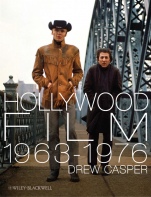
Hollywood Film 1963–1976: Years of Revolution and Reaction
ISBN 9781405188272
Autor: Drew Casper
Wydawca: Wiley
Dostępność: 3-6 tygodni
Cena: 473,55 zł
Przed złożeniem zamówienia prosimy o kontakt mailowy celem potwierdzenia ceny.
ISBN13: |
9781405188272 |
ISBN10: |
1405188278 |
Autor: |
Drew Casper |
Oprawa: |
Hardback |
Rok Wydania: |
2011-03-25 |
Ilość stron: |
400 |
Wymiary: |
255x187 |
Tematy: |
AB |
Hollywood 1963–1976: Years of Revolution and Reaction is a comprehensive study of one of the most tumultuous eras in American film, chronicling the collapse of the studio system, the rise of the auteur, and the birth of the blockbuster. Drew Casper’s maximalist review draws wide and varied examples from an expanded canon to discuss technological innovations, changing standards of censorship, and the broad spectrum of ideologies that found their way onto the reel, mirroring the nation′s own divided and frequently schizophrenic politics.
Acknowledgments.
List of Illustrations.
Foreword.
Part I: Cultural Overview: The Years of Revolution and Reaction, 1963–76:
1. Major Historical Events.
Civil Rights Legislation and Protests.
The Vietnam War.
Law and Order.
Realpolitik.
2. Economic Situation.
Expanse and Contraction.
Downturn.
3. Societal Issues.
The New Left, the Counterculture, Neo–Conservatism, and the Silent Majority.
Ecology, Good Health, and Fitness.
Scientific/Technological Advances.
Conglomerate Ascendancy.
Media Society.
Crime.
Religion.
A Sense of Confusion, Impotence, and Cynicism, and a Wave of Nostalgia.
Part II: Business:
4. Production–Distribution.
Showmen, Caretakers, and Conglomerates.
The Practices of the Seven Major Studios: Lesser Movies, Higher Costs, Independent/Runaway Production, Sources, Stars, Sequels/Series, Mainstreaming Exploitation, “The Big Kill,” “The Youth Movie,” “A Film By,” Diversification.
Competition: Minor and New Studios.
The Financial Bloodbath.
Additional Practices: Downsizing, Negative Pickup, Co–Production/Distribution, Tax Breaks/Shelters.
Still Other Gambits: The Nostalgic Wave and The “Special Event” Movie.
Distribution.
Black Groundswell.
Academy Awards.
5. Exhibition and the New Audience.
Exhibition.
The New Audience.
Part III: Technology:
6. Color, Screen Shapes, Sound, Special Effects, and Production Refinements.
Color.
Screen Shapes.
Sound.
Special Effects.
Production Refinements.
Part IV: Style:.
7. Documentary and Documentary Realism.
8. TV and TV Theatrical.
9. Modernism, TV Programming/Commercials, the Avant–Garde, and Expressive Stylization.
Literary Design.
Performance.
Visual Design.
Composition.
Temporal Design.
Sound Design.
Part V: Censorship:.
10. Issues, Solutions, and Problems.
Subsidiary Syndrome.
Two–Version Ploy.
Dilemma: The Pawnbroker (AA, 1965).
Turning Point: Who’s Afraid of Virginia Woolf? (WB, 1966).
The 1966 Production Code Guidelines and the “SMA” Category.
Ratings System.
Enlightenment of the Legion of Decency.
Divorce: Hollywood and the Church.
City/State Censorship and the Liberalization of the Supreme Court.
City/State Censorship vs. Hollywood.
Part VI: Genre:.
11. Adventure.
12. Biography.
13. Historical Spectacle.
14. Comedy.
Black Comedy.
Farce.
Parody.
Social Satire.
Romantic Comedy.
Family Comedy.
Fantasy Comedy.
15. Horror and Science Fiction.
Horror.
Science Fiction.
16. Melodrama.
Family Melodrama.
Road Film and Biker Film.
Female Melodrama.
Male Melodrama.
Romance Melodrama.
Buddy Film.
17. Musical.
Musical Comedy and Musical Drama.
Musical Biography.
18. Social Problem Film and Courtroom Drama.
Social Problem Film.
Courtroom Drama
19. Suspense Thriller.
Spy Thriller: WWII/Cold War.
Crime.
Vigilante.
Caper.
Conspiracy.
20. War
21. Western.
Coda: Postmodern Hollywood, 1977.
Appendix: Hierarchical Order of Ten Box–Office Stars, 1963–76.
Bibliography.
Index of Films.
Index of Subjects.
Drew Casper is the Alma and Alfred Hitchcock Chair of American Film at the University of Southern California’s School of Cinematic Arts. He is the author of Postwar Hollywood, 1946–1962 (Blackwell, 2007), Introduction to Film Reader (2007), Stanley Donen (1983), and Vincente Minnelli and the Film Musical (1977). He has contributed on many DVD commentaries for documentaries of classic and contemporary Hollywood films.
"I highly recommend this book to any film student or person interested in Hollywood films of the 60s and 70s. This text will definitely become a go–to reference as I continue my studies.." (Breitbart.com, 2011)
Koszyk
Książek w koszyku: 0 szt.
Wartość zakupów: 0,00 zł
Informacje


Kontakt
Gambit
Centrum Oprogramowania
i Szkoleń Sp. z o.o.
Al. Pokoju 29b/22-24
31-564 Kraków
Siedziba Księgarni
ul. Kordylewskiego 1
31-542 Kraków
+48 12 410 5991
+48 12 410 5987
+48 12 410 5989
Subskrypcje
Administratorem danych osobowych jest firma Gambit COiS Sp. z o.o. Na podany adres będzie wysyłany wyłącznie biuletyn informacyjny.
Autoryzacja płatności

Informacje na temat autoryzacji płatności poprzez PayU.

© Copyright 2012: GAMBIT COiS Sp. z o.o. Wszelkie prawa zastrzeżone.
Projekt i wykonanie: Alchemia Studio Reklamy