


Wydawcy
Katalog tematyczny
- Archeologia (109)
- Ekonomia, finanse, business (13704)
- Filozofia (1445)
- Historia (3040)
- Języki i językoznawstwo (2356)
- Lifestyle, hobby i rozrywka (475)
- Medycyna (9704)
- Nauki humanistyczne (4)
- Nauki o Ziemi i środowisku (2638)
- Nauki ścisłe (20412)
- Nauki społeczne (8486)
- Nauki techniczne (13450)
- Prawo (1696)
- Publikacje informacyjne i interdyscyplinarne (1288)
- Religia i wierzenia (917)
- Technika komputerowa (4067)
- Zdrowie, relacje międzyludzkie i rozwój osobisty (657)





Informacje szczegółowe o książce
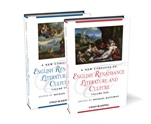
A New Companion to English Renaissance Literature and Culture
ISBN 9781405187626
Autor: Michael Hattaway
Wydawca: Wiley
Dostępność: 3-6 tygodni
Cena: 426,30 zł
Przed złożeniem zamówienia prosimy o kontakt mailowy celem potwierdzenia ceny.
ISBN13: |
9781405187626 |
ISBN10: |
140518762X |
Autor: |
Michael Hattaway |
Oprawa: |
Hardback |
Rok Wydania: |
2010-04-13 |
Ilość stron: |
1264 |
Wymiary: |
247x170 |
Tematy: |
CS |
In this revised and greatly expanded edition of the original Companion , some eighty of the very best modern scholars, including Judith H. Anderson, Patrick Collinson, Alison Findlay, Germaine Greer, Malcolm Jones, Arthur F. Kinney, James Knowles, Arthur F. Marotti, Robert S. Miola, and Greg Walker, come together to offer an original and far–reaching assessment of English Renaissance literature and culture. The expansion into two volumes – with over twenty new essays –allows for the exploration of further aspects of a wide range of topics, including material culture, theatre – both inside and outside the playhouses – sectarian writing, further forms of popular writing, the history of the body, gardens, law, and ecology in early modern England. Sections are interspersed with new readings of key texts, both canonical and non–canonical, and are designed to exemplify aspects of the topics dealt with in the remaining chapters. All of the essays from the first edition, along with the recommendations for further reading, have been reworked or updated. Unrivalled in range and in its exploration of unfamiliar literary and cultural territories, the Companion offers a pioneering study of the phenomenon of the Renaissance.
VOLUME I: List of Illustrations. Acknowledgements. Contributors. 1. Introduction: Michael Hattaway (New York University in London). PART I: CONTEXTS, READINGS, AND PERSPECTIVES c .1500– c .1650: 2. The English Language of the Early Modern Period: Arja Nurmi (University of Helsinki). 3. Literacy and Education: Jean R. Brink (Henry E. Huntington Library). 4. Rhetoric: Gavin Alexander (University of Cambridge). 5. History: Patrick Collinson (University of Cambridge). 6. Metaphor and Culture in Renaissance England: Judith H. Anderson (Indiana University). 7. Early Tudor Humanism: Mary Thomas Crane (Boston College). 8. Platonism, Stoicism, Scepticism, and Classical Imitation: Sarah Hutton (Aberystwyth University). 9. Translation: Liz Oakley–Brown (Lancaster University). 10. Mythology: Jane Kingsley–Smith (Roehampton University, London). 11. Scientific Writing: David Colclough (Queen Mary, University of London). 12. Publication: Print and Manuscript: Michelle O’Callaghan (University of Reading). 13. Early Modern Handwriting: Grace Ioppolo (University of Reading). 14. The Manuscript Transmission of Poetry: Arthur F. Marotti (Wayne State University). 15. Poets, Friends, and Patrons: Donne and his Circle; Ben and his Tribe: Robin Robbins (Wadham College Oxford). 16. Law: Poetry and Jurisdiction: Bradin Cormack (University of Chicago). 17. Spenser’s Faerie Queene, Book 5: Poetry, Politics, and Justice: Judith H. Anderson (Indiana University). 18. ‘Law Makes the King’: Richard Hooker on Law and Princely Rule: Torrance Kirby (McGill University). 19. Donne, Milton, and the Two Traditions of Religious Liberty: Feisal G. Mohamed (University of Illinois). 20. Court and Coterie Culture: Curtis Perry (University of Illinois). 21. Courtship and Counsel: John Lyly’s Campaspe: Greg Walker (University of Edinburgh). 22. Bacon’s ‘Of Simulation and Dissimulation’: Martin Dzelzainis (Royal Holloway, University of London). 23. The Literature of the Metropolis: John A. Twyning (University of Pittsburgh). 24. Tales of the City: The Plays of Ben Jonson and Thomas Middleton: Peter J. Smith (Nottingham Trent University). 25. ‘An Emblem of Themselves’: Early Renaissance Country House Poetry: Nicole Pohl (Oxford Brookes University). 26. Literary Gardens, from More to Marvell: Hester Lees–Jeffries (St Catharine’s College, Cambridge). 27. English Reformations: Patrick Collinson (University of Cambridge). 28. Translations of the Bible: Gerald Hammond (University of Manchester). 29. Lancelot Andrewes’ Good Friday 1604 Sermon: Richard Harries (King’s College, London). 30. Theological Writings and Religious Polemic: Donna B. Hamilton (University of Maryland). 31. Catholic Writings: Robert S. Miola (Loyola University of Maryland). 32. Sectarian Writing: Hilary Hinds (Lancaster University). 33. The English Broadside Print, c.1550–c.1650: Malcolm Jones (University of Sheffield). 34. The Writing of Travel: Peter Womack (University of East Anglia). 35. England’s Experiences of Islam: Stephan Schmuck (Institute of Medieval and Early Modern Studies, Wales). 36. Reading the Body: Jennifer Waldron (University of Pittsburgh). 37. Physiognomy: Sibylle Baumbach (University of Giessen). 38. Dreams and Dreamers: Carole Levin (University of Nebraska). VOLUME II: PART II: GENRES AND MODES: 39. Theories of Literary Kinds: John Roe (University of York). 40. The Position of Poetry: Making and Defending Renaissance Poetics: Arthur F. Kinney (University of Massachusetts–Amherst). 41. Epic: Rachel Falconer (University of Sheffield). 42. Playhouses, Performances, and the Role of Drama: Michael Hattaway (New York University in London). 43. Continuities between ‘Medieval’ and ‘Early Modern’ Drama: Michael O’Connell (University of California Santa Barbara). 44. Kyd’s The Spanish Tragedy: A. J. Piesse (Trinity College Dublin). 45. Boys’ Plays: Edel Lamb (University of Sydney). 46. Drama of the Inns of Court: Alan H. Nelson (University of California Berkeley) and Jessica Winston (Idaho State University). 47. ‘Tied to rules of flattery’? Court Drama and the Masque: James Knowles (University College Cork). 48. Women and Drama: Alison Findlay (Lancaster University). 49. Political Plays: Stephen Longstaffe (University of Cumbria). 50. Jacobean Tragedy: Rowland Wymer (Anglia Ruskin University, Cambridge). 51. Caroline Theatre: Roy Booth (Royal Holloway, University of London). 52. John Ford, Mary Wroth, and the Final Scene of ‘Tis Pity She’s a Whore: Robyn Bolam (St Mary’s University College, Twickenham). 53. Local Drama and Custom: Thomas Pettitt (University of Southern Denmark). 54. The Critical Elegy: John Lyon (University of Bristol). 55. Allegory: Clara Mucci (University of Chieti, Italy). 56. Pastoral: Michelle O’Callaghan (University of Reading). 57. Romance: Helen Moore (Corpus Christi Oxford). 58. Love Poetry: Diana E. Henderson (MIT). 59. Music and Poetry: David Lindley (University of Leeds). 60. Wyatt’s ‘Who so list to hunt’: Rachel Falconer (University of Sheffield). 61. The Heart of the Labyrinth: Mary Wroth’s Pamphilia to Amphilanthus: Robyn Bolam (St Mary’s University College, Twickenham). 62. Ovidian Erotic Poems: Boika Sokolova (University of California/University of Notre Dame/British American Drama Academy). 63. John Donne’s Nineteenth Elegy: Germaine Greer (University of Warwick). 64. Traditions of Complaint and Satire: John N. King (Ohio State University). 65. Folk Legends and Wonder Tales: Thomas Pettitt (University of Southern Denmark). 66. ‘Such pretty things would soon be gone’: The Neglected Genres of Popular Verse, 1480–1650: Malcolm Jones (University of Sheffield). 67. Religious Verse: Elizabeth Clarke (University of Warwick). 68. Herbert’s ‘The Elixir’: Judith Weil (University of Manitoba). 69. Conversion and Poetry in Early Modern England: Molly Murray (Columbia University). 70. Prose Fiction: Andrew Hadfield (University of Sussex). 71. The English Renaissance Essay: Churchyard, Cornwallis, Florio’s Montaigne, and Bacon: John Lee (University of Bristol). 72. Diaries and Journals: Elizabeth Clarke (University of Warwick). 73. Letters: Jonathan Gibson (Royal Holloway, University of London). PART III: ISSUES AND DEBATES: 74. Identity: A. J. Piesse (Trinity College Dublin). 75. Sexuality: A Renaissance Category?: James Knowles (University College Cork). 76. Was There a Renaissance Feminism?: Jean E. Howard (Columbia University). 77. Drama as Text and Performance: Andrea Stevens (University of Illinois at Urbana–Champaign). 78. The Debate on Witchcraft: James Sharpe (University of York). 79. Reconstructing the Past: History, Historicism, Histories: James R. Siemon (Boston University). 80. Race: A Renaissance Category?: Margo Hendricks (University of California at Santa Cruz). 81. Writing the Nations: Nicola Royan (University of Nottingham). 82. Early Modern Ecology: Ken Hiltner (University of California Santa Barbara). Index.
Michael Hattaway is Professor Emeritus of English Literature at the University of Sheffield, and Professor of English at New York University in London. His principal publications include Elizabethan Popular Theatre (1982), Hamlet: The Critics Debate (1987), and Renaissance and Reformations: An Introduction to Early Modern English Literature (2005); he is the editor of As You Like It (2000) and 1–3 Henry VI for the New Cambridge Shakespeare (1990, 1991, 1993), and of A Companion to English Renaissance Literature and Culture (2000) and The Cambridge Companion to Shakespeare’s History Plays (2002).
"As with the previous volume, each essay is the work of an accomplished scholar and is supplemented with a list of references and further reading. Summing Up: Highly recommended. Upper–division undergraduates through faculty." (Choice, 1July 2011)
Koszyk
Książek w koszyku: 0 szt.
Wartość zakupów: 0,00 zł
Informacje


Kontakt
Gambit
Centrum Oprogramowania
i Szkoleń Sp. z o.o.
Al. Pokoju 29b/22-24
31-564 Kraków
Siedziba Księgarni
ul. Kordylewskiego 1
31-542 Kraków
+48 12 410 5991
+48 12 410 5987
+48 12 410 5989
Subskrypcje
Administratorem danych osobowych jest firma Gambit COiS Sp. z o.o. Na podany adres będzie wysyłany wyłącznie biuletyn informacyjny.
Autoryzacja płatności

Informacje na temat autoryzacji płatności poprzez PayU.

© Copyright 2012: GAMBIT COiS Sp. z o.o. Wszelkie prawa zastrzeżone.
Projekt i wykonanie: Alchemia Studio Reklamy