


Wydawcy
Katalog tematyczny
- Archeologia (109)
- Ekonomia, finanse, business (13704)
- Filozofia (1445)
- Historia (3040)
- Języki i językoznawstwo (2356)
- Lifestyle, hobby i rozrywka (475)
- Medycyna (9704)
- Nauki humanistyczne (4)
- Nauki o Ziemi i środowisku (2638)
- Nauki ścisłe (20412)
- Astronomia (294)
- Biologia (5119)
- Biochemia (575)
- Biologia człowieka (14)
- Biologia komórkowa (377)
- Biologia molekularna (398)
- Biologia rozwoju (130)
- Biologia, ogólnie (1277)
- Botanika (280)
- Hydrobiologia (92)
- Mikrobiologia (363)
- Mykologia (22)
- Zoologia (303)
- Chemia (6540)
- Fizyka (3309)
- Matematyka (4574)
- Nauki ścisłe, ogólnie (503)
- Nauki społeczne (8486)
- Nauki techniczne (13450)
- Prawo (1696)
- Publikacje informacyjne i interdyscyplinarne (1288)
- Religia i wierzenia (917)
- Technika komputerowa (4067)
- Zdrowie, relacje międzyludzkie i rozwój osobisty (657)





Informacje szczegółowe o książce
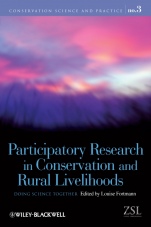
Participatory Research in Conservation and Rural Livelihoods: Doing Science Together
ISBN 9781405187329
Autor: Louise Fortmann
Wydawca: Wiley
Dostępność: 3-6 tygodni
Cena: 751,80 zł
Przed złożeniem zamówienia prosimy o kontakt mailowy celem potwierdzenia ceny.
ISBN13: |
9781405187329 |
ISBN10: |
1405187328 |
Autor: |
Louise Fortmann |
Oprawa: |
Hardback |
Rok Wydania: |
2008-09-19 |
Ilość stron: |
316 |
Wymiary: |
245x169 |
Tematy: |
PS |
Participatory Research in Conservation and Rural Livelihoods: Doing Science Together starts from the understanding that all people create knowledge and that the creation of sustainable livelihoods and of conditions that protect and sustain rural ecosystems are interrelated. Interdependent science, that is, science undertaken collaboratively by local and professional scientists, can create new knowledge to achieve conservation goals. Here local experts and professional researchers write independently about the participatory research processes through which they created new knowledge together. They demonstrate that interdependent science can produce more accurate and locally appropriate data, while frankly addressing persisting issues such as unequal power, whose knowledge and what ways of knowing count, whose voice can be heard or appear in print, and other dilemmas of this practice. Conservation scientists and practitioners will both benefit from reading this book.
Spis treści:
Contributors.
Foreword: Marshall W. Murphree.
Acknowledgements.
Acronyms and abbreviations.
Non–English words.
Introduction: doing science together: Louise Fortmann.
1. How participatory research convinced a sceptic: Robin Buruchara.
2. Sharing in innovation: reflections on a partnership to improve livelihoods and resource conservation in the Honduran hillsides: Sally Humphries, José Jiménez, Fredy Sierra and Omar Gallardo.
3. Campesinos cientificios: farmer philosophies on participatory research: members of the Association of CIALs of Honduras: Dionisia Corea, Ana Rosa Estrada, Reinaldo Funez, Isidora García, Claros Gómez, Maria Guada, Bonifacio Gutiérrez, Ángel Hernández, José Amado Hernández, Melvin Hernández, Nora Hernández, Wilmer Hernández, Cayetana Herrera, Gavina Herrera, José Santos Herrera, Juan Pedro Herrera, Toribia Herrera, Marco López, Dió
genes Matute, Hilda Mencía, Rosalío Mencía, Luís Alonso Meza, Manuel Meza, Enrique Murillo, Heladia Murillo, Amalia Núñez, Ubaldo Olvera, Andrea Orellana, Damiana Pérez and Simeona Pérez with Lauren Classen.
4. Retracing the trail to wisdom: doing science together in CibecueL Jonathan W. Long.
5. The land has wisdom: Benrita ‘Mae’ Burnette and Judy DeHose.
6. What makes a scientist? studying the impacts of harvest in the Pacific Northwest: Heidi L. Ballard.
7. ‘She fell out of the sky’: salal harvesters’ reflections on participatory research: Don Collins, Juan Cruz, Bob Smith and members of the Northwest Research and Harvester Association.
8. ‘Research sounds so big …’: collaborative inquiry with women in Drevdagen, Sweden: Seema Arora–Jonsson.
9. För oss är naturen en lisa för själen (where peace comes dropping slow): the forests and nature for us: Åsa Bergelin, Margareta Emretsson, Anne Lundgren Halvarsson, Ewa Halvarsson and Anna Ryen.
10. From participation to partnership: devolution, forest communities and CIFOR in Malinau, Indonesia: Eva Wollenberg, Ramses Iwan, Goodwin Limberg, Moira Moeliono, Made Sudana, Asung Uluk, Njau Anau and Miriam van Heist.
11. Malinau villagers’ relationship with CIFOR: high hopes, unmet expectations and trusted confidante: Ramses Iwan and Steve Rhee.
12. Rediscovering participation: reflections on the Mhondoro Tree Project: Nontokozo Nemarundwe and Louise Fortmann.
13. Unofanira Kuzvininipisa (you have to be humble): Gift Chidari, Francisca Chirambaguwa, Patricia Matsvimbo and Wisdom Muza.
14. New seeds, new selves, new societies: rural women’s reflections on participatory research in plant breeding: Elicelda Guardado Martinez, Lastenia Mendez and Leonarda Ramos Mejia with Jennifer Casolo.
15. Conclusions: Seema Arora–Jonsson, Heidi L. Ballard, Robin Buruchara,
Jennifer Casolo, Lauren Classen, Judy DeHose, Margareta Emretsson, Louise Fortmann, Anne Lundgren Halvarsson, Ewa Halvarsson, Sally Humphries, Jonathan W. Long, Marshall W. Murphree, Nontokozo Nemarundwe, Anne Olssen, Steve Rhee, Anna Ryen, Carl Wilmsen and Eva Wollenberg.
Appendix A Publications from the participatory research projects.
Index
Nota biograficzna:
Louise Fortmann is a Professor of Natural Resource Sociology and holds the Rudy Grah Chair in Forestry and Sustainable Development in the Department of Environmental Science, Policy and Management at the University of California at Berkeley.
Okładka tylna:
Participatory Research in Conservation and Rural Livelihoods: Doing Science Together starts from the understanding that all people create knowledge and that the creation of sustainable livelihoods and of conditions that protect and sustain rural ecosystems are interrelated. Interdependent science, that is, science undertaken collaboratively by local and professional scientists, can create new knowledge to achieve conservation goals. Here local experts and professional researchers write independently about the participatory research processes through which they created new knowledge together. They demonstrate that interdependent science can produce more accurate and locally appropriate data, while frankly addressing persisting issues such as unequal power, whose knowledge and what ways of knowing count, whose voice can be heard or appear in print, and other dilemmas of this practice. Conservation scientists and practitioners will both benefit from reading this book.
Koszyk
Książek w koszyku: 0 szt.
Wartość zakupów: 0,00 zł
Informacje


Kontakt
Gambit
Centrum Oprogramowania
i Szkoleń Sp. z o.o.
Al. Pokoju 29b/22-24
31-564 Kraków
Siedziba Księgarni
ul. Kordylewskiego 1
31-542 Kraków
+48 12 410 5991
+48 12 410 5987
+48 12 410 5989
Subskrypcje
Administratorem danych osobowych jest firma Gambit COiS Sp. z o.o. Na podany adres będzie wysyłany wyłącznie biuletyn informacyjny.
Autoryzacja płatności

Informacje na temat autoryzacji płatności poprzez PayU.

© Copyright 2012: GAMBIT COiS Sp. z o.o. Wszelkie prawa zastrzeżone.
Projekt i wykonanie: Alchemia Studio Reklamy