


Wydawcy
Katalog tematyczny
- Archeologia (109)
- Ekonomia, finanse, business (13704)
- Filozofia (1445)
- Historia (3040)
- Języki i językoznawstwo (2356)
- Lifestyle, hobby i rozrywka (475)
- Medycyna (9704)
- Nauki humanistyczne (4)
- Nauki o Ziemi i środowisku (2638)
- Nauki ścisłe (20412)
- Astronomia (294)
- Biologia (5119)
- Biochemia (575)
- Biologia człowieka (14)
- Biologia komórkowa (377)
- Biologia molekularna (398)
- Biologia rozwoju (130)
- Biologia, ogólnie (1277)
- Botanika (280)
- Hydrobiologia (92)
- Mikrobiologia (363)
- Mykologia (22)
- Zoologia (303)
- Chemia (6540)
- Fizyka (3309)
- Matematyka (4574)
- Nauki ścisłe, ogólnie (503)
- Nauki społeczne (8486)
- Nauki techniczne (13450)
- Prawo (1696)
- Publikacje informacyjne i interdyscyplinarne (1288)
- Religia i wierzenia (917)
- Technika komputerowa (4067)
- Zdrowie, relacje międzyludzkie i rozwój osobisty (657)





Informacje szczegółowe o książce
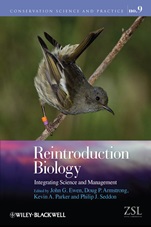
Reintroduction Biology: Integrating Science and Management
ISBN 9781405186742
Autor: John G. Ewen, Doug P. Armstrong, Kevin A. Parker, Philip J. Seddon
Wydawca: Wiley
Dostępność: 3-6 tygodni
Cena: 338,10 zł
Przed złożeniem zamówienia prosimy o kontakt mailowy celem potwierdzenia ceny.
ISBN13: |
9781405186742 |
ISBN10: |
1405186747 |
Autor: |
John G. Ewen, Doug P. Armstrong, Kevin A. Parker, Philip J. Seddon |
Oprawa: |
Paperback |
Rok Wydania: |
2012-01-06 |
Ilość stron: |
528 |
Wymiary: |
234x156 |
Tematy: |
PS |
Spis treści:
Book proposal.
AVIAN TRANSLOCATIONS FOR CONSERVATION: Science and Management.
.
Editors: John G. Ewen1, Doug Armstrong2,3, Kevin Parker4 & Phillip Seddon5,6.
.
1) Institute of Zoology, Regents Park, NW1 4RY London, United Kingdom.
2) Institute of Natural Resources, Massey University, Palmerston North, New Zealand.
3) Oceania Chair, IUCN/SSC Re–introduction Specialist Group.
4) Institute of Natural Resources, Massey University, Private Bag 102904, North Shore Mail Centre, Auckland, New Zealand.
5) Department of Zoology, University of Otago, P.O.Box 56, Dunedin, New Zealand.
6) Bird Section Chair, IUCN/SSC Reintroduction Specialist Group..
Section One: Planning and Implementation.
Chapter one – Why are we planning a translocation?.
Aim: To introduce the different forms of conservation translocation and the different stakeholders involved..
Overview: While the underling premise of translocations is deceptively simple the specifics of “who for” and “why” are seldom addressed. It is important for the success of a translocation project to clearly understand the aims and identify the stakeholders before it takes place. We suggest that translocations are primarily undertaken by three groups – conservation managers, scientists and the wider human community (ranging from volunteer groups and enthusiasts through to the tax payers who often foot the bill). Each stakeholder may have different aims, experience and resources that can influence the type and outcome of a translocation. There are also various types of translocation, ranging from: (i) a single species management exercise aimed at increasing a threatened species’ range and numbers; (ii) an advocacy tool to generate interest and public support; (iii) an experimental translocation aimed at addressing hypotheses about the science of translocation and population viability; and (iv)
a component of ecological restoration. Again it is essential to clearly understand why a translocation is being done as it will determine what resources and effort are available and what end point is expected. This chapter will introduce the idea of translocations and summarise the many different whys and who fors to help direct and focus a priori goal setting..
Possible box text 1: Tiritiri Matangi Island, New Zealand as a successful ecosystem restoration program heavily reliant on translocation. Translocations to Tiritiri Matangi Island offer an ideal model system that has incorporated all types of translocation and encompass all stakeholders..
Possible box text 2: Translocation, restoration and indigenous people. Traditional knowledge, values and stewardship are important components of successful management of endangered species – use the Rarotonga Flycatcher or kakerori (population declined to 29 birds) and the Kainuku, Karika and Manavaroa landowning clans as an example..
Possible authors: Kevin Parker (Massey University, NZ), Dr. Phillip Seddon (Otago University, NZ), Dr. Mark Stanley Price (Durrell Wildlife Conservation Trust, UK), Dr. Frédéric Launay (ERWDA, United Emirates), Assoc. Prof. Doug Armstrong (Massey University, NZ), representative of the Takitumu Conservation Area committee (Rarotonga).
.
Chapter two – Selecting a suitable release site.
Aim: To review the theory behind and provide a framework for selecting suitable habitat when we often have little information to work with..
Overview: One of the key requirements of translocation guidelines is to select suitable habitat for release sites. This, however, is a very difficult criterion to meet. Endangered species are often restricted to habitat that may not be preferred (or are only found in captivity) and the cause of extirpation from other regions is often poorly known. This chapter will critically assess our ability to determine habitat suitability
and summarise many of the pitfalls translocation practitioners have met. The importance of attempting to understand the factor(s) that caused the original population decline and required management action to remedy the threat or threats will be emphasised. In addition we will raise awareness to the often seen problem of basing management on intuition rather than data. Finally we will review modern methods that can help minimise the guesswork normally associated with selecting release sites..
Possible box text 1: Remnant habitats vs. ideal habitats. Review classic examples of where management was restricted by using habitat characteristics at sites of remnant populations and the benefits of relaxing these criteria. Examples will include the Lord Howe woodhen, the Hawaiian nene, the New Zealand takahe and saddleback..
Possible box text 2: The utilisation of GIS to predict and identify potential habitat for release sites. Provide an insight and examples of these powerful tools used in conservation of taxa such as bearded vulture and numerous mammal species..
Possible authors: Assoc. Prof. Doug Armstrong (Massey University, NZ), Dr. Ian Jamieson (Otago University, NZ), Kevin Parker (Massey University, NZ), Dr. Jim Groombridge (DICE, UK), Prof. Raphaёl Arlettaz (University of Bern, Switzerland), Prof. David Macdonald (University of Oxford, UK).
.
Chapter three – Practicalities of selecting and moving birds.
Aim: To summarize the many available options for selecting individuals for translocation and to provide appropriate methodologies for holding, transport and release..
Overview: A translocation is a series of stressful events for the target birds. Therefore capture, processing and transportation, and subsequent condition on release, is critical to the success of any translocation. The most basic component is personal highly skilled at handling and maintaining wild birds in captivity. A working knowledge of the effects of stress on
individual birds is required as it is important when considering release strategies, e.g., immediate versus delayed releases. Species will differ in their reactions to captivity, and the role of basic biological knowledge of target species is critical, particularly when deciding the age, sex ratio and number of individuals to release, multiple releases and the timing of reintroductions..
Possible box text 1: Various aviary and transport box designs and why they are preferred..
Possible box text 2: Stress. What is it? Why is it a problem? What causes it? And how do we monitor and mitigate it?.
Possible box text 3: Soft versus hard release. These terms need defining as they encompass a range of release strategies. The literature, however, suggests that at best soft releases have no effect, and in some cases reduces success, and yet it is often the preferred strategy. Why is this so? A critical assessment..
Possible box text 4: Two case studies highlighting the benefits of understanding a species biology and identifying threats. Operation nest egg. A novel approach to mitigating predation threats in the New Zealand kiwi. Translocation of the cooperatively breeding black–eared miner in Australia. Complex social structure adds major difficulties to planning and implementation of translocation programmes..
Possible authors: Tim Lovegrove (Auckland Regional Council, NZ), Kevin Parker (Massey University, NZ), Dr Claudia Carraro (University of Padova, Italy), Dr Rohan Clarke (Deakin University, Australia), Don Merton (Department of Conservation, NZ), Dr. Hugh Robertson (Department of Conservation, NZ)..
.
Section Two: Monitoring and Management.
.
Chapter four – Strategic monitoring of reintroduced populations.
Aim: To provide a reintroduction practitioners with a framework for fitting monitoring programs to information requirements..
Overview: It is now well appreciated that reintroduced populations need to be monitore
Koszyk
Książek w koszyku: 0 szt.
Wartość zakupów: 0,00 zł
Informacje


Kontakt
Gambit
Centrum Oprogramowania
i Szkoleń Sp. z o.o.
Al. Pokoju 29b/22-24
31-564 Kraków
Siedziba Księgarni
ul. Kordylewskiego 1
31-542 Kraków
+48 12 410 5991
+48 12 410 5987
+48 12 410 5989
Subskrypcje
Administratorem danych osobowych jest firma Gambit COiS Sp. z o.o. Na podany adres będzie wysyłany wyłącznie biuletyn informacyjny.
Autoryzacja płatności

Informacje na temat autoryzacji płatności poprzez PayU.

© Copyright 2012: GAMBIT COiS Sp. z o.o. Wszelkie prawa zastrzeżone.
Projekt i wykonanie: Alchemia Studio Reklamy