


Wydawcy
Katalog tematyczny
- Archeologia (109)
- Ekonomia, finanse, business (13704)
- Filozofia (1445)
- Historia (3040)
- Języki i językoznawstwo (2356)
- Lifestyle, hobby i rozrywka (475)
- Medycyna (9704)
- Nauki humanistyczne (4)
- Nauki o Ziemi i środowisku (2638)
- Nauki ścisłe (20412)
- Nauki społeczne (8486)
- Nauki techniczne (13450)
- Budownictwo lądowe (1045)
- Budownictwo komunikacyjne (9)
- Hydraulika (33)
- Konstrukcje budowlane (95)
- Mechanika konstrukcji (182)
- Przemysł budowlany (7)
- Chemia przemysłowa (2258)
- Elektronika i telekomunikacja (3287)
- Energetyka (1122)
- Inne nauki stosowane (363)
- Inżynieria biochemiczna (507)
- Inżynieria transportu (232)
- Mechanika i materiały (3316)
- Nauka o środowisku (321)
- Rolnictwo (507)
- Technika, ogólnie (475)
- Prawo (1696)
- Publikacje informacyjne i interdyscyplinarne (1288)
- Religia i wierzenia (917)
- Technika komputerowa (4067)
- Zdrowie, relacje międzyludzkie i rozwój osobisty (657)





Informacje szczegółowe o książce
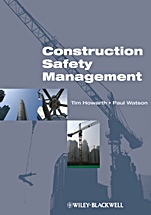
Construction Safety Management
ISBN 9781405186605
Autor: Tim Howarth, Paul Watson
Wydawca: Wiley
Dostępność: 3-6 tygodni
Cena: 246,75 zł
Przed złożeniem zamówienia prosimy o kontakt mailowy celem potwierdzenia ceny.
ISBN13: |
9781405186605 |
ISBN10: |
1405186607 |
Autor: |
Tim Howarth, Paul Watson |
Oprawa: |
Paperback |
Rok Wydania: |
2008-11-21 |
Ilość stron: |
216 |
Wymiary: |
246x177 |
Tematy: |
TN |
Additional resources to accompany the book are available at: http://www.blackwellpublishing.com/howarth/
The construction industry is a global, dynamic and innovative industry that delivers buildings and infrastructure for all aspects of commercial and domestic activity.
This dynamic and innovative industry is faced with safety challenges on a project by project and day to day basis. Excellence in Health and safety management is therefore a key requirement of construction industry professional practice, and as such its study is a necessary and core component of a wide range of built environment undergraduate degree programmes, either as a distinct discipline or as an embedded component.
Construction Safety Management is an accessible, up–to–date text that outlines the principles and practices of construction health and safety management. It is written to support the study of health and safety on professionally accredited undergraduate built environment degree programmes. The text introduces and informs the reader of issues, concepts, legislation and practice pertinent to the sound development of knowledge and practice requisite for effective construction health and safety management.
Students on courses ranging from Architecture, Architectural Technology, Building Engineering, Civil Engineering, Construction Management, Project Management and Quantity Surveying will find that each chapter presents clear learning objectives, addresses key issues and concepts and provides for self–assessment of learning.
Spis treści:
Introduction: Health and Safety – Overriding Principles.
Chapter 1 The Safety Performance of the UK Construction Industry.
This chapter introduces and reviews the safety performance record of the UK construction industry. The Egan report ‘Rethinking Construction’ (DETR, 1998) stated that ‘the health and safety record of construction is the second worst of any indust
ry’ and that ‘accidents can account for 4 to 6 per cent of total project costs’. This chapter presents an evaluation of the UK construction Industry’s safety performance statistics and enables the reader to meaningfully consider Egan’s statement.
Learning Objectives of the Chapter.
Introduction to the Chapter.
Reporting and Recording accidents – the HSC and the HSE.
Standardisation of accident statistics.
UK Construction Industry Safety Statistics.
Campaign to Revitalise Health and Safety in the UK Construction Industry.
The impact of ‘RIDDOR’ upon the recording of health and safety performance statistics.
Chapter Summary.
Self Assessment Questions.
Chapter 2 The Legal Framework and Enforcement of Construction Health and Safety.
This chapter outlines the framework of UK construction health and safety law and its enforcement. It presents an overview of the hierarchy of UK construction health and safety requirements, identifies the categories of duty imposed by UK health and safety law, introduces the institutions and actions of health and safety enforcement, addresses when a prosecution might be pursued and considers the burden of proof of prosecution and possible resultant penalties.
Learning Objectives of the Chapter.
Introduction to the Chapter.
European Union Law.
Statutory Law.
Statutory Instruments.
Approved Codes of Practice.
Complying with Health and Safety Law – Fulfilling Duties.
Enforcement of the Health and Safety within the UK.
The Enforcement Process.
Chapter Summary.
Self Assessment Questions.
Chapter 3 UK Construction Health and Safety Law.
The Health and Safety law of the UK construction industry is, like all UK industries, built upon The Health and Safety at Work Act, etc 1974. This Act provides the basis for UK health and safety law and is further supported by sets of ‘regulations’. Together the Act and regulati
ons make for a comprehensive and cohesive framework of UK construction health and safety law. This chapter presents detail of the Health and Safety at Work Act, etc 1974 and key UK construction health and safety regulations. Completion of the chapter provides the reader with a secure foundation of knowledge regarding the framework of UK construction health and safety law.
Learning Objectives of the Chapter.
Introduction to the Chapter.
Key Duties Imposed by the Health and Safety at Work Act, etc 1974.
Health and Safety Regulations.
Time Line of Key UK Construction Health and Safety Legislation.
Use of approved codes of practice in criminal proceedings.
The Fulfilment of Key Duties imposed by Health and Safety Law.
Chapter summary.
Self Assessment Questions.
Chapter 4 The Construction (Design and Management) Regulations 2007.
The Construction (Design and Management) Regulations 2007 (CDM2007) place health and safety management duties on all parties to a construction project. The Regulations promote effective project communication and co–ordination and require the assessment and demonstration of competence. A new role is created by the Regulations, that of the CDM co–ordinator. This role replaces that of the previous ‘planning supervisor’. In further support of effective health and safety management the Regulations require the production of ‘pre–construction information’ by the client and a ‘construction phase plan’ by the principal contractor.
Learning Objectives of the Chapter.
Introduction to the Chapter.
Definitions Provided within the Regulations.
Application of the Regulations.
The Structure and Content of the Regulations.
The requirement for welfare facilities on construction projects.
The safety management duties and responsibilities imposed on parties to a construction project by CDM2007.
Delivering Notifiable Construction Projects.
Further infor
mation on CDM2007.
Chapter Summary.
Self Assessment Questions.
Chapter 5 Key Site Health and Safety Hazards and Control Measures.
A safe site requires the effective planning of work operations, the control of hazards and hazardous activities, and project personnel with technical competence, professional conduct and positive attitudes towards safety. This chapter serves to raise awareness and understanding of the nature of safety hazards commonly encountered on construction projects. A ‘register’ of common hazards is presented which arranges hazards into 5 key categories. The register facilitates awareness of the typology of construction safety hazards and associated control measures of good safety management practice.
Learning Objectives of the Chapter.
Introduction to the Chapter.
Definition of a safety hazard.
Definition of ‘risk’ (in a safety context).
Identifying Hazards.
A ‘Register’ of Common Site Safety Hazards.
Chapter Summary.
Self Assessment Questions.
.
Chapter 6 Principles and Practice of Health and Safety Risk Assessment.
Risk assessment is a fundamental component of health and safety management methodology. It is essential for construction managers to be fully conversant with the principles and practice of risk assessment. The chapter identifies the legal basis for the requirement of health and safety risk assessment in the UK construction industry. Further to this, the chapter outlines a methodology for the carrying out of health and safety risk assessments and presents worked examples.
Learning Objectives of the Chapter.
Introduction to the Chapter.
Duty to Carry Out Risk Assessments.
Undertaking Risk Assessment.
Hazard Identification.
Evaluation of Risk.
Prevention and Protective Measures.
Chapter summary.
Self Assessment Questions.
.
Chapter 7 Managing for Health and Wellbeing.
It is essential that construction industry employers de
Koszyk
Książek w koszyku: 0 szt.
Wartość zakupów: 0,00 zł
Informacje


Kontakt
Gambit
Centrum Oprogramowania
i Szkoleń Sp. z o.o.
Al. Pokoju 29b/22-24
31-564 Kraków
Siedziba Księgarni
ul. Kordylewskiego 1
31-542 Kraków
+48 12 410 5991
+48 12 410 5987
+48 12 410 5989
Subskrypcje
Administratorem danych osobowych jest firma Gambit COiS Sp. z o.o. Na podany adres będzie wysyłany wyłącznie biuletyn informacyjny.
Autoryzacja płatności

Informacje na temat autoryzacji płatności poprzez PayU.

© Copyright 2012: GAMBIT COiS Sp. z o.o. Wszelkie prawa zastrzeżone.
Projekt i wykonanie: Alchemia Studio Reklamy