


Wydawcy
Katalog tematyczny
- Archeologia (109)
- Ekonomia, finanse, business (13704)
- Filozofia (1445)
- Historia (3040)
- Języki i językoznawstwo (2356)
- Lifestyle, hobby i rozrywka (475)
- Medycyna (9704)
- Nauki humanistyczne (4)
- Nauki o Ziemi i środowisku (2638)
- Geografia (299)
- Nauki o Ziemi (1661)
- Geologia (414)
- Hydrologia (237)
- Meteorologia i klimatologia (114)
- Paleontologia (33)
- Wulkanologia i sejsmologia (44)
- Planowanie przestrzenne (53)
- Środowisko (607)
- Nauki ścisłe (20412)
- Nauki społeczne (8486)
- Nauki techniczne (13450)
- Prawo (1696)
- Publikacje informacyjne i interdyscyplinarne (1288)
- Religia i wierzenia (917)
- Technika komputerowa (4067)
- Zdrowie, relacje międzyludzkie i rozwój osobisty (657)





Informacje szczegółowe o książce
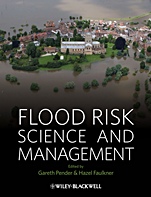
Flood Risk Science and Management
ISBN 9781405186575
Autor: Gareth Pender, Hazel Faulkner
Wydawca: Wiley
Dostępność: 3-6 tygodni
Cena: 1 202,25 zł
Przed złożeniem zamówienia prosimy o kontakt mailowy celem potwierdzenia ceny.
ISBN13: |
9781405186575 |
ISBN10: |
1405186577 |
Autor: |
Gareth Pender, Hazel Faulkner |
Oprawa: |
Hardback |
Rok Wydania: |
2010-12-17 |
Ilość stron: |
544 |
Wymiary: |
256x193 |
Tematy: |
RBKF |
Approaches to avoid loss of life and limit disruption and damage from flooding have changed significantly in recent years. Worldwide, there has been a move from a strategy of flood defence to one of flood risk management. Flood risk management includes flood prevention using hard defences, where appropriate, but also requires that society learns to live with floods and that stakeholders living in flood prone areas develop coping strategies to increase their resilience to flood impacts when these occur. This change in approach represents a paradigm shift which stems from the realisation that continuing to strengthen and extend conventional flood defences is unsustainable economically, environmentally and in terms of social equity. Flood risk management recognises that a sustainable approach must rest on integrated measures that reduce not only the probability of flooding, but also the consequences. This is essential as increases in the probability of inundation are inevitable in many areas of the world due to climate change, while socio–economic development will lead to spiralling increases in the consequences of flooding unless land use in floodplains is carefully planned.
Acceptance of the reality of climate change has introduced a further shift in flood studies and the management of flood risk. Until recently, assessment of flood hazards depended on statistical manipulation of historical records and the current pattern of land–use and economic activity in the area at risk. It is now accepted that future flood risks cannot be estimated from historical flood probabilities or current socio–economic conditions. Consequently, new approaches to flood management must rely on climate change predictions and scenarios for socio–economic change that are highly uncertain. The requirement to place the treatment of uncertainty at the heart of flood risk management places further demands on the scientists and engineers responsible for designing and d
elivering science and technologies capable of avoiding unacceptable increases in flood risk during the remainder of the 21st century. Conversely, the benefits of flooding to aquatic, riparian, floodplain and, particularly, wetland environments and ecosystems are being increasingly recognised. In this context, climate change impacts involving reductions in flood frequency and duration threaten many of the world’s most bioproductive and diverse ecosystems, and steps to promote managed flooding become vital to conserving endangered species and their habitats. A successful flood risk management strategy will therefore minimise the adverse impacts of flooding while, at the same time, allowing for uncertainties and maximising the environmental benefits.
The proposed Flood Management Handbook will provide a comprehensive state–of–the–art summary of current international research and practice in each of the following key components of flood risk management
Editor′s Note
Blackwell is at an advanced stage in planning the launch of a new journal on flood risk science and management, in conjunction with CIWEM and the UK Flood Risk consortium. This Handbook will benefit enormously from this synergy and the involvement oif the Institute.
Spis treści:
Part one – Drivers for change.
Led by Professor Colin Thorne, University of Nottingham with co–authors Professor Gareth Pender, Heriot Watt University and Professor Ian Cluckie, University of Bristol, this section will set the scene for the subsequent sections of the book. It will review the increase in uncertainty in hydrological prediction arising from climate change the impact of this on flood prediction and how this has acted as a driver for a change in practice from flood defence to flood risk management..
Part two– Catchment and land use management.
2.1 Strategic overview of land use management in the context of catchment flood pla
nning, lead author Professor Enda O’Connell, University of Newcastle..
2.2 A strategic view of land management planning, Professor Nishat, Bangladesh or Professor Chen, Flood Hazard Unit, China..
2.3 Integrated sustainable development of floodplains and wetlands, lead author Professor Stuart Lane, University of Durham..
2.4 Multi–scale impacts of upland land management on water and sediment runoff, lead author Professor Howard Wheater, Imperial College.
2.5 Distributed catchment modelling and uncertainty, lead author Professor Keith Beven, University of Lancaster..
2.6 Morphology, habitat and infrastructure interactions in the fluvial environment, lead author Professor Colin Thorne, University of Nottingham..
2.7 Morphology, habitat and infrastructure interactions in the coastal environment, lead author Professor Robert Nicholls, University of Southampton..
Part three – Flood forecasting and warning.
3.1 Handling uncertainty in coastal modelling, lead author Professor Dominic Reeve, University of Plymouth..
3.2 Artificial intelligence techniques in real–time flood forecasting, lead author Dr Jonathon Lawry, University of Bristol..
3.3 An international perspective of advances in flood forecasting and warning, lead author Professor Witold Krajewski, University of Iowa, USA.
3.4 Advances in weather radar and remote sensing in flood forecasting, lead author Professor Ian Cluckie, University of Bristol..
3.5 Real–time model updating in flood warning, lead author Professor Peter Young, University of Lancaster..
3.6 Coupled real–time forecasting and uncertainty using ensembles, lead author Professor Geoff Austin, University of Auckland..
Part four – Mitigation strategies.
4.1 Data needs to support flood mitigation, lead author Dr Martin Smith, University of Nottingham..
4.2 Modelling to support flood mitigation, lead author Professor Gareth Pender, Heriot Watt University..
4.3 Mod
elling flood risk at a national scale, Dr. Ad van Os, Delft Technical University, The Netherlands..
4.4 Integrated urban flood modelling, lead author Professor Adrian Saul, University of Sheffield..
4.5 Real–time control of urban flood water management, lead author Dr Hans–Reinhard Verworn, University of Hanover, FRG..
4.6 Improved methodologies for infrastructure condition assessment, lead author Professor Mick Mawdesley, University of Nottingham..
4.7 Coastal defence reliability analysis and option searching, lead author Paul Sayers HR Wallingford Ltd..
4.8 Engineering mitigation of flood risk, lead author Professor de Friend , Delft Hydraulics, The Netherlands..
Part five – Policy and planning.
5.1 Flood risk management policy and stakeholder engagement in the UK, lead author Professor Joe Howe, Queens University Belfast.
5.2 Advances in disaster management in Japan, lead author Professor Haruo Hayashi, Disaster Prevention Research Institute, Kyoto University, Japan..
5.3 Flood risk communication, lead UK author Dr Hazel Faulkner, Flood Hazard Research Centre, University of Middlesex..
5.4 Socio–psychological dimensions of flood risk management, lead author Professor Edmund Penning–Roswell, Flood Hazard Research Centre, University of Middlesex..
5.5 Managed retreat, lead author Dr Jonathon Simm, HR Wallingford Ltd..
5.6 Assessment of environmental and public health risks due to urban flooding, lead author Professor David Kay, University of Aberystwyth..
5.7 Institutions, governance and flood management goals, Professor Peter Rogers, Harvard University, USA..
Part six – Case studies.
The final case study topics have yet to be identified. The following are indicative what might be included in the handbook..
6.1 Thames estuary – internationally known demonstrates a wide range of issues including: strategic planning, disaster planning, and storm surge, flood modelling, mitigati
Koszyk
Książek w koszyku: 0 szt.
Wartość zakupów: 0,00 zł
Informacje


Kontakt
Gambit
Centrum Oprogramowania
i Szkoleń Sp. z o.o.
Al. Pokoju 29b/22-24
31-564 Kraków
Siedziba Księgarni
ul. Kordylewskiego 1
31-542 Kraków
+48 12 410 5991
+48 12 410 5987
+48 12 410 5989
Subskrypcje
Administratorem danych osobowych jest firma Gambit COiS Sp. z o.o. Na podany adres będzie wysyłany wyłącznie biuletyn informacyjny.
Autoryzacja płatności

Informacje na temat autoryzacji płatności poprzez PayU.

© Copyright 2012: GAMBIT COiS Sp. z o.o. Wszelkie prawa zastrzeżone.
Projekt i wykonanie: Alchemia Studio Reklamy