


Wydawcy
Katalog tematyczny
- Archeologia (109)
- Ekonomia, finanse, business (13704)
- Filozofia (1445)
- Historia (3040)
- Języki i językoznawstwo (2356)
- Lifestyle, hobby i rozrywka (475)
- Medycyna (9704)
- Nauki humanistyczne (4)
- Nauki o Ziemi i środowisku (2638)
- Nauki ścisłe (20412)
- Nauki społeczne (8486)
- Edukacja (229)
- Kryminologia, opieka spełeczna (284)
- Obronność (10)
- Polityka (1389)
- Psychologia (777)
- Socjologia (410)
- Społeczeństwo i kultura (187)
- Nauki techniczne (13450)
- Prawo (1696)
- Publikacje informacyjne i interdyscyplinarne (1288)
- Religia i wierzenia (917)
- Technika komputerowa (4067)
- Zdrowie, relacje międzyludzkie i rozwój osobisty (657)





Informacje szczegółowe o książce
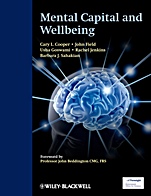
Mental Capital and Wellbeing
ISBN 9781405185912
Autor: Cary Cooper, Usha Goswami, Barbara J. Sahakian
Wydawca: Wiley
Dostępność: 3-6 tygodni
Cena: 1 540,35 zł
Przed złożeniem zamówienia prosimy o kontakt mailowy celem potwierdzenia ceny.
ISBN13: |
9781405185912 |
ISBN10: |
1405185910 |
Autor: |
Cary Cooper, Usha Goswami, Barbara J. Sahakian |
Oprawa: |
Hardback |
Rok Wydania: |
2009-10-28 |
Ilość stron: |
1040 |
Wymiary: |
254x197 |
Tematy: |
JC |
This major new reference presents The Foresight Mental Capital and Wellbeing Project (a UK Government project in the Government Office for Science). It offers a comprehensive exploration of how mental capital and wellbeing operate over the lifespan; how experiences in the family, in school, at work and following retirement augment or reduce mental capital and wellbeing, and the impact that this has for the individual and for the welfare and economic progress of the nation.
Mental Capital and Wellbeingcomprises a series of scientific reviews written by leading international scientists and social scientists in the field. The reviews undertake systematic analyses of the evidence base surrounding five key themes, on which they propose future policies will have to be based. An internationally renowned team of Editors introduce each theme and draw together conclusions in terms of both policy and practice.
Section 1 (Mental Capital and Wellbeing Through Life) – Mental capital refers to the totality of an individual’s cognitive and emotional resources, including their cognitive capability, flexibility and efficiency of learning, emotional intelligence and resilience in the face of stress. The extent of an individual’s resources reflects his or her basic endowment (e.g. genes and early biological programming), motivation and experiences (e.g. education) which take place throughout the life course. This section presents the very latest on the science of mental capital throughout life.
Section 2 (Learning Through Life) provides a coherent overview of a fast–moving and complex field of policy and practice. Educational attainment has a considerable impact on physical and mental wellbeing, both directly and indirectly, by enabling people better to achieve their goals. The ability to continue learning throughout the lifespan is critical to a successful and rewarding life in contemporary societies.
Se
ction 3 (Mental Health and Ill–Health) draws together the most recent evidence about positive mental health as well as a range of mental disorders to consider their importance to the population and economy in terms of prevalence and disability and the wider burden on society.
Section 4 (Wellbeing and Work) – It is estimated that 13 million working days are lost through stress each year, costing the economy over £3.7 billion per annum. This theme explores those drivers that influence the nature and structure of work and the impact this has on employee wellbeing.
Section 5 (Learning Difficulties) – This theme provides a cutting–edge picture of how recent insights from genetics, cognitive and neuroscience improve our understanding of learning difficulties such as dyslexia, dyscalculia and attention–deficit–hyperactivity disorder. Reviews focus on how current research can contribute to early diagnosis and improved intervention.
Spis treści:
List of Contributors
Foreword
Introduction
Acknowledgements
Section 1: Mental Capital and Wellbeing Through Life (lead expert: Professor Barbara J. Sahakian)
1 Mental capital and wellbeing through life: future challenges (Tom Kirkwood, John Bond, Carl May, Ian McKeith and Min–Min Teh)
2 Neuroscience in education (Usha Goswami)
3 Neuroscience of human reward (Rebecca Elliott and Bill Deakin)
4 Neuroeconomics (Ray Dolan)
5 Cognitive reserve and mental capital (Jennifer Barnett and Barbara J. Sahakian)
6 Mapping brain maturation and development of social cognition during adolescence (Tomáš Paus)
7 Reinforcement, impulsivity and behavioural economics (Chris M. Bradshaw)
8 The neural basis of resilience (Rebecca Elliott, Barbara J. Sahakian and Dennis Charney)
9 Neurocognition and social cognition
in adolescent drug users: vulnerability and consequences (Martin P. Paulus and Susan F. Tapert)
10 Pharmacological cognitive enhancement (Sharon Morein–Zamir, Trevor Robbins, Danielle Turner and Barbara J. Sahakian)
11 Stem cells in neural regeneration and adult neurogenesis (Roger A. Barker)
12 Early detection of mild cognitive impairment and Alzheimer’s disease: an example using the CANTAB PAL (Mischa de Rover, Sharon Morein–Zamir and Barbara J. Sahakian)
13 Neurocognition and neuroimaging in anxiety disorders: implications for treatment and functional outcome (Daniel S. Pine and Ellen Leibenluft)
14 Neurocognition and social cognition in middle–aged and older adult drug users: vulnerability and consequences (Karen Ersche and David Nutt)
15 Determinants of normal cognitive ageing: implications for mental capital (Ian J. Deary and Alan J. Gow)
16 The neuroscience of social cognition in teenagers: implications for inclusion in society (Catherine Sebastian, Stephanie Burnett and Sarah–Jayne Blakemore)
17 Stress–related mood disorder: novel concepts for treatment and prevention (Mark J. Millan)
18 Nutrition, cognitive wellbeing and socioeconomic status (Chris J. Packard)
19 Nutrition and cognitive health (Jose M. Ordovas)
20 Effect of chronic stress on cognitive function through life (Oliver T. Wolf and Claudia Buss)
21 Depression and its toll on mental capital (Ian McKeith and Jan Scott)
22 Cognitive training: influence on neuropsychological and brain function in later life (George W. Rebok)
23 The effect of physical activity on mental capital and wellbeing (Hilde Hendrickx and Frans van der Ouderaa)
24 Technology solutions to prevent waste of mental capital (Patrick Olivier, Joe Wherton and Andrew Monk)
25 Housing as a determinant of mental capital (James R. Dunn)26 Brain–computer interfaces and cognitive neural prostheses (Kenneth R. Foster)
27 The cellular and molecular logic of neural circuit assembly: progress and challenges (Thomas M. Jessell)
Section 2: Learning Through Life (lead expert: Professor John Field)
28 Learning through life: future challenges (Leon Feinstein, John Vorhaus and Ricardo Sabates)
29 Learning at work: opportunities and barriers (Lorna Unwin)
30 Participation in learning; barriers to learning (Stephen Gorard)
31 Evidence–informed principles from the Teaching and Learning Research Programme (Andrew Pollard)
32 Estimating the effects of learning (Jere R. Behrman)
33 Self–regulation and executive function: what can teachers and schools do? (Mark T. Greenberg and Brittany L. Rhoades)
34 Models of provision of lifelong learning: how is it done around the world? (John Field)
35 The economic importance of social skills: a short (and selective) survey of recent research (Pedro Carneiro)
Section 3: Mental Health and Ill–Health (lead expert: Professor Rachel Jenkins)
36 Mental health and ill–health: future challenges (Rachel Jenkins, Howard Meltzer, Peter B. Jones, Terry Brugha, Paul Bebbington, Michael Farrell, David Crepaz–Keay and Martin Knapp)
37 Genetics of mental ill–health in children and adults and interaction of genes with social factors (Rudolf Uher and Peter McGuffin)
38 The influence of demographic, social and physical factors on ageing and the mental health of older people (Robert Stewart and Martin Prince)
39 The influence of social, demographic and physical factors on positive mental health in children, adults and older people (Margaret Barry and Lynne Friedli)
40 The influence of social, demographic and physical factors on mental disorders in children and adolescents (Howar
Koszyk
Książek w koszyku: 0 szt.
Wartość zakupów: 0,00 zł
Informacje


Kontakt
Gambit
Centrum Oprogramowania
i Szkoleń Sp. z o.o.
Al. Pokoju 29b/22-24
31-564 Kraków
Siedziba Księgarni
ul. Kordylewskiego 1
31-542 Kraków
+48 12 410 5991
+48 12 410 5987
+48 12 410 5989
Subskrypcje
Administratorem danych osobowych jest firma Gambit COiS Sp. z o.o. Na podany adres będzie wysyłany wyłącznie biuletyn informacyjny.
Autoryzacja płatności

Informacje na temat autoryzacji płatności poprzez PayU.

© Copyright 2012: GAMBIT COiS Sp. z o.o. Wszelkie prawa zastrzeżone.
Projekt i wykonanie: Alchemia Studio Reklamy