


Wydawcy
Katalog tematyczny
- Archeologia (109)
- Ekonomia, finanse, business (13704)
- Filozofia (1445)
- Historia (3040)
- Języki i językoznawstwo (2356)
- Lifestyle, hobby i rozrywka (475)
- Medycyna (9704)
- Nauki humanistyczne (4)
- Nauki o Ziemi i środowisku (2638)
- Nauki ścisłe (20412)
- Nauki społeczne (8486)
- Nauki techniczne (13450)
- Prawo (1696)
- Publikacje informacyjne i interdyscyplinarne (1288)
- Religia i wierzenia (917)
- Technika komputerowa (4067)
- Zdrowie, relacje międzyludzkie i rozwój osobisty (657)





Informacje szczegółowe o książce
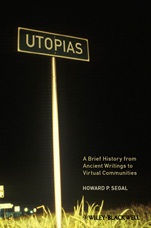
Utopias: A Brief History from Ancient Writings to Virtual Communities
ISBN 9781405183284
Autor: Howard P. Segal
Wydawca: Wiley
Dostępność: 3-6 tygodni
Cena: 184,80 zł
Przed złożeniem zamówienia prosimy o kontakt mailowy celem potwierdzenia ceny.
ISBN13: |
9781405183284 |
ISBN10: |
1405183284 |
Autor: |
Howard P. Segal |
Oprawa: |
Paperback |
Rok Wydania: |
2012-04-20 |
Ilość stron: |
304 |
Wymiary: |
216x142 |
Tematy: |
CS |
The term utopia typically conjures up naive, impractical, and superficial notions of a perfect society. This book offers a less stereotyped and more complex view of utopias – of their history, their varying manifestations, and their reflection of the societies from which they hail.
Segal connects past to present utopianism, from the first utopias in ancient Greece, through their flourishing in the Renaissance to the famous ′dystopias′ of Orwell, Huxley, and Zamyatin in the twentieth–century, and right up to present–day high tech and virtual utopias.
The book explores the many genres in which utopianism has expressed itself – prophecies and oratory, writings, political movements, world′s fairs, physical communities, and cyberspace communities. The book shows that, far from an exclusively Western enterprise, utopias have been worldwide, appearing in regions such as Latin America and Asia. With the current strong interest in utopias, now conceived as cyberspace paradises or as the result of high–tech advances, this book offers a timely appraisal of the joys and pitfalls of utopian thought.
Preface xi
Introduction 1
1 The Nature of Utopias 5
Utopias Defined 5
Utopias Differ from both Millenarian Movements and Science Fiction 8
Utopias′ Spiritual Qualities are Akin to those of Formal Religions 9
Utopias′Real Goal: Not Prediction of the Future but Improvement of the Present 12
How and When Utopias are Expected to be Established 13
2 The Variety of Utopias 16
The Global Nature of Utopias: Utopias are Predominantly but not Exclusively Western 16
The Several Genres of Utopianism: Prophecies and Oratory, Political Movements, Communities, Writings, World′s Fairs, Cyberspace 24
3 The European Utopias and Utopians and Their Critics 47
The Pioneering European Visionaries and Their Basic Beliefs: Plato′s Republic and More′s Utopia 47
Forging the Connections Between Science, Technology, and Utopia 50
The Pansophists 53
The Prophets of Progress: Condorcet, Saint–Simon, and Comte 55
Dissenters from the Ideology of Unadulterated Scientific and Technological Progress: Thomas Carlyle, John Ruskin, and William Morris 58
The Expansive Visions of Robert Owen and Charles Fourier 60
The "Scientific"Socialism of Karl Marx and Friedrich Engels 66
4 The American Utopias and Utopians and Their Critics 74
America as Utopia: Potential and Fulfillment 74
The Pioneering American Visionaries and their Basic Beliefs in America as Land of Opportunity: John Adolphus Etzler, Thomas Ewbank, and Mary Griffith 78
America as "Second Creation": Enthusiasm and Disillusionment 81
5 Growing Expectations of Realizing Utopia in the United States and Europe 89
Later American Technological Utopians: John Macnie Through Harold Loeb 89
Utopia Within Sight: The American Technocracy Crusade 96
Utopia Within Reach: "The Best and the Brightest" Post–World War II Science and Technology Policy in the United States and Western Europe and the Triumph of the Social Sciences 99
On Misreading Frankenstein: How Scientific and Technological Advances have Changed Traditional Criticisms of Utopianism in the Twentieth and Twenty–First Centuries 123
6 Utopia Reconsidered 139
The Growing Retreat from Space Exploration and Other Megaprojects 139
Nuclear Power: Its Rise, Fall, and Possible Revival Maine Yankee as a Case Study 142
The Declining Belief in Inventors, Engineers, and Scientists as Heroes; in Experts as Unbiased; and in Science and Technology as Social Panaceas 157
Contemporary Prophets for Profit: The Rise and Partial Fall of Professional Forecasters 160
Post–colonial Critiques of Western Science and Technology as Measures of "Progress"169
7 The Resurgence of Utopianism 186
The Major Contemporary Utopians and Their Basic Beliefs 186
Social Media: Utopia at One′s Fingertips 193
Recent and Contemporary Utopian Communities 194
The Star Trek Empire: Science Fiction Becomes Less Escapist 199
Edutopia: George Lucas and Others 203
The Fate of Books and Newspapers: Utopian and Dystopian Aspirations 217
8 The Future of Utopias and Utopianism 234
The "Scientific and Technological Plateau"and the Redefinition of Progress 234
Conclusion: Why Utopia Still Matters Today and Tomorrow 241
Further Reading 261
Index 269
Howard P. Segal is Bird Professor of History at the University of Maine, where he has taught since 1986. He received his M.A. and Ph.D. from Princeton University. His previous books include Technological Utopianism in American Culture (1985) , Future Imperfect: The Mixed Blessings of Technology in America (1994), Technology in America: A Brief History (1989, 1999, with Alan Marcus), and Recasting the Machine Age: Henry Ford′s Village Industries (2005). He also reviews for, among other publications, Nature and the Times Higher Education.
Segal does a good job of surveying the history of utopias, particularly focusing on the connections with science and technology. Histories of this topic tend to highlight the religious or cultural motivations for writing about or creating utopian societies, but here the author expands the discussion to include virtual communities This text provides a unique approach for teaching history and the history of science. Highly recommended: general readers; lower–division undergraduates and above. Choice (1 February 2013)
Segal brings considerable scholarship and experience to bear, particularly on the historical intersections between technology and utopia ... [He] covers several continents and many centuries, addressing key texts and thinkers ... [and] supplies impressive coverage and thoughtful interpretations. Times Higher Education (12 July 2012)
Koszyk
Książek w koszyku: 0 szt.
Wartość zakupów: 0,00 zł
Informacje


Kontakt
Gambit
Centrum Oprogramowania
i Szkoleń Sp. z o.o.
Al. Pokoju 29b/22-24
31-564 Kraków
Siedziba Księgarni
ul. Kordylewskiego 1
31-542 Kraków
+48 12 410 5991
+48 12 410 5987
+48 12 410 5989
Subskrypcje
Administratorem danych osobowych jest firma Gambit COiS Sp. z o.o. Na podany adres będzie wysyłany wyłącznie biuletyn informacyjny.
Autoryzacja płatności

Informacje na temat autoryzacji płatności poprzez PayU.

© Copyright 2012: GAMBIT COiS Sp. z o.o. Wszelkie prawa zastrzeżone.
Projekt i wykonanie: Alchemia Studio Reklamy