


Wydawcy
Katalog tematyczny
- Archeologia (109)
- Ekonomia, finanse, business (13704)
- Filozofia (1445)
- Historia (3040)
- Języki i językoznawstwo (2356)
- Lifestyle, hobby i rozrywka (475)
- Medycyna (9704)
- Nauki humanistyczne (4)
- Nauki o Ziemi i środowisku (2638)
- Nauki ścisłe (20412)
- Nauki społeczne (8486)
- Nauki techniczne (13450)
- Prawo (1696)
- Publikacje informacyjne i interdyscyplinarne (1288)
- Religia i wierzenia (917)
- Technika komputerowa (4067)
- Zdrowie, relacje międzyludzkie i rozwój osobisty (657)





Informacje szczegółowe o książce
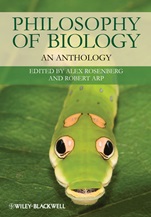
Philosophy of Biology: An Anthology
ISBN 9781405183161
Autor: Alex Rosenberg, Robert Arp
Wydawca: Wiley
Dostępność: 3-6 tygodni
Cena: 213,15 zł
Przed złożeniem zamówienia prosimy o kontakt mailowy celem potwierdzenia ceny.
ISBN13: |
9781405183161 |
ISBN10: |
1405183160 |
Autor: |
Alex Rosenberg, Robert Arp |
Oprawa: |
Paperback |
Rok Wydania: |
2009-03-31 |
Ilość stron: |
464 |
Wymiary: |
246x173 |
Tematy: |
HP |
Rapid biological advances and new standards of philosophical rigor are casting age–old questions about the nature and methodology of the biological sciences in a dramatic new light. Philosophy of Biology: An Anthology offers a comprehensive and up–to–date collection of the field s most significant works. The text is organized to provide readers at all levels with a thorough grounding in the general history, philosophy, and science behind debates that remain at the heart of the philosophy of biology. Addressing the field s central issues, sections draw on works relating to Darwinism and its influence on the biological sciences, evolution and chance, the unit of selection debate, adaptationism, evolutionary psychology, and the burgeoning science of evolutionary developmental biology, to name just a few. Editors introductions and further reading material throughout the text combined with the readings themselves provide novices with a solid basis on which to pursue further research in philosophy of biology.
Comprehensive in scope, Philosophy of Biology: An Anthology offers readers an accessible gateway into a field of study that holds the most crucial insights and implications into our understanding of the nature and methodology of the biological sciences.
Personal Acknowledgments
Source Acknowledgments
General Introduction: A Short History of Philosophy of Biology: Alex Rosenberg and Robert Arp
Part I: Basic Principles and Proofs of Darwinism
Introduction
1. Struggle for Existence and Natural Selection: Charles Darwin
2. Evolution: Eugenie G. Scott
Part II: Evolution and Chance
Introduction
3. Beyond the Reach of Chance: Michael Denton
4. Accumulating Small Change: Richard Dawkins
5. Chance and Natural Selection: John Beatty
6. The Principle of Drift: Biology s First Law: Robert N. Brandon
Part III: The Tautology Problem
Introduction
7. Darwin s Untimely Burial: Stephen Jay Gould
8. Adaptation and Evolutionary Theory: Robert N. Brandon
Part IV: Adaptationism
Introduction
9. The Spandrels of San Marco and the Panglossian Paradigm: A Critique of the Adaptationist Programme: Stephen Jay Gould and Richard C. Lewontin
10. How to Carry Out the Adaptationist Program?: Ernst Mayr
Part V: Biological Function and Teleology
Introduction
11. The Modern Philosophical Resurrection of Teleology: Mark Perlman
12. Neo–Teleology: Robert Cummins
13. A Modern History Theory of Functions: Peter Godfrey–Smith
Part VI: Evolutionary Developmental Biology
Introduction
14. Endless Forms: The Evolution of Gene Regulation and Morphological Diversity: Sean B. Carroll
15. Functional Evo–devo: Casper J. Breuker, Vincent Debat, and Christian Peter Klingenberg
Part VII: Reductionism and the Biological Sciences
Introduction
16. 1953 and All That: A Tale of Two Sciences: Philip Kitcher
17. The Multiple Realizability Argument against Reductionism: Elliott Sober
Part VIII: Species and Classification Problems
Introduction
18. Species, Taxonomy, and Systematics: Marc Ereshefsky
19. Spec;iation: A Catalogue and Critique of Species Concepts: Jerry A. Coyne and H. Allen Orr
Part IX: The Units of Selection Debate
Introduction
20. Artifact, Cause, and Genic Selection: Elliott Sober and Richard C. Lewontin
21. The Return of the Gene: Kim Sterelny and Philip Kitcher
22. The Levels of Selection Debate: Philosophical Issues: Samir Okasha
Part X: Sociobiology and Ethics
Introduction
23. Sociobiology: The New Synthesis: Edward O. Wilson
24. The Evolution of Cooperation: Robert Axelrod and William D. Hamilton
25. Darwinism in Moral Philosophy and Social Theory: Alex Rosenberg
Part XI: Evolutionary Psychology Introduction
26. Conceptual Foundations of Evolutionary Psychology: John Tooby and Leda Cosmides
27. The Environments of Our Hominin Ancestors, Tool–usage, and Scenario Visualization: Robert Arp
Part XII: Design and Creationism
Introduction
28. Science and Creationism: Donald Prothero
29. Irreducible Complexity: Obstacle to Darwinian Evolution: Michael J. Behe
30. The Flagellum Unspun: The Collapse of "Irreducible Complexity": Kenneth R. Miller
Alex Rosenberg is the R. Taylor Cole Professor of Philosophy, Professor of Biology and Director of the Center for Philosophy of Biology at Duke University. He has published 11 books on the philosophy of science including The Philosophy of Biology: A Contemporary Introduction (2007) with Daniel McShea. In 1993, he won the Lakatos Prize in the Philosophy of Science and in 2007 was the National Phi Beta Kappa Rommell lecturer in philosophy.
Robert Arp is Research Associate with the National Center for Biomedical Ontology at the University of Buffalo and works with the Ontology Research Group at the New York State Center of Excellence in Bioinformatics & Life Sciences in Buffalo, New York. A PhD in Philosophy from Saint Louis University, he has published in the areas of philosophy of biology, philosophy of mind, and biomedical ontology.
Nevertheless, this new anthology is a useful addition to the existing collection of building blocks from which introductory courses in philosophy of biology are constructed . ( Acta Biotheor , 1 June 2013) Philosophy of Biology: An Anthology has selections that make it easy to teach evolutionary theory, clear up common misconceptions, and introduce students to genuinely important philosophical problems. ( Science & Education, 2010)
Koszyk
Książek w koszyku: 0 szt.
Wartość zakupów: 0,00 zł
Informacje


Kontakt
Gambit
Centrum Oprogramowania
i Szkoleń Sp. z o.o.
Al. Pokoju 29b/22-24
31-564 Kraków
Siedziba Księgarni
ul. Kordylewskiego 1
31-542 Kraków
+48 12 410 5991
+48 12 410 5987
+48 12 410 5989
Subskrypcje
Administratorem danych osobowych jest firma Gambit COiS Sp. z o.o. Na podany adres będzie wysyłany wyłącznie biuletyn informacyjny.
Autoryzacja płatności

Informacje na temat autoryzacji płatności poprzez PayU.

© Copyright 2012: GAMBIT COiS Sp. z o.o. Wszelkie prawa zastrzeżone.
Projekt i wykonanie: Alchemia Studio Reklamy