


Wydawcy
Katalog tematyczny
- Archeologia (109)
- Ekonomia, finanse, business (13704)
- Filozofia (1445)
- Historia (3040)
- Języki i językoznawstwo (2356)
- Lifestyle, hobby i rozrywka (475)
- Medycyna (9704)
- Nauki humanistyczne (4)
- Nauki o Ziemi i środowisku (2638)
- Nauki ścisłe (20412)
- Nauki społeczne (8486)
- Nauki techniczne (13450)
- Prawo (1696)
- Publikacje informacyjne i interdyscyplinarne (1288)
- Religia i wierzenia (917)
- Technika komputerowa (4067)
- Zdrowie, relacje międzyludzkie i rozwój osobisty (657)





Informacje szczegółowe o książce
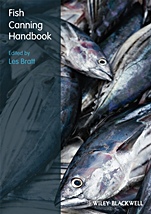
Fish Canning Handbook
ISBN 9781405180993
Autor: Les Bratt
Wydawca: Wiley
Dostępność: 3-6 tygodni
Cena: 887,25 zł
Przed złożeniem zamówienia prosimy o kontakt mailowy celem potwierdzenia ceny.
ISBN13: |
9781405180993 |
ISBN10: |
1405180994 |
Autor: |
Les Bratt |
Oprawa: |
Hardback |
Rok Wydania: |
2010-06-04 |
Ilość stron: |
320 |
Wymiary: |
252x175 |
Tematy: |
KNAF |
Canning continues to be an extremely important form of food preservation commercially, and canned fish represents a source of relatively inexpensive, nutritious and healthy food. It is vitally important that all canning operations are undertaken in keeping with the rigorous application of good manufacturing practices if the food is to be safe at the point of consumption. This demands that all personnel involved in the management and operation of cannery operations have a competent understanding of the technologies involved including the basic requirements for container integrity and safe heat sterilisation.
This book provides a source of up to date and detailed technical information for all those involved in the production of canned fish, from students who might wish to enter the industry, to regulatory authorities with responsibility for official inspection, for trading companies or retail organisations who purchase canned fish, or for the manufacturing companies themselves. An exhaustive range of topics will be covered in approximately 20 chapters, including: the current global market; sustainability; sourcing of fish stocks; international legislation; HACCP; global food standards; can design; cooking, filling and other machinery; hygiene and sanitation; canning of specific fish breeds; warehousing and distribution.
Spis treści:
List of contributors.
Preface: review of the market for, and sources of, canned fish.
1 Legal requirements for producers selling canned fish into Europe (John Hammond).
1.1 Introduction.
1.2 Imports into the EU.
1.3 General food law.
1.4 Product–specific controls.
1.5 Hygiene rules.
1.6 Fishery products from outside the EU.
1.7 Identification marking.
1.8 Microbiological criteria.
1.9 Labelling.
1.10 Lot marking.
1.11 Food contact materials.
1.12 Additives.
1.13 Flavourings.
1.14 Contaminants.
1.15 Pesticides.
1.16 Veterinary medicinal produ
cts.
1.17 Weights and measures.
1.18 Warning.
References.
2 Legal requirements for producers selling canned fish into North America (Kenneth Lum).
2.1 Introduction.
2.2 Canned fish description.
2.3 Why are regulations necessary?
2.4 Legal requirements and food safety.
2.5 Regulatory systems in Canada and the United States.
2.6 Canadian requirements.
2.7 United States requirements.
3 HACCP systems for ensuring the food safety of canned fish products (Alan Williams).
3.1 Introduction.
3.2 The HACCP Principles.
3.3 Prerequisite programmes.
3.4 How to set up and conduct an HACCP study for canned fish products.
3.5 Implementation.
3.6 ISO 22000.
3.7 Conclusions.
References.
Appendix 1: Useful websites (for HACCP Guidance and including generic HACCP plans in some cases).
Appendix 2: Modular HACCP approach for the canning of tuna products, showing typical activities within each module.
Appendix 3: Example of a tabular documentation format for prerequisite programmes.
Appendix 4: Extract from a non–tabular format HACCP plan approach for can seaming (CCP 2).
Appendix 5: Extract of a tabular HACCP Chart for CCP 3 sterilisation and CCP 4 in the generic fish canning flow diagram.
4 National and international food safety certification schemes (Harriet Simmons).
4.1 Introduction.
4.2 Food safety legislation.
4.3 Food safety management systems.
4.4 Certification: A brief overview.
4.5 Hazard analysis critical control points.
4.6 The Global Food Safety Initiative.
4.7 A comparison of major global certification programmes for food safety.
4.8 Summary of comparison of global certification programmes.
5 Fish quality (Tony Garthwaite)
5.1 Introduction.
5.2 Important fish species.
5.3 Pollution aspects.
5.4 Handling and transport.
5.5 Spoilage factors.
5.6 Reception and testing.
5.7 Storage.
5.8 De
frosting frozen fish.
5.9 Fish preparation.
5.10 Chemical indicators of quality.
References.
6 Design and operation of frozen cold stores (Stephen J. James and Christian James).
6.1 Introduction.
6.2 Factors affecting frozen storage life.
6.3 Cold store design.
6.4 Specification and optimisation of cold stores.
6.5 Thawing.
6.6 Conclusions.
References.
7 Packaging formats for heat–sterilised canned fish products (Bev Page).
7.1 Overview of the basic materials used for heat–sterilised fish packaging.
7.2 Metal cans for heat sterilised–fish products.
7.3 Plastic containers for heat–sterilised fish products.
7.4 Glass containers for heat–sterilised fish products.
Further reading.
8 Retorting machinery for the manufacture of heat–sterilised fish products (Claude Vincent).
8.1 Introduction.
8.2 Retorting equipment available.
8.3 Technical features of horizontal batch retorts.
8.4 General arrangement of a sterilising plant.
8.5 Utilities required for batch retorts.
8.6 The different usages of a retort.
8.7 Legal steps to be taken when installing a new retort.
9 Management of thermal process (Nick May).
9.1 Role of the thermal process manager.
9.2 Documentation of thermal process requirements.
9.3 Maintaining and calibration of key instrumentation.
9.4 Training of key staff.
9.5 Review of production records.
9.6 Managing non–conformance (process deviations).
9.7 Conclusion.
References.
10 Principal causes of spoilage in canned fish products (Joy Gaze).
10.1 The quality of raw materials.
10.2 Hygiene and good manufacturing practice.
10.3 Potential spoilage issues associated with canned fish products.
10.4 Typical causes of spoilage in canned fish products.
10.5 Types of spoilage.
10.6 Microbiological examination of suspect spoilt cans.
10.
7 Microbiological investigations – decision criteria.
10.8 Conclusion.
References.
11 Commercial sterility and the validation of thermal processes (Geoff Shaw).
11.1 Introduction.
11.2 Temperature measurement systems.
11.3 Processing vessels.
11.4 Temperature distribution.
11.5 Retort survey.
11.6 Test loading.
11.7 Data analysis.
11.8 Heat penetration measurement.
11.9 Commercial sterility and lethality.
11.10 General method.
11.11 Heat penetration experimental methods.
11.12 Flexible packaging.
11.13 Future developments and information.
References.
Other sources of information.
12 The quality department in a fish cannery (Leila Radi).
12.1 Avant–propos.
12.2 The organisation and the scope of operations of the quality department.
12.3 Quality assurance for the management of pre–requisite measures.
12.4 Quality control.
12.5 Establishment of a quality plan.
12.6 Standard quality procedures.
12.7 Training of quality staff against procedures.
12.8 Handling of non–conforming materials.
12.9 Establishment and monitoring of corrective actions.
12.10 Legislative compliance.
12.11 Research and development.
12.12 Security.
12.13 Conclusion.
Acknowledgement.
References.
13 The laboratory in a fish canning factory (Linda Nicolaides and Les Bratt).
13.1 Laboratory facilities.
13.2 Chemical analyses.
13.3 Microbiological testing.
13.4 Analysis required for cannery water and retort cooling water.
13.5 Swab testing.
13.6 Incubation tests.
13.7 Sterility tests.
13.8 Laboratory accreditation.
Further reading.
14 Cleaning and disinfection in the fish canning industry (Peter Littleton).
14.1 Introduction.
14.2 The cleaning process.
14.3 Principles of cleaning.
14.4 Open plant cleaning.
14.5 Floor cleaning.
14.6 Tray and rack washing machines.
14.7 Pri
nciples of disinfection.
14.8 Factors affecting disinfectant effectiveness.
14.9 Choosing the right disinfectant.
14.10 Where to disinfect.
14.11 Types of disinfectants.
14.12 Oxidising disinfectants.
14.13 Non–oxidising disinfectants.
14.14 Effects of time and concentration.
14.15 Specific issues relating to fish canning operations.
14.16 Cleaning management.
14.17 Cleaning programme.
References.
15 The canning factory (Les Bratt).
15.1 The fish canning factory: Introduction.
15.2 Site selection.
15.3 Factory design and construction.
15.4 The principal areas of the factory.
15.5 Services.
References and suggestions for further reading.
Index.
Nota biograficzna:
Les Bratt, Consultant in Food Technology, Worcester, UK
Okładka tylna:
Canning continues to be an extremely important form of food preservation commercially, and canned fish represents a source of relatively inexpensive, nutritious and healthy food. It is vitally important that all canning operations are undertaken in keeping with the rigorous application of good manufacturing practices if the food is to be safe at the point of consumption. This demands that all personnel involved in the management and operation of cannery operations have a competent understanding of the technologies involved including the basic requirements for container integrity and safe heat sterilisation.
This book provides a source of up to date and detailed technical information for all those involved in the production of canned fish, from students who might wish to enter the industry, to regulatory authorities with responsibility for official inspection, for trading companies or retail organisations who purchase canned fish, or for the manufacturing companies themselves. An exhaustive range of topics will be covered in approximately 20 chapters, including: the current global market; sustainability; sourcing of fish
stocks; international legislation; HACCP; global food standards; can design; cooking, filling and other machinery; hygiene and sanitation; canning of specific fish breeds; warehousing and distribution.
Koszyk
Książek w koszyku: 0 szt.
Wartość zakupów: 0,00 zł
Informacje


Kontakt
Gambit
Centrum Oprogramowania
i Szkoleń Sp. z o.o.
Al. Pokoju 29b/22-24
31-564 Kraków
Siedziba Księgarni
ul. Kordylewskiego 1
31-542 Kraków
+48 12 410 5991
+48 12 410 5987
+48 12 410 5989
Subskrypcje
Administratorem danych osobowych jest firma Gambit COiS Sp. z o.o. Na podany adres będzie wysyłany wyłącznie biuletyn informacyjny.
Autoryzacja płatności

Informacje na temat autoryzacji płatności poprzez PayU.

© Copyright 2012: GAMBIT COiS Sp. z o.o. Wszelkie prawa zastrzeżone.
Projekt i wykonanie: Alchemia Studio Reklamy