


Wydawcy
Katalog tematyczny
- Archeologia (109)
- Ekonomia, finanse, business (13704)
- Filozofia (1445)
- Historia (3040)
- Języki i językoznawstwo (2356)
- Lifestyle, hobby i rozrywka (475)
- Medycyna (9704)
- Nauki humanistyczne (4)
- Nauki o Ziemi i środowisku (2638)
- Nauki ścisłe (20412)
- Nauki społeczne (8486)
- Edukacja (229)
- Kryminologia, opieka spełeczna (284)
- Obronność (10)
- Polityka (1389)
- Psychologia (777)
- Socjologia (410)
- Społeczeństwo i kultura (187)
- Nauki techniczne (13450)
- Prawo (1696)
- Publikacje informacyjne i interdyscyplinarne (1288)
- Religia i wierzenia (917)
- Technika komputerowa (4067)
- Zdrowie, relacje międzyludzkie i rozwój osobisty (657)





Informacje szczegółowe o książce
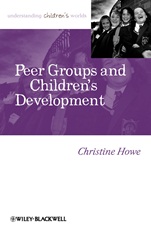
Peer Groups and Childrens Development
ISBN 9781405179447
Autor: Christine Howe
Wydawca: Wiley
Dostępność: 3-6 tygodni
Cena: 228,90 zł
Przed złożeniem zamówienia prosimy o kontakt mailowy celem potwierdzenia ceny.
ISBN13: |
9781405179447 |
ISBN10: |
1405179449 |
Autor: |
Christine Howe |
Oprawa: |
Paperback |
Rok Wydania: |
2010-01-22 |
Ilość stron: |
248 |
Wymiary: |
229x162 |
Tematy: |
JC |
Peer Groups and Children′s Development considers the experiences of school–aged children with their peer groups.
The book looks at the formal peer groups that children are placed in for teaching and learning, covering such topics as the class size debate, mixed–ability vs. ability–based teaching, gender and classroom dialogue, and dialogic teaching and cooperative learning. Howe also provides an in–depth examination of the nature, causes, and consequences of a child′s informal peer relationships, including those associated with cliques, friendships, and adolescent gangs.
Evidence presented throughout reveals how formal and informal aspects of peer groups interrelate to a great extent in determining patterns of development. This has significant implications for research and theory, as well as for the practical concerns of parents, teachers, counselors, school psychologists, and policy makers.
Informed by the latest research and scholarship, Peer Groups and Children′s Development offers revelatory insights into the effects of peer relationships on a child′s intellectual, personal and social development.
Spis treści:
Chapter 1: Peer groups in a cultural context.
Introduction.
Cultural dependency.
Theoretical framework.
Piaget and Sullivan.
Group socialization theory.
Peer groups and children’s development.
Overview of contents.
An inter–disciplinary perspective.
Chapter 2: Peer groups and classroom structure.
Introduction.
The peer group structure of classes.
Class size.
Selective assignment.
The structure of classroom subgroups.
Cultural and local influences upon classroom structure.
Size and selectivity.
Competing pressures.
Summary and conclusions.
Chapter 3: Performance and cooperation in classrooms
.
Introduction.
Whole–class interaction and the performance mode.
The ubiquitous IRF.
Individual differences in performance roles.
Subgroup interaction and the cooperative mode.
Sitting in groups versus working with groups.
Cooperative learning.
Role differentiation in classroom subgroups.
Summary and conclusions.
Chapter 4: Cooperative interaction and curriculum mastery.
Introduction.
Piagetian perspectives upon cooperative interaction.
Socio–cognitive conflict, transactive dialogue and exploratory talk.
Group work in science.
Resolving differences.
Assistance and cooperative interaction.
Helping and learning.
Assistance versus contrasting.
The social impact of classroom interaction.
Selecting mechanisms.
Social judgments in classrooms.
Conclusions.
Chapter 5: Friendship, status, and centrality.
Introduction.
Children’s friendships.
Membership of friendship groups.
The qualities of friends.
Similarity and complementarity.
Peer status in formal groups.
Socio–metric relations.
Assigning status.
Beyond the classroom.
Status in friendship groups.
Ethnographic approaches.
The concept of centrality.
Conclusions.
Chapter 6: Individual differences in informal experiences.
Introduction.
Varying experiences of status.
Sociability, aggression and withdrawal.
Behavioural characteristics and status.
Behavioural characteristics in context.
Friendship and status compared.
Sociability and friendship.
Aggression, friendship and centrality.
Continuity and change.
Context dependency.
Conclusions.
Chapter 7: Social and personal adjustment.
Introduction.
Peer groups and antisocial
behaviour.
Rejection and antisocial behaviour.
Friendship and antisocial behaviour.
Mutual support or bad examples.
Peer groups and personal adjustment.
Status and internalizing difficulties.
Internalizing versus externalizing.
Rejection and neglect.
The protective status of friendship.
Summary and conclusions.
Chapter 8: School performance revisited.
Introduction.
Peer groups and educational failure.
Status and performance.
Status and friendship.
Diverse consequences of friendship.
Friends and academic polarization.
Towards an integrated perspective.
Classroom practice and developmental outcomes.
Chapter 9: Implications for practice and future research.
Summary and introduction.
Remedial work with individuals.
Skills training for at–risk children.
Skills training in context.
Qualified endorsement of the cooperative approach.
Maximizing the ‘promotiveness’ of promotive interaction.
The problem of aggression.
Teacher involvement.
Future research and theoretical development.
Developing the socio–cultural perspective.
Conclusion.
Nota biograficzna:
Christine Howe is Professor of Education at the University of Cambridge, and Fellow of Lucy Cavendish College. Previously she was Professor of Psychology at the University of Strathclyde. Her main research interests are peer interaction and conceptual growth, children′s reasoning in mathematics and science, and communication and social relations among children. In addition to publishing seven books and over 100 journal articles, Christine was for many years co–editor of the journal Social Development and has served as Chair of the British Psychological Society′s Developmental Section.
Okładka tylna:
P
eer Groups and Children′s Development considers the experiences of school–aged children with their peer groups.
The book looks at the formal peer groups that children are placed in for teaching and learning, covering such topics as the class size debate, mixed–ability vs. ability–based teaching, gender and classroom dialogue, and dialogic teaching and cooperative learning. Howe also provides an in–depth examination of the nature, causes, and consequences of a child′s informal peer relationships, including those associated with cliques, friendships, and adolescent gangs.
Evidence presented throughout reveals how formal and informal aspects of peer groups interrelate to a great extent in determining patterns of development. This has significant implications for research and theory, as well as for the practical concerns of parents, teachers, counselors, school psychologists, and policy makers.
Informed by the latest research and scholarship, Peer Groups and Children′s Development offers revelatory insights into the effects of peer relationships on a child′s intellectual, personal and social development.
Koszyk
Książek w koszyku: 0 szt.
Wartość zakupów: 0,00 zł
Informacje


Kontakt
Gambit
Centrum Oprogramowania
i Szkoleń Sp. z o.o.
Al. Pokoju 29b/22-24
31-564 Kraków
Siedziba Księgarni
ul. Kordylewskiego 1
31-542 Kraków
+48 12 410 5991
+48 12 410 5987
+48 12 410 5989
Subskrypcje
Administratorem danych osobowych jest firma Gambit COiS Sp. z o.o. Na podany adres będzie wysyłany wyłącznie biuletyn informacyjny.
Autoryzacja płatności

Informacje na temat autoryzacji płatności poprzez PayU.

© Copyright 2012: GAMBIT COiS Sp. z o.o. Wszelkie prawa zastrzeżone.
Projekt i wykonanie: Alchemia Studio Reklamy