


Wydawcy
Katalog tematyczny
- Archeologia (109)
- Ekonomia, finanse, business (13704)
- Filozofia (1445)
- Historia (3040)
- Języki i językoznawstwo (2356)
- Lifestyle, hobby i rozrywka (475)
- Medycyna (9704)
- Nauki humanistyczne (4)
- Nauki o Ziemi i środowisku (2638)
- Nauki ścisłe (20412)
- Astronomia (294)
- Biologia (5119)
- Biochemia (575)
- Biologia człowieka (14)
- Biologia komórkowa (377)
- Biologia molekularna (398)
- Biologia rozwoju (130)
- Biologia, ogólnie (1277)
- Botanika (280)
- Hydrobiologia (92)
- Mikrobiologia (363)
- Mykologia (22)
- Zoologia (303)
- Chemia (6540)
- Fizyka (3309)
- Matematyka (4574)
- Nauki ścisłe, ogólnie (503)
- Nauki społeczne (8486)
- Nauki techniczne (13450)
- Prawo (1696)
- Publikacje informacyjne i interdyscyplinarne (1288)
- Religia i wierzenia (917)
- Technika komputerowa (4067)
- Zdrowie, relacje międzyludzkie i rozwój osobisty (657)





Informacje szczegółowe o książce
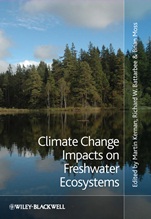
Climate Change Impacts on Freshwater Ecosystems
ISBN 9781405179133
Autor: Martin Kernan, Richard W. Battarbee, Brian R. Moss
Wydawca: Wiley
Dostępność: 3-6 tygodni
Cena: 384,30 zł
Przed złożeniem zamówienia prosimy o kontakt mailowy celem potwierdzenia ceny.
ISBN13: |
9781405179133 |
ISBN10: |
1405179139 |
Autor: |
Martin Kernan, Richard W. Battarbee, Brian R. Moss |
Oprawa: |
Hardback |
Rok Wydania: |
2010-09-10 |
Ilość stron: |
328 |
Wymiary: |
253x174 |
Tematy: |
PS |
Climate change is occurring and there is little doubt now that human activity is the principal cause. However, the full extent of the impact of climate change on freshwater ecosystems is difficult to detect as other pressures on our freshwaters, such as pollution and land–use change, are still more important. But as temperatures continue to rise and pollution pressures are reduced, climate change will become the dominant threat to our freshwaters in future.
In this book we examine the impact of climate change on freshwater ecosystems, past, present and future. We consider especially the interactions between climate change and other drivers of change including hydromorphological modification, nutrient loading, acid deposition and contamination by toxic substances using evidence from palaeolimnology, time–series analysis, space–for–time substitution, laboratory and field experiments and process modelling. The book evaluates these processes in relation to extreme events, seasonal changes in ecosystems, trends over decadal–scale time periods, mitigation strategies and ecosystem recovery.
The book is also concerned with how aspects of hydrophysical, hydrochemical and ecological change can be used as early indicators of climate change in aquatic ecosystems and it addresses the implications of future climate change for freshwater ecosystem management at the catchment scale. The book is aimed at the scientific research community, but is also accessible to Masters and senior undergraduate students.
Spis treści:
1. Introduction.
Brian Moss.
University of Liverpool.
This chapter will summarise current climate change scenarios following the IPCC report. The greater focus on what will happen in Europe, using the Greenland to Greece gradient. The state of freshwater ecosystems in Europe (physico–chemical conditions, patterns of biodiversity, water usage, ecosystem use and goods and services) will be
highlighted. Emphasis will be placed on interconnectivity and multiple chains of consequence. The chapter will summarise existing evidence of change in freshwaters: rainfall patterns, glacier retreat, river discharge, growth season, period of ice cover.
The available tools for identifying change, calculating effects and quantifying uncertainties will be introduced. These include: documenting the past (long time scale, limited record; shorter time scales, better data but lower horizon of perception); experiments (whole system, problems of representation, replication and control; sub–system, problems of completeness of system but greater control and replication); comparative studies along climate gradients (space for time), need for large numbers of data to distinguish climate from other trends, problems inherent in correlation; modelling. This book essentially takes the emerging evidence from the physical to the sociological and applies expert judgement to it to assess the interplay between freshwaters and human societies..
.
2. Aquatic ecosystem variability and climate change at different timescales.
Rick Battarbee.
Environmental Change Research Centre, University College London.
This chapter examines how climate change has influenced stream and lake ecosystems in the past. It uses palaeolimnological records to provide evidence for decadal–scale patterns of variability and long–term observational records from key sites to identify climate–ecosystem relationships on shorter, time–scales. Special attention is given to the seasonal pattern of response of aquatic ecosystems to changes in the climate system and to the changing frequency and intensity of climate events. The chapter will focus on the Holocene context (long–term natural variability), recent trends (evidence from remote lakes), changing seasonality and the impact of extreme, episodic climate events.
.
3. Direct impacts of climate change on F
reshwater Ecosystems.
Ulrike Nickus.
University of Innsbruck, Institute of Meteorology and Geophysics, Institute of Zoology and Limnology.
This chapter will review responses of freshwater systems to recent changes in climate by evaluating selected long–term data series, and it will discuss the possible impact of predicted future climate on freshwater systems simulated by manipulation experiments. Using case studies the chapter will show (i) the degree to which large–scale climate forcing produces a coherent response in water temperature and ice dynamics, (ii) how enhanced weathering and release of minerals from the catchment in response to rising air temperature are reflected in the increasing ion content of high altitude lakes during the past decades, (iii) that increasing surface water concentrations of dissolved organic carbon across much of Europe appear to reflect changes in climate and acid atmospheric deposition, (iv) that the predicted future increase in mean geostrophic winds particularly in the north of Europe is expected to increase the input of mixing energy to lakes and (v) that increasing air temperature may result in colder soil temperatures, i.e. riparian wetlands are expected to cool down due to less insulation by winter snow cover..
.
4. Climate Change and hydromorphology of rivers and lakes at catchment, site and mircohabitat levels.
Piet Verdonschot.
ALTERRA Green World Research.
Based on a literature survey, an overview of predicted hydrological changes in broadly defined European ecoregions is given, supplemented by hypotheses on land use changes. For 9 study catchments, trends in land use and hydrology together with potential effects on floodplain and channel morphology are categorised. Selected hydromorphological trends, which result from Global Change and Climate Change, are described in detail, based on paired–site studies performed in Euro–Limpacs: (1) increased sedimentation (
examples: river Waldaist, Austria; Lake Constance); (2) braiding of mountain rivers (examples: 8 case studies from Germany, Italy and the Czech Republic); (3) meandering vs. straightening of lowland rivers (examples form The Netherlands, Germany and Sweden). Field and laboratory studies on habitat stability and species distribution under varying discharge patterns are described, resulting from both, a literature survey and experiments performed within Euro–Limpacs. Habitat types and species likely to be threatened and likely to benefit from Climate Change will be identified for different European ecoregions..
.
5. Interaction of climate change and pollutants – nutrients.
Erik Jeppesen.
National Environmental Research Institute, Department of Freshwater Ecology.
This chapter deals with climate – eutrophication interactions in streams, lakes and wetlands. Various approaches have been used , including 1) space–for–time substitution using a latitude gradient from Iceland to Greece, 2) food web studies based on stable isotopes 3) comparison of paired sites with contrasting water temperature where natural experiments involving contrasting nutrient concentrations have been carried out, 4) advanced mescosms factorial (nutrients, temperature) experiments, 5) analyses of long time–series data to examine episodic, seasonal, and long–term effects, 6) analyses of changes on longer time scales using analogue sites in climate space combining palaeolimnological and empirical or dynamic modelling. Here we synthesize the main results. Special emphasis will be placed on climate change effects on the recovery from eutrophication, including chemical and biological resilience and resistance determined by processes within the aquatic ecosystems and by changes in catchment hydrology and hydrochemistry.
.
6. Interaction of climate change and pollutants – nutrients.
Dick Wright.
Norwegian Institute for Water R
esearch.
This chapter deals with climate–acidification interactions in streams and lake ecosystems. Particular focus is on the effect of short– and long–term changes in climate on the recovery of aquatic ecosystems from damage caused by acid deposition. Data come from acid–impacted areas of Europe as well as eastern North America. Large–scale experiments with altered climate are conducted in small catchments and lakes. Long–term datasets (30+ years) from key sites are used with various statistical techniques to elucidate empirical evidence linking variations in acid deposition and climate on water chemistry and biology, at time scales ranging from short–term episodes to decades. Time–for–space analogues combining paleolimnological with empirical data are also used. Finally the experimental, empirical and paleolimnological data are used to develop, modify, calibrate dynamic models. These models are then used to simulate expected ecosystem changes given future scenarios of acid deposition and climate..
.
7. Interaction of climate change and pollutants – toxic substances.
Joan Grimalt.
Spanish Council for Scientific Research, Barcelona.
In this chapter the focus is on persistent organic pollutants (POPs) and metals as the toxic substances whose environmental distribution may be strongly influenced by future climate change. POPs are subject to a world–wide redistribution because of their volatility and chemical stability. In the last decade some organic pollutants have been observed to be transferred from temperate areas, where they were synthesised and used, to distant cold sites without significant dilution. For metals there are two concerns. Firstly, mercury, due to its capacity to disperse globally in the atmosphere and accumulate in aquatic and terrestrial ecosystems means that many remote ecosystems are today contaminated with mercury. The second concern is the remobilisati
on of metals from polluted soils both in upland catchments and lowland floodplains. Remobilisation of metals (and POPs) from soils can occur where climate change leads to an alteration in the rate of key soil processes such as leaching and erosion. This chapter examines i) seasonal deposition patterns in the transfer of toxic substances from the atmosphere to the hydrosphere, ii) redistribution and uptake of POPs and metals as a consequence of temperature change, iii) Climate change and mercury mobilisation and iv) Climate change and remobilisation of heavy metals and POPs from polluted soils..
.
8. The effect of Climate Change on the distribution of freshwater organisms and its implications for ecological assessment.
Daniel Hering.
University of Duisburg–Essen, Centre for Microscale Ecosystem, Institute fo Hydrobiology.
The chapter starts with a conceptual model of Climate Change effects on freshwater ecosystems and their inhabitants, based on separate Cause–Effect–Chains for rivers, lakes and wetlands. The model, which is based on a literature review, includes a framework of the major stress types potentially influenced by changing climate, broken down into direct effects (e.g. precipitation and temperature), abiotic change (hydrology, morphology and hydrochemistry) and biotic change (primary production, secondary production). For selected steps of the Cause–Effect–Chains (groups of) organisms will be identified, which are likely to be sensitive to the predicted change or may benefit. The second part of the chapter will give an overview of autecological characteristics (traits) of freshwater inhabiting species, which determine their occurrence and may be relevant for changing distribution patterns. Traits and parameters, which are particularly sensitive for Climate Change effects, are identified (e.g. the occurrence in spring habitats in mountain regions). Six case studies (one for each organism group mentioned above)
will be described, including species likely to diminish and species likely to extend their range..
.
9. Climate change: implications for aquatic ecosystem restoration.
Richard Johnson.
Swedish University of Agricultural Sciences, Department of Environmental Assessment.
Although a number of approaches are commonly used to establish reference conditions, little is known of the inherent strengths and weakness of different approaches. The first part of this chapter will briefly summarise approaches commonly used across Europe to establish the reference condition of lake and stream ecosystems. Using selected case studies, we will illustrate the variability associated with different approaches. Moreover, how reference conditions are used in lake, stream and wetland restoration activities will be discussed. Having established a background regarding the use of reference conditions in restoration of aquatic ecosystems, in the second part of the chapter we will speculate on how climate change might affect “baseline” reference conditions and how these effects might confound interpretation of future restoration success/failure. Using the conceptual model “operational landscape units”, the focus will be placed on the importance of interactions between catchment land use and ecosystem connectivity..
.
10. Modelling Catchment Scale Responses to Climate Change.
Paul Whitehead.
University of Reading, Aquatic Environments Research Centre.
A range of new models have been developed during the Euro–limpacs project. These models are process based, dynamic and can link hydrological behaviour, water quality and ecology at a range of scales. Because they are process based they can cope with the non–linear nature of environmental change and so the impacts of changes in climate, land use and pollution levels can be investigated. Information and results from the science work packages 1 to 5 are incorporated into the models so t
hat the latest knowledge of processes is embedded in the models. The models are tested in a wide range of case studies for flow, nutrients, sediments and toxics. Future climate time series have been generated using techniques of statistical and dynamic downscaling from the Global Circulation Models and the models used to investigate future impacts of climatic change. The effects of both changing land use and pollution levels are also investigated to evaluate synergistic impacts and trends. Finally the models are used to evaluate adaptation strategies required to minimise the impacts of environmental change..
.
11. Tools for Better Decision Making: Bridges to Policy and Science.
Ed Maltby.
This chapter will cover i) Decision making in the context of uncertainty, ii) Transfer of science into policy (generalisation of site specific studies and wider evidence into something useful for policy), iii) Communication of scientific ideas to policy makers,.
iv) Difficulty of dealing with interacting issues (e.g. water quality, biodiversity, social priorities), v) Balancing societal and environmental objectives (referring to the Ecosystem Approach and deciding on weighting factors of the different criteria in MCA), vi) Tools for decision makers (e.g. MCA, economic valuation methodologies) and vii) the role of decision support systems. Catchment case will be presented showing how different catchments have different issues and different priorities.
Nota biograficzna:
Martin Kernan is an environmental scientist at the Environmental Change Research Centre, University College London. He has worked extensively on upland lakes and streams across Europe. His current research interests include the effects of atmospheric pollution and climate change on freshwater ecosystems. He was scientific co–ordinator on the Euro–limpacs Project.
Rick Battarbee is Emeritus Professor of Environmental Change at University College London wit
Koszyk
Książek w koszyku: 0 szt.
Wartość zakupów: 0,00 zł
Informacje


Kontakt
Gambit
Centrum Oprogramowania
i Szkoleń Sp. z o.o.
Al. Pokoju 29b/22-24
31-564 Kraków
Siedziba Księgarni
ul. Kordylewskiego 1
31-542 Kraków
+48 12 410 5991
+48 12 410 5987
+48 12 410 5989
Subskrypcje
Administratorem danych osobowych jest firma Gambit COiS Sp. z o.o. Na podany adres będzie wysyłany wyłącznie biuletyn informacyjny.
Autoryzacja płatności

Informacje na temat autoryzacji płatności poprzez PayU.

© Copyright 2012: GAMBIT COiS Sp. z o.o. Wszelkie prawa zastrzeżone.
Projekt i wykonanie: Alchemia Studio Reklamy