


Wydawcy
Katalog tematyczny
- Archeologia (109)
- Ekonomia, finanse, business (13704)
- Filozofia (1445)
- Historia (3040)
- Języki i językoznawstwo (2356)
- Lifestyle, hobby i rozrywka (475)
- Medycyna (9704)
- Nauki humanistyczne (4)
- Nauki o Ziemi i środowisku (2638)
- Nauki ścisłe (20412)
- Nauki społeczne (8486)
- Edukacja (229)
- Kryminologia, opieka spełeczna (284)
- Obronność (10)
- Polityka (1389)
- Psychologia (777)
- Socjologia (410)
- Społeczeństwo i kultura (187)
- Nauki techniczne (13450)
- Prawo (1696)
- Publikacje informacyjne i interdyscyplinarne (1288)
- Religia i wierzenia (917)
- Technika komputerowa (4067)
- Zdrowie, relacje międzyludzkie i rozwój osobisty (657)





Informacje szczegółowe o książce
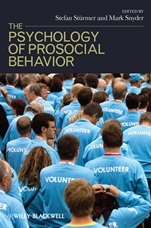
The Psychology of Prosocial Behavior: Group Processes, Intergroup Relations, and Helping
ISBN 9781405178808
Autor: Stefan Stürmer, Mark Snyder
Wydawca: Wiley
Dostępność: 3-6 tygodni
Cena: 267,75 zł
Przed złożeniem zamówienia prosimy o kontakt mailowy celem potwierdzenia ceny.
ISBN13: |
9781405178808 |
ISBN10: |
1405178809 |
Autor: |
Stefan Stürmer, Mark Snyder |
Oprawa: |
Paperback |
Rok Wydania: |
2009-08-14 |
Ilość stron: |
464 |
Wymiary: |
234x169 |
Tematy: |
JB |
The Psychology of Prosocial Behavior provides original contributions that examine current perspectives and promising directions for future research on helping behaviors and related core issues. With an emphasis on helping in the context of social groups and large organizations, this volume presents a new and distinctive perspective that links research on prosocial behavior to interventions designed to foster helping in real–world settings.
Spis treści:
List of Contributors
Acknowledgments
Introduction:
The Psychological Study of Group Processes and Intergroup Relations in Prosocial Behavior: Past, Present, Future: Stefan Stürmer (FernUniversität Hagen) and Mark Snyder (University of Minnesota).
Part I: Motivations for Helping In–Group and Out–Group Members:
1. The Tribal Instinct Hypothesis: Evolution and the Social Psychology of Intergroup Relations: Mark van Vugt (University of Kent at Canterbury) and Justin H. Park (University of Groningen, The Netherlands).
2. Helping "Us" versus "Them": Towards a Group–Level Theory of Helping and Altruism Within and Across Group Boundaries: Stefan Stürmer (FernUniversität Hagen) and Mark Snyder (University of Minnesota).
3. Stigmas and Prosocial Behavior: Are People Reluctant to Help Stigmatized Persons?: John B. Pryor (Illinois State University), Glenn D. Reeder (Illinois State University), Andrew E. Monroe (University of Oregon), and Arati Patel (Illinois State University).
4. The Strategic Side of Out–Group Helping: Esther van Leeuwen (Free University Amsterdam) and Susanne Täuber (Friedrich–Schiller–University Jena).
Part II: Consequences of Giving or Receiving Help in the Context of Groups:
5. Discrimination Against Out–Group Members in Helping Situations: Donald A. Saucier (Kansas State University), Jessica L. McManus (Kansas State University), and Sara J. Smith (Kansas
State University).
6. Receiving Help: Consequences for the Recipient: Samer Halabi (Zefat Academic College) and Arie Nadler (Tel Aviv University).
7. Turning to Others in Times of Change: Social Identity and Coping with Stress: Jolanda Jetten (University of Queensland/University of Exeter), S. Alexander Haslam (University of Exeter), Aarti Iyer (University of Queensland), and Catherine Haslam (University of Exeter).
8. Volunteering Across the Life Span: Doing Well by Doing Good: Jane Allyn Piliavin (Professor Emerita, University of Wisconsin–Madison).
Part III: Intervention Strategies: Targeting Individuals, Groups, and Organizations:
9. Perspective Taking and Intergroup Helping: Mark H. Davis (Eckerd College) and Angela T. Maitner (University of Kent).
10. Recategorization and Prosocial Behavior: Common In–Group Identity and a Dual Identity: John F. Dovidio (Yale University), Samuel L. Gaertner (University of Delaware), Nurit Shnabel (Yale University), Tamar Saguy (University of Connecticut), and James Johnson (University of North Carolina).
11. Groups, Identities, and Bystander Behavior: How Group Processes Can Be Used to Promote Helping: Mark Levine (Lancaster University) and Clare Cassidy (deceased, formerly University of St. Andrews).
12. Influences of Psychological Sense of Community on Voluntary Helping and Prosocial Action: Allen M. Omoto (Claremont Graduate University) and Mark Snyder (University of Minnesota).
13. Empowering the Volunteer Organization: What Volunteer Organizations Can Do to Recruit, Content, and Retain Volunteers: Naomi Ellemers (Leiden University) and Edwin J. Boezeman (Leiden University).
Part IV: The Broader Picture: Political and Societal Implications:
14. Interpersonal and Intergroup Helping Relations as Power Relations: Implications for Real–World Helping: Arie Nadler (Tel Aviv University).
15. Beyond Help: A Social Psychology of Collective Solidarity and Social Coh
esion: Stephen Reicher (University of St. Andrews) and S. Alexander Haslam (University of Exeter).
16. Cross–Group Helping: Perspectives on Why and Why Not: Stephen C. Wright (Simon Fraser University) and Norann T. Richard (Simon Fraser University).
17. Helping Disadvantaged Out–Groups Challenge Unjust Inequality: The Role of Group–Based Emotions: Aarti Iyer (University of Queensland) and Colin Wayne Leach (University of Connecticut).
Bibliography.
Author Index.
Subject Index.
Nota biograficzna:
Stefan Stürmer, Ph.D., is Professor of Psychology at the Fern Universität in Hagen (Germany), and the Chair in Social Psychology. In his research, he investigates inter– and intragroup processes, with a particular emphasis on the role of group processes in social movement participation, cooperation, helping, and altruism. He also serves as a consultant for various city councils and community agencies, concerning measures and policies to foster community action and civic participation.
Mark Snyder, Ph.D., is Professor of Psychology at the University of Minnesota, where he holds the McKnight Presidential Chair in Psychology and is the Director of the Center for the Study of the Individual and Society. His research examines the motivational foundations of individual and collective action. He is recipient of the Society for Personality and Social Psychology’s Donald T. Campbell Award and the Kurt Lewin Award of the Society for the Psychological Study of Social Issues. He is the author of the book, Public Appearances/Private Realities: The Psychology of Self–Monitoring, and co–editor of Cooperation: The Political Psychology of Effective Human Interaction.
Okładka tylna:
The Psychology of Prosocial Behavior provides original contributions that examine current perspectives and promising directions for future research on helping behaviors a
nd related core issues. With an emphasis on helping in the context of social groups and large organizations, this volume presents a new and distinctive perspective that links research on prosocial behavior to interventions designed to foster helping in real–world settings.
Koszyk
Książek w koszyku: 0 szt.
Wartość zakupów: 0,00 zł
Informacje


Kontakt
Gambit
Centrum Oprogramowania
i Szkoleń Sp. z o.o.
Al. Pokoju 29b/22-24
31-564 Kraków
Siedziba Księgarni
ul. Kordylewskiego 1
31-542 Kraków
+48 12 410 5991
+48 12 410 5987
+48 12 410 5989
Subskrypcje
Administratorem danych osobowych jest firma Gambit COiS Sp. z o.o. Na podany adres będzie wysyłany wyłącznie biuletyn informacyjny.
Autoryzacja płatności

Informacje na temat autoryzacji płatności poprzez PayU.

© Copyright 2012: GAMBIT COiS Sp. z o.o. Wszelkie prawa zastrzeżone.
Projekt i wykonanie: Alchemia Studio Reklamy