


Wydawcy
Katalog tematyczny
- Archeologia (109)
- Ekonomia, finanse, business (13704)
- Filozofia (1445)
- Historia (3040)
- Języki i językoznawstwo (2356)
- Lifestyle, hobby i rozrywka (475)
- Medycyna (9704)
- Chirurgia (272)
- Inne gałęzie medycyny (1871)
- Medycyna kliniczna (4187)
- Medycyna niekonwencjonalna (14)
- Medycyna przedkliniczna (269)
- Medycyna, ogólnie (1740)
- Historia medycyny (3)
- Lekarze, sprawy zawodowe (8)
- Medycyna, aspekty prawne (10)
- Służba zdrowia (36)
- Wyposażenie medyczne (157)
- Zdrowie publiczne (460)
- Medyczne służby pomocnicze (745)
- Studia medyczne (16)
- Weterynaria (548)
- Nauki humanistyczne (4)
- Nauki o Ziemi i środowisku (2638)
- Nauki ścisłe (20412)
- Nauki społeczne (8486)
- Nauki techniczne (13450)
- Prawo (1696)
- Publikacje informacyjne i interdyscyplinarne (1288)
- Religia i wierzenia (917)
- Technika komputerowa (4067)
- Zdrowie, relacje międzyludzkie i rozwój osobisty (657)





Informacje szczegółowe o książce
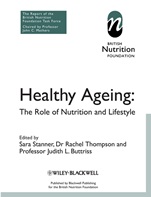
Healthy Ageing: The Role of Nutrition and Lifestyle
ISBN 9781405178778
Autor: BNF (British Nutrition Foundation), Sara Stanner, Rachel Thompson, Judith L. Buttriss
Wydawca: Wiley
Dostępność: 3-6 tygodni
Cena: 512,40 zł
Przed złożeniem zamówienia prosimy o kontakt mailowy celem potwierdzenia ceny.
ISBN13: |
9781405178778 |
ISBN10: |
1405178779 |
Autor: |
BNF (British Nutrition Foundation), Sara Stanner, Rachel Thompson, Judith L. Buttriss |
Oprawa: |
Paperback |
Rok Wydania: |
2009-01-02 |
Ilość stron: |
448 |
Wymiary: |
246x189 |
Tematy: |
MB |
Year on year, countries across the world continue to see an increase in life expectancy, largely attributed to the impact of modern medicine and disease eradication. There is now increasing evidence that environmental factors such as diet and lifestyle also have a significant role to play.
However with this increase in years there often comes an unfortunate rise in chronic morbidity, with the quality of later life severely compromised by ill health.
With age being the single greatest risk factor for a large proportion of common medical conditions, this latest report from the British Nutrition Foundation looks in detail at the role nutrition and physical activity can play in ensuring that the older adults of tomorrow can lead not only longer, but healthier lives.
• Written by a team of well known and respected experts
• Describes the role of diet and lifestyle in the ageing process of the major body organs and tissues including the brain, heart, gastrointestinal tract, musculoskeletal tissues, eyes, teeth and skin, as well as immune and endocrine systems
• Provides essential information for anyone involved in promoting health and quality of life for older people
• Each chapter includes a summary of the key points, as well as important recommendations to help identify long–term strategies for healthy ageing
• An overview of the main messages of the report are provided in a practical question and answer format suitable for lay readers
Full of invaluable information on a subject which is set to increase in importance as the average age of populations rise worldwide, this book is crucial reading for students of nutrition, dietetics and food science, clinical nutritionists, public health nutritionists and policy makers. It will also provide an excellent reference for those working in the food industry and for nutritional supplement manufacturers and pharmaceutical companies.
Spis treści:
Fo
reword.
Terms of Reference.
Task force Membership.
1. Diet and Nutrition Issues Relevant to Older Adults.
1.1 Introduction.
1.1.1 Demographics.
1.1.1.1 Worldwide.
1.1.1.2 UK.
1.1.1.3 Europe.
1.1.1.4 United States of America.
1.1.1.5 Other Regions and Countries.
1.2 Ageing and Health.
1.2.1 Causes of Death.
1.2.2 Quality of Life.
1.3 Ageing, Gender and Ethnicity.
1.4 Costs of An Ageing Population.
1.5 Nutritional Requirements of Older People and Current Recommendations.
1.5.1 Energy.
1.5.2 Body Weight.
1.5.3 Macronutrients.
1.5.4 Micronutrients.
1.5.5 Fluid.
1.5.6 Physical Activity.
1.6 Food Patterns, Nutrient intakes and Nutritional Status of Older People.
1.6.1 Food Patterns.
1.6.2 Nutrient intakes.
1.6.2.1 Great Britain.
1.6.3 Nutritional Status.
1.6.3.1 Undernutrition/Overnutrition.
1.6.3.2 Micronutrient Status.
1.6.3.3 Physical Activity.
1.7Determinants of Food and Nutrient intake and Status in Older People.
1.7.1 Ill Health, Disease and Disability.
1.7.2Poor Dentition.
1.7.3 Living in institutions.
1.7.4 Socioeconomic Status, Poverty and Economic Uncertainty.
1.7.5 Drug–Nutrient interaction.
1.7.6 Taste and Smell.
1.8 Conclusions.
1.9 Key Points.
1.10 Recommendations for Future Research.
1.11 Key References.
2. The Basic Biology of Ageing.
2.1 Definitions.
2.2 Current Understanding of Ageing and its Genetic Basis.
2.3 Mechanisms of Cellular Damage.
2.3.1DNA Damage and Repair.
2.3.2 Telomeres.
2.3.3 Mitochondria.
2.3.4 Epigenetic Changes.
2.3.5 Proteins.
2.3.6 Interactions Between Mechanisms.
2.4 Metabolic Factors Affecting Ageing.
2.5 Energy (Calorie) Restriction in Rodents.
2.6 Early Life Effects.
2.7 Nutrition and Antioxidants.
2.8 Nutrition and inflammation.
2.9 Nutrigenomics.
2.10 Conclusions.
2.11 Key Points.
2.12 Recommendations for Future Research.
2.13
Key References.
3. Healthy Ageing: Teeth and the Oral Cavity.
3.1 Changing Oral Health Status With Age.
3.2 Impact of Nutrition On Oral Disease.
3.2.1 Dental Caries (Tooth Decay).
3.2.1.1 Mineralised Tissues.
3.2.1.2 the Role of Fluoride.
3.2.1.3 oral Hygiene.
3.2.1.4 Saliva.
3.2.2 Sugars Consumption.
3.2.2.1 Which Sugars are Important?.
3.2.2.2 Is Frequency or Quantity Important?.
3.2.2.3 Sugars in Medicines.
3.2.2.4 Caries Prevention.
3.2.3 Erosion.
3.2.4 Antioxidants and Periodontal Disease.
3.2.5 Nutrients and Oral Mucosal Health.
3.2.5.1 Iron, Vitamin B12 and Folate.
3.2.6 Alcohol.
3.2.7 Oral Cancer.
3.2.8 Smoking.
3.2.8.1 Dental Caries.
3.2.8.2 Periodontal Disease.
3.3 Impact of the oral Environment On Nutrition.
3.3.1 Chewing Efficiency, Digestion and Foods Choice.
3.3.1.1 Masticatory Efficiency.
3.3.1.2 Masticatory Efficiency and Food Choice.
3.3.2 Salivary Changes With Age and Disease.
3.3.2.1 Pathological Change in Gland Function.
3.4 Taste and Smell.
3.4.1 Alterations in Taste Perception With Age.
3.4.2 Alterations in Olfactory Perception With Age.
3.5 Texture.
3.6 Key Points.
3.7 Recommendations for Future Research.
3.8 Key References.
4. Healthy Ageing: Bone Health.
4.1 Introductory Remarks.
4.1.1 Defining Bone Health.
4.1.2 Implications of Osteoporosis From A Public Health Perspective.
4.1.3 Change in Bone Mass With Ageing.
4.1.4 Determinants of Bone Health: Modifiable Vs. Non–Modifiable.
Factors.
4.2 Nutritional influences On Bone Health.
4.2.1 General.
4.2.2 Calcium.
4.2.2.1 Peak Bone Mass Attainment.
4.2.2.2 Effect of Oligosaccharides On Calcium Absorption.
4.2.2.3 Postmenopausal Bone Loss.
4.2.2.4 Calcium and Vitamin D in Fracture Prevention.
4.2.3 Vitamin D and Risk of Falling.
4.2.4 Vitamin D Status and Health.
4.2.4.1 Defining Vitamin D Status.
4.2.4.2 Importance of Vi
tamin D To Bone.
4.2.5 Protein intake and Bone Health.
4.2.5.1 General.
4.2.5.2 Animal Vs. Vegetable Protein intake: Impact On Bone.
4.2.6 Vitamin K.
4.2.6.1 General.
4.2.6.2 Vitamin K Supplementation and Bone ‘Quality’ in Younger and.
Older Women.
4.2.7 the Effect of Fruit and Vegetables On Bone Health.
4.2.7.1 Observational Studies.
4.2.7.2 Dietary intervention Studies.
4.2.7.3 Clinical Studies.
4.2.8 Vegetarianism and Bone Health.
4.2.8.1 Earlier Studies in Vegetarian Populations.
4.2.8.2 Later Studies (Post–1984) in Vegetarian Populations.
4.2.8.3 Studies in inuit Populations.
4.2.9 Isoflavones and Bone Health.
4.2.10 Vitamin A and Bone.
4.2.11 Folate and Bone Health Link.
4.2.12 Sodium and Calcium Metabolism.
4.2.13 Alcohol and Caffeine.
4.2.13.1 Alcohol and Osteoporosis Risk.
4.2.13.2 Caffeine Consumption and Bone Health.
4.2.14 Polyunsaturated Fatty Acids and Bone Health.
4.2.15 Other Key Factors Affecting Bone Health.
4.2.15.1 Physical Activity.
4.2.15.2 Body Weight.
4.2.15.3 Smoking.
4.3 Discussion.
4.4 Key Points.
4.5 Recommendations for Future Research.
4.6 Key References.
5. Healthy Ageing: The Joints.
5.1 Introduction.
5.1.1 Background.
5.1.2 Principles Relating To Associations Between Diet and Arthritis.
5.2 The Inflammatory Arthropathies.
5.2.1 Diet and Rheumatoid Arthritis.
5.2.2 Dietary Fatty Acids and inflammatory Arthritis.
5.2.3 Nutritional Problems Resulting From Severe inflammatory Arthritis.
5.2.4 Gout and Nutrition.
5. 3 Osteoarthritis.
5.3.1 What is Osteoarthritis (OA)?.
5.3.2 incidence and Prevalence of OA.
5.3.3 Risk Factors for OA.
5.3.3.1 Age as a Risk Factor for OA.
5.3.3.2 Obesity and the Risk of OA.
5.3.3.3 Other Nutritional Factors as Risk Factors for OA.
5.3.4 Incident OA and Progressive OA.
5.3.5 Clinical Features of OA.
5.3.6 Joint Pain in Older People.
5
.3.7 Musculoskeletal Disability in Older People.
5.3.8 The Prevention and Treatment of OA.
5.3.8.1 Prevention.
5.3.8.2 Principles of OA Management.
5.3.8.3 Nutrition and the Treatment of OA.
5.4 Conclusion.
5.5 Key Points.
5.6 Recommendations for Future Research.
5.7 Key References.
6. Healthy Ageing: Skeletal Muscle.
6.1 Introduction.
6.2 Functions of Skeletal Muscle.
6.3Sarcopenia.
6.3.1 Definition of Sarcopenia and Its Prevalence.
6.3.2 Onset of Sarcopenia.
6.3.3 Sex Differences.
6.3.4 Impact of Birth Weight.
6.3.5 Effects of Co–Morbidity and Smoking.
6.4 Muscle Fibre Type Composition and Ageing.
6.4.1Muscle Collagen.
6.5 Proximal Causes of Age–Related Changes in Skeletal Muscle.
6.5.1Free Radical theory of Ageing.
6.5.2 Mitochondrial Damage theory.
6.5.3 Inflammation theory of Ageing.
6.6 Ageing and Glucose Metabolism.
6.7 Protein Turnover.
6.7.1 Muscle Protein Synthesis.
6.7.2 Muscle Protein Breakdown.
6.8 Implications for Protein Requirements.
6.9 Caloric Restriction.
6.10 The Effects of Physical Activity/Exercise.
6.11Can Nutraceuticals Help Maintain Muscle Mass?.
6.12 Skeletal Muscle Spasms With Progressive Ageing.
6.13 Summary and Recommendations.
6.14 Key Points.
6.15 Recommendations for Future Research.
6.16 Key References.
7. Healthy Ageing: The Skin.
7.1 Introduction.
7.2 Skin Structure and Function.
7.2.1 Anatomy.
7.2.2 Skin Facts.
7.2.3 Function.
7.3 Intermediate Metabolism.
7.4 Skin Research Models.
7.5 Vitamin D and Health.
7.6 Skin Ageing.
7.6.1 Skin Ageing Clinical Appearance and Histology.
7.6.2 Skin Ageing Mechanisms.
7.6.3 Role of Telomeres in Skin Ageing.
7.6.4 Neuroendocrine Stress and Skin Ageing.
7.6.5 Hormonal Pathway interactions and Skin Ageing.
7.7 Nutritional influences On Skin Health.
7.8 Vitamins Essential for Skin.
7.8.1 Vitamin A (Retinol).
7.
8.2 Vitamin C.
7.8.3 The B Vitamins.
7.8.4 Vitamin D.
7.8.5 Vitamin E.
7.9 Nutrition, UV Protection and Skin Ageing.
7.9.1 Carotenoids and UV Protection.
7.9.2 Vitamins E and C and UV Protection.
7.9.3 Omega–3 Fatty Acids and Sun Protection.
7.9.4 Polyphenols and Sun Protection.
7.10 Nutrition and Wound Healing.
7.10.1 Proteins and Amino Acids.
7.10.2 Carbohydrates and Fats.
7.10.3 Vitamins.
7.10.4 Trace Elements.
7.11 Dietary intake and Skin Conditions.
7.12 Gene:Nutrient interactions and Skin.
7.12.1 Vitamin A.
7.12.2 Vitamin D.
7.12.3 Peroxisome Proliferator–Activated Receptors (Ppars).
7.12.4 Oestrogens and Phytoestrogens.
7.13 Skin Nutrition: Topical or Dietary?.
7.14 Key Points.
7.15 Recommendations for Further Research.
7.16 Key References.
8. Healthy Ageing: The Brain.
8.1 Introduction.
8.2 Stroke.
8.2.1 Blood Pressure and Risk of Stroke.
8.2.2 Dietary Determinants of Blood Pressure.
8.2.3 Homocysteine and Risk of Stroke.
8.2.4 Randomised Trials of B–Vitamin Supplementation To Prevent Stroke and CHD.
8.2.5 Cholesterol and Risk of Stroke.
8.2.6 Antioxidants and Risk of Stroke.
8.2.7 N–3 and N–6 Fatty Acids and Risk of Stroke.
8.3 Dementia.
8.3.1 Vitamin B12 and Folate and Risk of Cognitive Impairment and Dementia.
8.3.2 Possible Hazards of Folic Acid.
8.3.3 Oxidative Stress and Alzheimer’s Disease.
8.3.4 Dietary Fat and Dementia.
8.3.5 Blood Pressure and Risk of Dementia.
8.3.6 Aluminum and Alzheimer’s Disease.
8.4 Depression.
8.5 Parkinson’s Disease.
8.5.1 Diet and Parkinson’s Disease.
8.6 Implications for Research and Public Health.
8.7 Key Points.
8.8 Recommendations for Future Research.
8.9 Key References.
9. Healthy Ageing: The Eyes.
9.1 Introduction.
9.1.1 Refractive Errors.
9.1.2 Cataract.
9.1.3 Age–Related Macular Degenerati
on (AMD).
9.1.4 Glaucoma.
9.1.5 Diabetic Retinopathy.
9.1.6 Vision Impairment in Ethnic Groups.
9.2 AMD and Cataract: Classical Conditions of Ageing?.
9.3 Brief Review of Structure and Function of the Lens.
9.3.1 Opacification of the Lens.
9.3.2 The Antioxidant Defence System of the Lens.
9.4 Brief Overview of Retinal Structure and Function.
9.4.1 Light and the Retina.
9.4.2 The Antioxidant Defence System in the Retina.
9.5 The Role of Diet: Evidence from Epidemiological Studies.
9.5.1 Epidemiological Evidence on External Oxidative Stress.
9.5.2 Antioxidants and Lens Opacities.
9.5.3 Body Fat and Lens Opacities.
9.5.4 Antioxidants and AMD.
9.7.1 AMD and Dietary Fat.
9.7.2 Body Fat and AMD.
9.8 Role of Diet: Evidence From Randomised Trials.
9.8.1 Age–Related Macular Degeneration.
9.8.2 Cataracts.
9.9 Key Points.
9.10 Recommendations for Future Research.
9.11 Key References.
10. Healthy Ageing: The Cardiovascular System.
10.1 Pathophysiology.
10.2 The Scale of the Problem.
10.3 Ageing and CVD Risk.
10.4 Risk Factors for CVD in the General Population.
10.4.1 ‘Classical’ Risk Factors.
10.4.2 ‘Emerging’ Risk Factors.
10.4.2.1 Lipid–Related Factors.
10.4.2.2 Homocysteine.
10.4.2.3 Endothelial Dysfunction.
10.4.2.4 Markers of Blood Clotting.
10.4.2.5 Oxidative Stress.
10.4.2.6 Inflammation–Related Factors.
10.4.2.7 Chronic Infections.
10.4.2.8 Adipose Tissue–Derived Factors.
10.4.2.9 Early Growth.
10.4.3 Risk Factor Clustering.
10.5 Age Trends in CVD Risk Factors.
10.6 Relevance of CVD Risk Factors After the Age of 65 Years.
10.6.1 Dyslipidaemia and Hypertension.
10.6.2 Obesity and Diabetes.
10.6.3 the Metabolic Syndrome.
10.6.4 Physical inactivity.
10.6.5 The Relevance of Novel Risk Factors in Old Age.
10.6.6 Periodontal Disease and CVD.
10.7 The Role of Dietary and Nutrit
ional Factors in CVD Prevention.
10.7.1 Energy Density.
10.7.2 Dietary Cholesterol.
10.7.3 Dietary Fat intake.
10.7.3.1 Saturated Fatty Acids.
10.7.3.2 Trans Fatty Acids.
10.7.3.3 Low Fat Versus Moderate Fat Diets.
10.7.3.4 N–6 Polyunsaturated Fatty Acids.
10.7.3.5 Monounsaturated Fatty Acids.
10.7.3.6 Long Chain N–3 Polyunsaturates.
10.7.3.7 Alpha–Linolenic Acid.
10.7.3.8 Conjugated Linoleic Acid (CLA).
10.7.4 Protein.
10.7.5 Dietary Fibre.
10.7.6 Micronutrients.
10.7.6.1 Sodium (Salt).
10.7.6.2 Antioxidants.
10.7.6.3 Selenium.
10.7.6.4 Folate and B Vitamins.
10.7.6.5 Milk Peptides.
10.7.7 Specific Foods Associated With CVD Risk.
10.7.7.1 Fruit and Vegetables.
10.7.7.2 Whole–Grains.
10.7.7.3 Soya.
10.7.7.4 Nuts.
10.7.7.5 Plant Phytosterol Enriched Foods.
10.7.7.6 Mycoprotein.
10.7.7.7 Coffee.
10.7.8 Alcohol.
10.7.9 Dietary Patterns and CVD Risk.
10.7.10 Diet–Gene interactions.
10.7.11 Current Dietary Recommendations in the UK.
10.8 Physical Activity and CVD.
10.9 The Need for A Life–Course Approach.
10.9.1 The ‘Fetal origins of Adult Disease’ (FOAD) Hypothesis.
10.9.2 intergenerational influences.
10.10 Treating and Preventing CVD in the Elderly.
10.11 Key Points.
10.12 Recommendations for Future Research.
10.13 Key References.
11. Healthy Ageing: the Immune System.
11.1 Overview of the Immune System.
11.2 Immune Changes During Ageing.
11.2.1 Thymic involution.
11.2.2 T–Cell Ageing.
11.2.3 NK Cell Ageing.
11.2.4 Macrophage Ageing.
11.2.5 Neutrophil Ageing.
11.2.6 B–Cell Ageing.
11.2.7 Cytokines and Ageing.
11.2.8 Cytokine Antagonists and Ageing.
11.2.9 Immune Risk Profile.
11.3 Genetics and Immune Ageing.
11.4 Inflammation and Ageing.
11.4.1 Ageing Processes Contribute To increased inflammation.
11.4.2 External Factors Contribute To inc
Koszyk
Książek w koszyku: 0 szt.
Wartość zakupów: 0,00 zł
Informacje


Kontakt
Gambit
Centrum Oprogramowania
i Szkoleń Sp. z o.o.
Al. Pokoju 29b/22-24
31-564 Kraków
Siedziba Księgarni
ul. Kordylewskiego 1
31-542 Kraków
+48 12 410 5991
+48 12 410 5987
+48 12 410 5989
Subskrypcje
Administratorem danych osobowych jest firma Gambit COiS Sp. z o.o. Na podany adres będzie wysyłany wyłącznie biuletyn informacyjny.
Autoryzacja płatności

Informacje na temat autoryzacji płatności poprzez PayU.

© Copyright 2012: GAMBIT COiS Sp. z o.o. Wszelkie prawa zastrzeżone.
Projekt i wykonanie: Alchemia Studio Reklamy