


Wydawcy
Katalog tematyczny
- Archeologia (109)
- Ekonomia, finanse, business (13704)
- Filozofia (1445)
- Historia (3040)
- Języki i językoznawstwo (2356)
- Lifestyle, hobby i rozrywka (475)
- Medycyna (9704)
- Nauki humanistyczne (4)
- Nauki o Ziemi i środowisku (2638)
- Nauki ścisłe (20412)
- Astronomia (294)
- Biologia (5119)
- Biochemia (575)
- Biologia człowieka (14)
- Biologia komórkowa (377)
- Biologia molekularna (398)
- Biologia rozwoju (130)
- Biologia, ogólnie (1277)
- Botanika (280)
- Hydrobiologia (92)
- Mikrobiologia (363)
- Mykologia (22)
- Zoologia (303)
- Chemia (6540)
- Fizyka (3309)
- Matematyka (4574)
- Nauki ścisłe, ogólnie (503)
- Nauki społeczne (8486)
- Nauki techniczne (13450)
- Prawo (1696)
- Publikacje informacyjne i interdyscyplinarne (1288)
- Religia i wierzenia (917)
- Technika komputerowa (4067)
- Zdrowie, relacje międzyludzkie i rozwój osobisty (657)





Informacje szczegółowe o książce
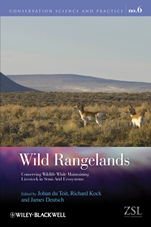
Wild Rangelands: Conserving Wildlife While Maintaining Livestock in Semi–Arid Ecosystems
ISBN 9781405177856
Autor: Johan T. du Toit, Richard Kock, James Deutsch
Wydawca: Wiley
Dostępność: 3-6 tygodni
Cena: 397,95 zł
Przed złożeniem zamówienia prosimy o kontakt mailowy celem potwierdzenia ceny.
ISBN13: |
9781405177856 |
ISBN10: |
1405177853 |
Autor: |
Johan T. du Toit, Richard Kock, James Deutsch |
Oprawa: |
Paperback |
Rok Wydania: |
2010-01-11 |
Ilość stron: |
448 |
Wymiary: |
232x160 |
Tematy: |
PS |
Rangelands, which include unimproved grasslands, shrublands, savannas and semi–deserts, and represent almost half of the terrestrial surface of the Earth, are defined by their use by people as grazing lands for extensive livestock production. However, these ecosystems also constitute a major share of global biodiversity, include some of the most charismatic landscapes and species on our planet, and supply essential ecosystem goods and services to many millions of people who live outside of the global economy. Reconciling livestock production with wildlife conservation is thus a key requirement of sustainable development, but the obstacles are immense. The contributors to this book include leading experts who have pooled their experiences from all continents to cover the ecological, sociological, political, veterinary, and economic aspects of the situation as it exists today. This is to provide practitioners, and students of rangeland management and wildland conservation with a diversity of perspectives on a central question: can rangelands be wildlands?
Spis treści:
Contributors.
Preface.
Foreword by Anthony R. E. Sinclair & George B. Schaller
1. Introduction: A review of rangeland conservation issues in an uncertain future (Monica L. Wrobel & Kent H. Redford).
Part I – Thematic Reviews
2. Riding the rangelands piggyback: a resilience approach to conservation management (Brian Walker).
3. Addressing the mismatches between livestock production and wildlife conservation across spatiotemporal scales and institutional levels (Johan T. du Toit).
4. Rangeland conservation and shrub encroachment: new perspectives on an old problem (Steven R. Archer).
5. Health and disease in wild rangelands (Richard Kock, Mike Kock, Sarah Cleaveland & Gavin Thomson).
6. Contemporary views of human–carnivore conflicts on wild rangelands (Alexandra Zimmermann, Nic
k Baker, Chloe Inskip, John D.C. Linnell, Silvio Marchini, John Odden, Greg Rasmussen & Adrian Treves).
7. Financial incentives for rangeland conservation: addressing the “show–us–the–money” challenge (Ray Victurine & Charles Curtin).
Part II – Case Studies
8. Biodiversity conservation in Australian tropical rangelands (Stephen T. Garnett, John C.Z. Woinarski, Gabriel M. Crowley, and Alex S. Kutt).
9. Livestock grazing and wildlife conservation in the American West: historical, policy, and conservation biology perspectives (Thomas L. Fleischner).
10. Guanaco management in Patagonian rangelands: a conservation opportunity on the brink of collapse
Ricardo Baldi, Andrés Novaro, Martín Funes, Susan Walker, Pablo Ferrando, Mauricio Failla & Pablo Carmanchahi
11. Multiple use of Trans–Himalayan rangelands: reconciling human livelihoods with wildlife conservation (Charudutt Mishra, Sumanta Bagchi, Tsewang Namgail & Yash Veer Bhatnagar).
12. Herders and hunters in a transitional economy: the challenge of wildlife and rangeland management in post–socialist Mongolia (Katie M. Scharf, María E. Fernández–Giménez, Batjav Batbuyan & Sumiya Enkhbold).
13. Social and economic challenges for conservation in east African rangelands: land use, livelihoods and wildlife change in Maasailand (Katherine Homewood & Michael Thompson).
14. The future for wildlife on Kenya′s rangelands: an economic perspective (Michael Norton–Griffiths & Mohammed Y. Said).
15. Synthesis: Local and global solutions to the challenge of keeping rangelands wild (James C. Deutsch).
Index
Nota biograficzna:
Johan T. du Toit is a professor at Utah State University, where he is the Head of the Department of Wildland Resources. He is especia
lly interested in the ecology of large mammals and the conservation of terrestrial ecosystems through the fusion of science and management.
Richard Kock is a Doctor of Veterinary Medicine and specialist in wildlife medicine. He has worked with a focus on wildlife health and conservation, livestock and mixed wildlife/livestock communities and in rangelands throughout his career. He has worked for the Zoological Society of London for 26 years and now works in the African and South Asian region looking at wildlife health programmes in wild rangelands.
James Deutsch directs the Africa Program of the Wildlife Conservation Society, with over a thousand staff working to save globally important landscapes and species in twelve African countries. James has lectured at the University of East Anglia and Imperial College, helped found the Tropical Biology Association and AIDS Treatment Project, ran Crusaid, and chairs Aidspan.
Okładka tylna:
Rangelands, which include unimproved grasslands, shrublands, savannas and semi–deserts, and represent almost half of the terrestrial surface of the Earth, are defined by their use by people as grazing lands for extensive livestock production. However, these ecosystems also constitute a major share of global biodiversity, include some of the most charismatic landscapes and species on our planet, and supply essential ecosystem goods and services to many millions of people who live outside of the global economy. Reconciling livestock production with wildlife conservation is thus a key requirement of sustainable development, but the obstacles are immense. The contributors to this book include leading experts who have pooled their experiences from all continents to cover the ecological, sociological, political, veterinary, and economic aspects of the situation as it exists today. This is to provide practitioners, and students of rangeland management and wildland conservation with a diver
sity of perspectives on a central question: can rangelands be wildlands?
Koszyk
Książek w koszyku: 0 szt.
Wartość zakupów: 0,00 zł
Informacje


Kontakt
Gambit
Centrum Oprogramowania
i Szkoleń Sp. z o.o.
Al. Pokoju 29b/22-24
31-564 Kraków
Siedziba Księgarni
ul. Kordylewskiego 1
31-542 Kraków
+48 12 410 5991
+48 12 410 5987
+48 12 410 5989
Subskrypcje
Administratorem danych osobowych jest firma Gambit COiS Sp. z o.o. Na podany adres będzie wysyłany wyłącznie biuletyn informacyjny.
Autoryzacja płatności

Informacje na temat autoryzacji płatności poprzez PayU.

© Copyright 2012: GAMBIT COiS Sp. z o.o. Wszelkie prawa zastrzeżone.
Projekt i wykonanie: Alchemia Studio Reklamy