


Wydawcy
Katalog tematyczny
- Archeologia (109)
- Ekonomia, finanse, business (13704)
- Filozofia (1445)
- Historia (3040)
- Języki i językoznawstwo (2356)
- Lifestyle, hobby i rozrywka (475)
- Medycyna (9704)
- Nauki humanistyczne (4)
- Nauki o Ziemi i środowisku (2638)
- Nauki ścisłe (20412)
- Nauki społeczne (8486)
- Edukacja (229)
- Kryminologia, opieka spełeczna (284)
- Obronność (10)
- Polityka (1389)
- Psychologia (777)
- Socjologia (410)
- Społeczeństwo i kultura (187)
- Nauki techniczne (13450)
- Prawo (1696)
- Publikacje informacyjne i interdyscyplinarne (1288)
- Religia i wierzenia (917)
- Technika komputerowa (4067)
- Zdrowie, relacje międzyludzkie i rozwój osobisty (657)





Informacje szczegółowe o książce
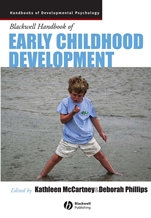
The Blackwell Handbook of Early Childhood Development
ISBN 9781405176613
Autor: Kathleen McCartney, Deborah Phillips
Wydawca: Wiley
Dostępność: 3-6 tygodni
Cena: 290,85 zł
Przed złożeniem zamówienia prosimy o kontakt mailowy celem potwierdzenia ceny.
ISBN13: |
9781405176613 |
ISBN10: |
140517661X |
Autor: |
Kathleen McCartney, Deborah Phillips |
Oprawa: |
Paperback |
Rok Wydania: |
2008-05-30 |
Ilość stron: |
680 |
Wymiary: |
244x170 |
Tematy: |
JC |
This Handbook presents a comprehensive summary of research into child development from age two to seven. Comprising thirty contributions from both established scholars and emerging leaders in the field, it addresses some of the most compelling questions about early experience, such as how important early brain development is, and whether parents matter.
The volume covers the full range of research in developmental psychology including: conceptual frameworks; biological and physiological development; cognitive development; language and literacy development; and social, emotional, and regulatory development. It also considers the applications of psychology to the care and education of young children, treating issues such as poverty, family systems, orphanages, media, and the transition to school.
The Handbook will be a valuable resource for students and scholars across a range of disciplines, as well as for practitioners working with young children.
Spis treści:
List of Contributors.
Preface.
Acknowledgements.
Part I: Conceptual Frameworks.
Nature and Nurture in Early Childhood. (Kirby Deater–Deckard and Katherine Cahill).
Vulnerability and Resilience in Early Child Development. (Ann S. Masten and Abigail H. Gewirtz).
Family Influences on the Development of Young Children’s Competence. (Michael J. Guralnick).
Intersections Among Domains of Development. (Catherine C. Ayoub and Kurt W. Fischer).
Part II: Early Biological and Physiological Development.
Early Brain Development and Plasticity. (Jane W. Couperus and Charles A. Nelson).
Social Regulation of Stress in Early Child Development. (Megan R. Gunnar).
Temperament. (Jennifer N. Martin and Nathan A. Fox).
Part III: Cognitive Development.
Early Conceptual Development. (Susan A. Gelman).
Executive Functions in Developing Children: Current Conceptualizations and Questions for the Future. (Marilyn C. Wels
h, Sarah L. Friedman, and Susan J. Spieker).
Developing Social Understanding in a Social Context. (Rachel Barr).
Mathematical Thinking and Learning. (Herbert P. Ginsburg, Joanna Cannon, Janet Eisenband, and Sandra Pappas).
Part IV: Language and Communicative Development.
Language Experience and Language Milestones During Early Childhood. (Erika Hoff).
How Children Learn Language: A Focus on Resilience. (Susan Goldin–Meadow).
What counts as literacy in early childhood? (Catherine E. Snow).
Part V: Social, Emotional, and Regulatory Development.
Getting Along with Others: Social Competence in Early Childhood. (Richard A. Fabes, Bridget M. Gaertner, and Tiernay K. Popp).
Feeling and Understanding: Early Emotional Development. (Ross A. Thompson and Kristin H. Lagattuta).
Temperament, Attention, and the Development of Self–Regulation. (Mary K. Rothbart, Michael I. Posner, and Jessica Kieras).
Maladjustment in Preschool Children: A Developmental Psychopathology Perspective. (Susan B. Campbell).
Part VI: The Social Ecology of Early Development.
Family Systems. (Marc H. Bornstein and Jeanette Sawyer).
Poverty in Early Childhood. (Eric Dearing, Daniel Berry, and Martha Zaslow).
Orphanages as a Developmental Context for Early Childhood. (Charles H. Zeanah, Anna T. Smyke, and Lisa D. Settles).
Peer Relationships in Early Childhood. (Deborah Lowe Vandell, Lana Nenide, and Sara J. Van Winkle).
Child Care and Early Childhood Education. (Deborah Phillips, Kathleen McCartney, and Amy L. Sussman).
The Social Ecology of the Transition to School: Classrooms, Families, and Children. (Robert C. Pianta and Sara Rimm–Kaufman).
Media and Early Development. (Sandra L. Calvert).
Part VII: Policy Issues.
Evaluating Early Childhood Assessments: A Differential Analysis. (Samuel J. Meisels and Sally Atkins–Burnett).
Head Start: What Do We Know About Its Effectiveness? What Do We Need to
Know? (John M. Love, Louisa Banks Tarullo, Helen Raikes, and Rachel Chazan–Cohen).
Early Childhood Policy: A Comparative Perspective. (Jane Waldfogel).
Promoting Social Competence in Early Childhood: Classroom Curricula and Social Skills Coaching Programs. (Karen L. Bierman and Stephen A. Erath).
Treatment and Prevention of Conduct Problems: Parent Training Interventions for Young Children (2–7 Years Old). (Carolyn Webster–Stratton and M. Jamila Reid).
References.
Author Index.
Subject Index
Nota biograficzna:
Kathleen McCartney is Gerald S. Lesser Professor of Early Childhood Development at the Harvard Graduate School of Education.
Deborah Phillips is Professor of Psychology at Georgetown University.
Okładka tylna:
This Handbook presents a comprehensive summary of research into child development from age two to seven. Comprising thirty contributions from both established scholars and emerging leaders in the field, it addresses some of the most compelling questions about early experience, such as how important early brain development is, and whether parents matter.
The volume covers the full range of research in developmental psychology including: conceptual frameworks; biological and physiological development; cognitive development; language and literacy development; and social, emotional, and regulatory development. It also considers the applications of psychology to the care and education of young children, treating issues such as poverty, family systems, orphanages, media, and the transition to school.
The Handbook will be a valuable resource for students and scholars across a range of disciplines, as well as for practitioners working with young children.
Koszyk
Książek w koszyku: 0 szt.
Wartość zakupów: 0,00 zł
Informacje


Kontakt
Gambit
Centrum Oprogramowania
i Szkoleń Sp. z o.o.
Al. Pokoju 29b/22-24
31-564 Kraków
Siedziba Księgarni
ul. Kordylewskiego 1
31-542 Kraków
+48 12 410 5991
+48 12 410 5987
+48 12 410 5989
Subskrypcje
Administratorem danych osobowych jest firma Gambit COiS Sp. z o.o. Na podany adres będzie wysyłany wyłącznie biuletyn informacyjny.
Autoryzacja płatności

Informacje na temat autoryzacji płatności poprzez PayU.

© Copyright 2012: GAMBIT COiS Sp. z o.o. Wszelkie prawa zastrzeżone.
Projekt i wykonanie: Alchemia Studio Reklamy