


Wydawcy
Katalog tematyczny
- Archeologia (109)
- Ekonomia, finanse, business (13704)
- Filozofia (1445)
- Historia (3040)
- Języki i językoznawstwo (2356)
- Lifestyle, hobby i rozrywka (475)
- Medycyna (9704)
- Nauki humanistyczne (4)
- Nauki o Ziemi i środowisku (2638)
- Geografia (299)
- Nauki o Ziemi (1661)
- Geologia (414)
- Hydrologia (237)
- Meteorologia i klimatologia (114)
- Paleontologia (33)
- Wulkanologia i sejsmologia (44)
- Planowanie przestrzenne (53)
- Środowisko (607)
- Nauki ścisłe (20412)
- Nauki społeczne (8486)
- Nauki techniczne (13450)
- Prawo (1696)
- Publikacje informacyjne i interdyscyplinarne (1288)
- Religia i wierzenia (917)
- Technika komputerowa (4067)
- Zdrowie, relacje międzyludzkie i rozwój osobisty (657)





Informacje szczegółowe o książce
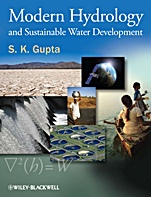
Modern Hydrology and Sustainable Water Development
ISBN 9781405171243
Autor: S. K. Gupta
Wydawca: Wiley
Dostępność: 3-6 tygodni
Cena: 436,80 zł
Przed złożeniem zamówienia prosimy o kontakt mailowy celem potwierdzenia ceny.
ISBN13: |
9781405171243 |
ISBN10: |
1405171243 |
Autor: |
S. K. Gupta |
Oprawa: |
Hardback |
Rok Wydania: |
2010-11-23 |
Ilość stron: |
464 |
Wymiary: |
254x193 |
Tematy: |
RB |
The book is intended to provide a complete graduate/postgraduate level course for aspiring hydrology professionals. The material of this book will derive its scientific under–pinning from basics of mathematics, physics, chemistry, geology, meteorology, engineering, soil science, and related disciplines and will provide sufficient breadth and depth of understanding in each sub–section of hydrology. It will start with basic concepts such as peculiar properties of water and parameters of quantity and quality of visible surface flow and parameters of invisible subsurface flow including aquifer characteristics. A chapter on ‘hydrologic investigations using isotopic tracers’ from fundamentals to catchments and groundwater response models is intended to help step up the level of application of isotope techniques for investigations of hydrologic processes and aid water resource development and management. Human impacts on quality and flow, statistical methods of analyses of hydrologic data including hypotheses testing procedures, modelling of hydrological processes and design of hydrologic systems including systems for pollution remediation, rainwater harvesting, groundwater recharge will be covered in next few chapters. Chapters on ‘global change’ and ‘water and ethics’ aim respectively to emphasize the central role of hydrological cycle and its quantitative understanding and monitoring for human well being and to familiarize the readers with complex issues of equity and justice in large scale water resource development process.
Spis treści:
1.1 Table of contents.
1) FUNDAMENTALS OF HYDROLOGY.
a) Peculiar Physical Properties of Water.
i) Boiling and Freezing points of water.
ii) Latent heat.
iii) Heat Capacity.
iv) Thermal expansion.
v) Density, Viscosity.
vi) Surface tension and Capillarity.
b) Water Quantity and Quality.
i) Quantity (volume and Flow rate).(1) Precipitation/snowmelt/gauges, networks, data sources/ accuracy.
(2) Evaporation pans, evaporation and transpiration.
(3) Surface water flow measurements (Weirs, flumes and gauges).
(4) Soil moisture (soil–water pressure, tension/ retention).
ii) Quality parameters.
(1) pH.
(2) DO.
(3) Temperature.
(4) Conductivity.
(5) Chemical parameters.
(6) Biological parameters.
c) Quantity and Timing of Flow.
i) Physics of Water Flow.
(1) Visible Flow: Surface Water.
· Uniform flow; Manning Equation.
· Channel routing; reservoir routing.
(2) Soil Water.
· Infiltration Process/ rate.
(3) Invisible Flow: Groundwater.
· Darcy’s law; head data; equipotential and flow lines.
(4) Hydraulic conductivity; hydraulic head; “K”.
ii) Watersheds and Aquifers.
(1) Watershed concepts (hydrologic cycle, estimation/measurement, flow patterns, divides).
· Watershed characterization (land use, soil types, unsaturated flow).
· Lakes.
(2) Aquifers, storage properties and confining units.
(3) Water budgets (balance equations, hydrologic cycle, global fluxes, atmosphere, oceans, climate, global energy budget).
(4) Streamflow components and processes (runoff streamflow, baseflow, hydrograph separation, snow melt).
(5) Hydrograph modeling.
(6) Geologic basics in watershed characterization (earth materials cycling, rocks/minerals, soils, porosity, landforms, evaporation/evapotranspiration, fluvial geomorphology.
2) HUMAN IMPACTS ON WATER QUALITY AND FLOW.
a) Common inorganic and organic pollutants and sources.
b) Oxygen demands.
i) Biochemical.
ii) Carbonaceous.
iii) Nitrogenous.
c) Common organic pollutants.
d) Point, non–point, and atmospheric sources.
e) Urban impacts on water quality.
f) Sediment– erosion.
i) Land use effects.
ii) Transport.
iii) Sediment yield.
iv) Settling.
g) Nutrients.
h) Q
uantifying loads.
i) Water quality standards.
j) Human impacts on flow.
i) Infiltration.
ii) Recharge.
iii) Runoff.
3) HYDROLOGIC INVESTIGATIONS USING ISOTOPIC TRACERS.
a) Fundamentals of Isotope Geochemistry: Definitions, Terminology, Standards.
b) Stable isotope Fractionations: Ralyleigh equations, open and closed systems.
c) Biological fractionations.
d) Processes affecting isotope compositions.
i) Precipitation.
ii) Mesoscale circulation and storm trajectories.
iii) Evapo–transpiration.
e) Shallow aquifers.
i) Groundwater recharge.
ii) Groundwater dating.
f) Modeling of Isotope and hydrogeochemical responses.
g) Catchment models.
h) Groundwater models.
4) STATISTICAL ANALYSES.
a) Basic statistical measures (mean, median, variance, standard deviation).
b) Frequency analysis.
c) Significance testing and analysis.
d) Normalization.
e) Detection limits.
5) INTERPRETATION, ANALYSIS & MODELING OF HYDROLOGICAL PROCESSES.
a) Estimate groundwater discharge/recharge.
i) Estimate, measure or analyze infiltration.
ii) Infiltration models.
b) Estimate water budget.
i) Analyze precipitation data.
ii) Water balance models.
c) Interpret water chemistry data.
d) Predict groundwater contaminant fate and transport.
i) Model vadose zone contaminant transport.
e) Conduct analyses for statistical significance.
f) Model local groundwater flow.
g) Model regional groundwater flow.
h) Model regional groundwater quality.
i) Model groundwater contaminant transport.
j) Determine groundwater flow direction and velocity.
k) Estimate pollutant loads for groundwater.
l) Remote sensing and GIS tools.
6) DESIGN OF HYDROLOGICAL SYSTEMS.
a) Design subsurface remediation systems (product/contaminant recovery, soil vapour, extraction, air sparging, etc.).
b) Design water supply wells.
c) Design wellhead protection plans.
d) Conservation, Renova
tion and Reuse strategies.
e) Rain water harvesting and Groundwater Recharge.
7) WATER AND ETHICS.
a) Environmental context.
b) Social context.
c) Water–resource management.
8) THE EARTH’S WATERY ENVELOPE, ITS CIRCULATION AND GLOBAL CHANGE.
a) Hydrologic Cycle on Global scale: reservoirs and fluxes.
b) Drivers of global change.
c) Global change and hydrologic issues at different scales
Nota biograficzna:
Dr. S.K. Gupta has more than 150 publications in internationally refereed research journals and several books to his credit. Dr. Gupta has also been a Fulbright Fellow at the University of Hawaii at Manoa, an Alexander von Humboldt Fellow at the University of Heidelberg, and a Visiting Fellow at the University of Canberra. He is a Fellow of the National Academy of Sciences, India.
Okładka tylna:
The book is intended to provide a complete graduate/postgraduate level course for aspiring hydrology professionals. The material of this book will derive its scientific under–pinning from basics of mathematics, physics, chemistry, geology, meteorology, engineering, soil science, and related disciplines and will provide sufficient breadth and depth of understanding in each sub–section of hydrology. It will start with basic concepts such as peculiar properties of water and parameters of quantity and quality of visible surface flow and parameters of invisible subsurface flow including aquifer characteristics. A chapter on ‘hydrologic investigations using isotopic tracers’ from fundamentals to catchments and groundwater response models is intended to help step up the level of application of isotope techniques for investigations of hydrologic processes and aid water resource development and management. Human impacts on quality and flow, statistical methods of analyses of hydrologic data including hypotheses testing procedures, modelling of hydrological processes and desig
n of hydrologic systems including systems for pollution remediation, rainwater harvesting, groundwater recharge will be covered in next few chapters. Chapters on ‘global change’ and ‘water and ethics’ aim respectively to emphasize the central role of hydrological cycle and its quantitative understanding and monitoring for human well being and to familiarize the readers with complex issues of equity and justice in large scale water resource development process.
Koszyk
Książek w koszyku: 0 szt.
Wartość zakupów: 0,00 zł
Informacje


Kontakt
Gambit
Centrum Oprogramowania
i Szkoleń Sp. z o.o.
Al. Pokoju 29b/22-24
31-564 Kraków
Siedziba Księgarni
ul. Kordylewskiego 1
31-542 Kraków
+48 12 410 5991
+48 12 410 5987
+48 12 410 5989
Subskrypcje
Administratorem danych osobowych jest firma Gambit COiS Sp. z o.o. Na podany adres będzie wysyłany wyłącznie biuletyn informacyjny.
Autoryzacja płatności

Informacje na temat autoryzacji płatności poprzez PayU.

© Copyright 2012: GAMBIT COiS Sp. z o.o. Wszelkie prawa zastrzeżone.
Projekt i wykonanie: Alchemia Studio Reklamy