


Wydawcy
Katalog tematyczny
- Archeologia (109)
- Ekonomia, finanse, business (13704)
- Filozofia (1445)
- Historia (3040)
- Języki i językoznawstwo (2356)
- Lifestyle, hobby i rozrywka (475)
- Medycyna (9704)
- Nauki humanistyczne (4)
- Nauki o Ziemi i środowisku (2638)
- Nauki ścisłe (20412)
- Nauki społeczne (8486)
- Edukacja (229)
- Kryminologia, opieka spełeczna (284)
- Obronność (10)
- Polityka (1389)
- Psychologia (777)
- Socjologia (410)
- Społeczeństwo i kultura (187)
- Nauki techniczne (13450)
- Prawo (1696)
- Publikacje informacyjne i interdyscyplinarne (1288)
- Religia i wierzenia (917)
- Technika komputerowa (4067)
- Zdrowie, relacje międzyludzkie i rozwój osobisty (657)





Informacje szczegółowe o książce
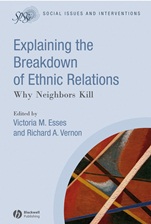
Explaining the Breakdown of Ethnic Relations: Why Neighbors Kill
ISBN 9781405170598
Autor: Victoria M. Esses, Richard A. Vernon
Wydawca: Wiley
Dostępność: 3-6 tygodni
Cena: 522,90 zł
Przed złożeniem zamówienia prosimy o kontakt mailowy celem potwierdzenia ceny.
ISBN13: |
9781405170598 |
ISBN10: |
140517059X |
Autor: |
Victoria M. Esses, Richard A. Vernon |
Oprawa: |
Hardback |
Rok Wydania: |
2008-07-11 |
Ilość stron: |
296 |
Wymiary: |
237x160 |
Tematy: |
JB |
At a time when human capacities for conflict and for cooperation seem to be at their peak, it is vital to understand the host of factors that may lead to the catastrophic deterioration of relatively peaceful relations between ethnocultural and ethnoreligious groups. In particular, how is it that groups that have shared social and public space, and have developed economic ties, can come to engage in deadly violence against one another? How do we explain acts of cruelty committed by once peaceful neighbors?
Explaining the Breakdown of Ethnic Relations addresses the multitude of factors that may lead to the collapse of ethnic relations using both real–world case studies and theoretical perspectives from a variety of disciplines. Though their perspectives differ, the original, contributed chapters in this volume all attempt to identify events and processes that can break down inhibitions against violence, and lead to mass killings and genocide. Together, they describe the different levels and kinds of explanations that must be considered if we are to make sense of past acts and prevent repetition. There are powerful messages here that will be of interest and relevance to social scientists and policy–makers alike.
Spis treści:
Notes on Contributors.
Series Preface.
Acknowledgments.
1 Why Neighbors Kill: An Overview: Richard A. Vernon and Victoria M. Esses (University of Western Ontario).
Part I. Individual Factors.
2 Extreme Harmdoing: A View from the Social Psychology of Justice: Carolyn L. Hafer (Brock University), James M. Olson (University of Western Ontario), and Alexandra A. Peterson (University of Toronto).
3 On the Nature of Contemporary Prejudice: From Subtle Bias to Severe Consequences: John F. Dovidio and Adam R. Pearson (Yale University), Samuel L. Gaertner (University of Delaware), and Gordon Hodson (Brock University).
4 Why Neighbors Kill: Prior Intergroup Contact and Killing of Ethni
c Outgroup Neighbors: Miles Hewstone (University of Oxford), Nicole Tausch (Cardiff University), Alberto Voci (University of Padova), Jared Kenworthy (University of Texas at Arlington), Joanne Hughes (Queen’s University Belfast), and Ed Cairns (University of Ulster).
5 Why Neighbors Don’t Stop the Killing: The Role of Group–Based Schadenfreude: Russell Spears (Cardiff University/University of Amsterdam) and Colin Wayne Leach (University of Sussex).
Part II. Societal Factors.
6 When Neighbors Blame Neighbors: Scapegoating and the Breakdown of Ethnic Relations: Peter Glick (Lawrence University).
7 The Influence of the Threatening Transitional Context on Israeli Jews’ Reactions to Al Aqsa Intifada: Daniel Bar–Tal and Keren Sharvit (Tel–Aviv University).
8 Why Do States Kill Citizens? Or, Why Racism is an Insufficient Explanation: Patricia Marchak (University of British Columbia).
Part III. Synthesis.
9 Theories of Genocide: The Case of Rwanda: Howard Adelman (Griffith University).
10 Applying the Unified Instrumental Model of Group Conflict to Understanding Ethnic Conflict and Violence: The Case of Sudan: Victoria M. Esses (University of Western Ontario) and Lynne M. Jackson (King’s University College at the University of Western Ontario).
11 The Origins of Genocide and Mass Killing, Prevention, Reconciliation, and their Application to Rwanda: Ervin Staub (University of Massachusetts at Amherst).
Index
Nota biograficzna:
Victoria M. Esses is Professor of Psychology at the University of Western Ontario, Canada.
Richard A. Vernon is Professor of Political Science at the University of Western Ontario, Canada.
Okładka tylna:
At a time when human capacities for conflict and for cooperation seem to be at their peak, it is vital to understand the host of factors that may lead to the catastrophic deterioration of relatively peaceful relations
between ethnocultural and ethnoreligious groups. In particular, how is it that groups that have shared social and public space, and have developed economic ties, can come to engage in deadly violence against one another? How do we explain acts of cruelty committed by once peaceful neighbors?
Explaining the Breakdown of Ethnic Relations addresses the multitude of factors that may lead to the collapse of ethnic relations using both real–world case studies and theoretical perspectives from a variety of disciplines. Though their perspectives differ, the original, contributed chapters in this volume all attempt to identify events and processes that can break down inhibitions against violence, and lead to mass killings and genocide. Together, they describe the different levels and kinds of explanations that must be considered if we are to make sense of past acts and prevent repetition. There are powerful messages here that will be of interest and relevance to social scientists and policy–makers alike.
Koszyk
Książek w koszyku: 0 szt.
Wartość zakupów: 0,00 zł
Informacje


Kontakt
Gambit
Centrum Oprogramowania
i Szkoleń Sp. z o.o.
Al. Pokoju 29b/22-24
31-564 Kraków
Siedziba Księgarni
ul. Kordylewskiego 1
31-542 Kraków
+48 12 410 5991
+48 12 410 5987
+48 12 410 5989
Subskrypcje
Administratorem danych osobowych jest firma Gambit COiS Sp. z o.o. Na podany adres będzie wysyłany wyłącznie biuletyn informacyjny.
Autoryzacja płatności

Informacje na temat autoryzacji płatności poprzez PayU.

© Copyright 2012: GAMBIT COiS Sp. z o.o. Wszelkie prawa zastrzeżone.
Projekt i wykonanie: Alchemia Studio Reklamy