


Wydawcy
Katalog tematyczny
- Archeologia (109)
- Ekonomia, finanse, business (13704)
- Filozofia (1445)
- Historia (3040)
- Języki i językoznawstwo (2356)
- Lifestyle, hobby i rozrywka (475)
- Medycyna (9704)
- Nauki humanistyczne (4)
- Nauki o Ziemi i środowisku (2638)
- Nauki ścisłe (20412)
- Nauki społeczne (8486)
- Edukacja (229)
- Kryminologia, opieka spełeczna (284)
- Obronność (10)
- Polityka (1389)
- Psychologia (777)
- Socjologia (410)
- Społeczeństwo i kultura (187)
- Nauki techniczne (13450)
- Prawo (1696)
- Publikacje informacyjne i interdyscyplinarne (1288)
- Religia i wierzenia (917)
- Technika komputerowa (4067)
- Zdrowie, relacje międzyludzkie i rozwój osobisty (657)





Informacje szczegółowe o książce
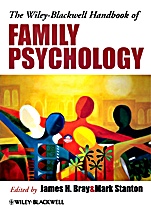
The Wiley–Blackwell Handbook of Family Psychology
ISBN 9781405169943
Autor: James H. Bray, Mark Stanton
Wydawca: Wiley
Dostępność: 3-6 tygodni
Cena: 807,45 zł
Przed złożeniem zamówienia prosimy o kontakt mailowy celem potwierdzenia ceny.
ISBN13: |
9781405169943 |
ISBN10: |
140516994X |
Autor: |
James H. Bray, Mark Stanton |
Oprawa: |
Hardback |
Rok Wydania: |
2009-08-27 |
Ilość stron: |
788 |
Wymiary: |
248x174 |
Tematy: |
JC |
The Wiley–Blackwell Handbook of Family Psychology provides a comprehensive overview of the range of disciplines relating to family psychology – a field that transcends the treatment of families to include psychological services to individuals, couples, and large organizations, based on the tenets of systems theory and the science of family psychology.
Beginning with coverage of the field′s epistemological and theoretical underpinnings, the text proceeds to recount relevant scientific methods, clinical models and methods, and other significant topics. Essays by a variety of recognized experts provide in–depth analysis and fresh insights while addressing the latest developments.
Chapters in the Foundations section help clinicians establish a scientific basis for interventions and detail competencies. The Clinical section includes summaries of the most widely recognized models for clinical practice. The Dimensions section summarizes the most recent research literature and clinical interventions for specialized areas of interest.
The Wiley–Blackwell Handbook of Family Psychology is an invaluable resource for all mental health professionals providing family–related psychological services.
Spis treści:
Family Psychology Foundations.
A. Family Psychology Foundations: Introduction (Editors).
1. The Systemic Epistemology of the Specialty of Family Psychology (Mark Stanton).
2. The Revolution and Evolution of Family Therapy and Family Psychology (Herbert Goldenberg and Irene Goldenberg).
3. The Fascinating Story of Family Theories (Margaret Crosbie–Burnett and David M. Klein).
4. Changing Landscape of American Family Life (Kay Pasley and Spencer B. Olmstead).
5. Family Diversity (George K. Hong).
6. Qualitative Research and Family Psychology (Jane F. Gilgun).
7. Systemic Research Controversies and Challenges (Danielle A. Black and Jay Lebow).
8. Tra
ining in Family Psychology: A Competencies–Based Approach (Nadine J. Kaslow, Marianne P. Celano, and Mark Stanton).
9. Education in Family Psychology (Mark Stanton, Michele Harway, and Arlene Vetere).
Clinical Family Psychology.
B. Clinical Family Psychology: Introduction (Editors).
10. Couple and Family Assessment (James H. Bray).
11. Couple and Family Processes in DSM–V: Moving beyond Relational Disorders (Erika Lawrence, Steven R.H. Beach, and Brian D. Doss).
12. Ethical and legal considerations in family psychology: The special issue of competence (Terence Patterson).
13. Clinical Practice in Family Psychology (John Thoburn, Gwynith Hoffman–Robinson, Lauren J. Shelly, and Ashly J. Hagen).
14. Solution–Focused Brief Therapy (Stephen Cheung).
15. Behavioral and Cognitive–Behavioral Therapies (Kristina Coop Gordon, Lee J. Dixon, Jennifer M. Willett, and Farrah M. Hughes).
16. Psychodynamic Family Psychotherapy: Toward Unified Relational Systematics (Jeffrey J. Magnavita).
17. Personality–Guided Couples Psychology (Mark Stanton and A. Rodney Nurse).
18. Intensive Family–of–Origin Consultation: An Intergenerational Approach (Timothy Weber and Cheryl Cebula).
19. Psychotherapy Based on Bowen Family Systems Theory (David S. Hargrove).
20. Collaborative Practice: Relationships and Conversations that Make a Difference (Harlene Anderson).
21. Science, Practice, and Evidence–based Treatments in the Clinical Practice of Family Psychology (Thomas L. Sexton and Kristina Coop Gordon).
22. Functional Family Therapy: Traditional Theory to Evidence–based Practice (Thomas L. Sexton).
23. Multidimensional Family Therapy: A Science–Based Treatment System for Adolescent Drug Abuse (Howard A. Liddle).
24. Structural Ecosystems Therapy (SET) for Women with HIV/AIDS (Victoria Mitrani, Carleen Robinson, and José Szapocznik).
25. Multisystem
ic Therapy (MST) (Scott W. Henggeler, Ashli J. Sheidow, and Terry Lee).
26. Behavioral Couples Therapy for Alcoholism and Drug Abuse (William Fals–Stewart, Timothy J. O’Farrell, Gary R. Birchler, and Wendy (K.K.) Lam).
27. Emotionally Focused Couple Therapy: Creating Loving Relationships (Susan Johnson and Brent Bradley).
28. Brief Strategic Family Therapy for Adolescents with Behavior Problems (Michael S. Robbins, José Szapocznik, and Viviana E. Horigian).
29. Empirically Informed Systemic Psychotherapy: Tracking Client Change and Therapist Behavior During Therapy (William M. Pinsof and Anthony L. Chambers).
Dimensions of Family Psychology.
C. Dimensions of Family Psychology: Introduction (Editors).
30. Relationship Education Programs: Current Trends and Future Directions (Erica P. Ragan, Lindsey A. Einhorn, Galena K. Rhoades, Howard J. Markman, and Scott M. Stanley).
31. Children of Divorce: New Trends and Ongoing Dilemmas (Marsha Kline Pruett and Ryan Barker).
32. Collaborative Divorce: A Family–Centered Process (A. Rodney Nurse and Peggy Thompson).
33. Treating Stepfamilies: A Subsystems–based Approach (Scott Browning and James H. Bray).
34. A Family–Centered Intervention Strategy for Public Middle Schools (Thomas J. Dishion and Elizabeth Stormshak).
35. Family and Schools (Cindy Carlson, Catherine L. Funk, and Kim Hoang Nguyen).
36. Family Psychology in the Context of Pediatric Medical Conditions (Melissa A. Alderfer and Mary T. Rourke).
37. Families and Health: An Attachment Perspective (Tziporah Rosenberg and William Watson).
38. Anorexia Nervosa and the Family (Ivan Eisler).
39. Combining Work and Family: From Conflict to Compatible (Diane F. Halpern and Sherylle J. Tan).
40. Lesbian, Gay, and Bisexual Family Psychology: A Systemic, Life Cycle Perspective (Abbie E. Goldberg).
41. The Psychology of Men & Masculinity (Ronald F. Levant
and Christine M. Williams).
42. Religion and Spirituality in Couple and Family Relations (Froma Walsh).
43. Moral Identity in the Family (Kevin S. Reimer).
44. Family Stories and Rituals (Barbara H. Fiese and Marcia A. Winter).
45. Systemic Treatments for Substance Use Disorders (Mark Stanton).
46. Couples Therapy for Depression (Mark A. Whisman, Valerie E. Whiffen, and Natalie Whiteford).
47. Families and Public Policy (Margaret Heldring).
48. Family Psychology of Immigrant Mexican and Mexican American Families (Joseph M. Cervantes and Olga L. Mejía).
49. International Family Psychology (Florence W. Kaslow).
50. Family Forensic Psychology (Robert Welsh, Lyn Greenberg, and Marjorie Graham–Howard).
51. Families and HIV/AIDS: Willo Pequegnat and the NIMH Consortium on Families and HIV/AIDS.
52. Families, violence, and abuse (Daniela J. Owen, Lauren Knickerbocker, Richard E. Heyman, and Amy M. Smith Slep).
53. Serious Mental Illness: Family Experiences, Needs, and Interventions (Diane T. Marsh & Harriet P. Lefley).
Conclusion.
54. The Future of Family Psychology (James H. Bray and Mark Stanton).
Nota biograficzna:
James H. Bray is an Associate Professor of Family and Community Medicine at Baylor College of Medicine. Dr Bray’s NIH–funded research focuses on family and developmental issues in adolescent substance use, divorce, remarriage, and stepfamilies. He is a pioneer in collaborative family healthcare and primary care psychology. He also maintains an active clinical practice focusing on children and families. He is the 2009 President of the American Psychological Association.
Mark Stanton is Professor of Psychology and Dean of the School of Behavioral and Applied Sciences at Azusa Pacific University, California. He is certified in Family Psychology by the American Board of Professional Psychology and a licensed psychologist in
the state of California. He was President of the Society of Family Psychology of the American Psychological Association in 2005, Editor of The Family Psychologist from 2002 to 2007, elected as President of the American Board of Couple and Family Psychology (2011–13), and named the Family Psychologist of the Year in 2007 by the Society of Family Psychology.
Okładka tylna:
The Wiley–Blackwell Handbook of Family Psychology provides a comprehensive overview of the range of disciplines relating to family psychology – a field that transcends the treatment of families to include psychological services to individuals, couples, and large organizations, based on the tenets of systems theory and the science of family psychology.
Beginning with coverage of the field′s epistemological and theoretical underpinnings, the text proceeds to recount relevant scientific methods, clinical models and methods, and other significant topics. Essays by a variety of recognized experts provide in–depth analysis and fresh insights while addressing the latest developments.
Chapters in the Foundations section help clinicians establish a scientific basis for interventions and detail competencies. The Clinical section includes summaries of the most widely recognized models for clinical practice. The Dimensions section summarizes the most recent research literature and clinical interventions for specialized areas of interest.
The Wiley–Blackwell Handbook of Family Psychology is an invaluable resource for all mental health professionals providing family–related psychological services.
Koszyk
Książek w koszyku: 0 szt.
Wartość zakupów: 0,00 zł
Informacje


Kontakt
Gambit
Centrum Oprogramowania
i Szkoleń Sp. z o.o.
Al. Pokoju 29b/22-24
31-564 Kraków
Siedziba Księgarni
ul. Kordylewskiego 1
31-542 Kraków
+48 12 410 5991
+48 12 410 5987
+48 12 410 5989
Subskrypcje
Administratorem danych osobowych jest firma Gambit COiS Sp. z o.o. Na podany adres będzie wysyłany wyłącznie biuletyn informacyjny.
Autoryzacja płatności

Informacje na temat autoryzacji płatności poprzez PayU.

© Copyright 2012: GAMBIT COiS Sp. z o.o. Wszelkie prawa zastrzeżone.
Projekt i wykonanie: Alchemia Studio Reklamy