


Wydawcy
Katalog tematyczny
- Archeologia (109)
- Ekonomia, finanse, business (13704)
- Filozofia (1445)
- Historia (3040)
- Języki i językoznawstwo (2356)
- Lifestyle, hobby i rozrywka (475)
- Medycyna (9704)
- Nauki humanistyczne (4)
- Nauki o Ziemi i środowisku (2638)
- Nauki ścisłe (20412)
- Nauki społeczne (8486)
- Nauki techniczne (13450)
- Prawo (1696)
- Publikacje informacyjne i interdyscyplinarne (1288)
- Religia i wierzenia (917)
- Technika komputerowa (4067)
- Zdrowie, relacje międzyludzkie i rozwój osobisty (657)





Informacje szczegółowe o książce
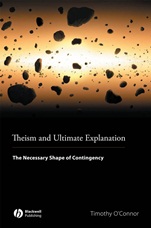
Theism and Ultimate Explanation: The Necessary Shape of Contingency
ISBN 9781405169691
Autor: Timothy OConnor
Wydawca: Wiley
Dostępność: 3-6 tygodni
Cena: 401,10 zł
Przed złożeniem zamówienia prosimy o kontakt mailowy celem potwierdzenia ceny.
ISBN13: |
9781405169691 |
ISBN10: |
1405169699 |
Autor: |
Timothy OConnor |
Oprawa: |
Hardback |
Rok Wydania: |
2008-01-31 |
Ilość stron: |
192 |
Wymiary: |
231x163 |
Tematy: |
HP |
Theism and Ultimate Explanation engages with the traditional metaphysician′s quest for a true ultimate explanation of the most general features of the world we inhabit. The first part of the book develops an original view concerning the epistemology and metaphysics of modality, or truths concerning what is possible or necessary. This framework is then applied to a re–examination of the cosmological argument for theism. O′Connor defends a novel version of the Leibnizian cosmological argument from contingency for the existence of a transcendent necessary being as the source and basis for the ultimate explanation of contingent beings and their interconnected histories.
Preface ix Part I The Explanatory Role of Necessity 1 1. Modality and Explanation 3 Relative and Absolute Necessity 3 Scientifi cally Established Necessities 5 An Epistemological Worry about Modality: Causal Contact with Modal Facts 7 Modal Nihilism 10 Modal Reductionism and Defl ationism 15 Modal Anti–Realism and Quasi–Realism 27 Conclusion 30 2. Modal Knowledge 32 Conceivability As Our Guide? 32 Modality a Matter of Principle? 36 The Theoretical Roles of Modal Claims: Towards a Modal Epistemology 41 The Spheres of Possibility 60 Part II The Necessary Shape of Contingency 63 3. Ultimate Explanation and Necessary Being: The Existence Stage of the Cosmological Argument 65 Necessary Being 68 Two Objections to the Traditional Answer 73 Necessary Being As the Explanatory Ground of Contingency? 79 4. The Identifi cation Stage 86 From Necessary Being to God, I: Transcendent, Not Immanent 86 Two Models of Transcendent Necessary Being: Logos and Chaos 93 Varieties of Chaos 93 Interlude: The Fine–Tuning Argument 97 From Necessary Being to God, II: Logos, Not Random Chaos 109 5. The Scope of Contingency 111 How Many Universes Would Perfection Realize? 111 Perfection and Freedom 121 Some Applications of the Many–Universe–Creation Hypothesis 122 Necessary Being and the Scope of Possibility 125 Necessary Being and the Many Necessary Truths 128 6. The God of Abraham, Isaac, and Anselm ? 130 The Unity of the Divine Nature and Its Consequences 132 Natural Theology in the Understanding of Revealed Theology 140 Coda 143 Notes 145 Bibliography 162 Index 172
Timothy O′Connor is Professor of Philosophy at Indiana University, Bloomington. He has published widely in the areas of metaphysics, philosophy of mind, and philosophy of religion. He is the author of Persons and Causes (2000), and the editor of Agents, Causes and Events (1995) and Philosophy of Mind: Contemporary Readings (2003).
“This trim but highly technical volume is indisensable for scholars and graudate–level researchers in the field. Summing Up: Essential. Graduate students and researchers/faculty.” ( Choice , 1 October 2012) "Despite these limitations, this book is worth reading. It will alert theologians to the philosophical strength of cosmological arguments and the superficial objections to them. It will also interest philosophers of religion and those working on modal logic." (The Journal of Religion, 2011) "It will alert theologians to the philosophical strength of cosmological arguments and the superficial objections to them. It will also interest philosophers of religion and those working on modal logic." (Journal of Religion, 1 April 2011) "O’Connor does not disappoint those who are used to the high levels of clarity, rigor, and originality that readers of his work on free will and emergence have come to expect from him.” ( Mind , July 2009) “A breathtaking sweep from metaphysics through theology. This is a superb book in the philosophy of religion, the like of whose quality and originality is rare.” Alexander Pruss, Baylor University
Koszyk
Książek w koszyku: 0 szt.
Wartość zakupów: 0,00 zł
Informacje


Kontakt
Gambit
Centrum Oprogramowania
i Szkoleń Sp. z o.o.
Al. Pokoju 29b/22-24
31-564 Kraków
Siedziba Księgarni
ul. Kordylewskiego 1
31-542 Kraków
+48 12 410 5991
+48 12 410 5987
+48 12 410 5989
Subskrypcje
Administratorem danych osobowych jest firma Gambit COiS Sp. z o.o. Na podany adres będzie wysyłany wyłącznie biuletyn informacyjny.
Autoryzacja płatności

Informacje na temat autoryzacji płatności poprzez PayU.

© Copyright 2012: GAMBIT COiS Sp. z o.o. Wszelkie prawa zastrzeżone.
Projekt i wykonanie: Alchemia Studio Reklamy