


Wydawcy
Katalog tematyczny
- Archeologia (109)
- Ekonomia, finanse, business (13704)
- Filozofia (1445)
- Historia (3040)
- Języki i językoznawstwo (2356)
- Lifestyle, hobby i rozrywka (475)
- Medycyna (9704)
- Nauki humanistyczne (4)
- Nauki o Ziemi i środowisku (2638)
- Nauki ścisłe (20412)
- Astronomia (294)
- Biologia (5119)
- Chemia (6540)
- Chemia analityczna (361)
- Chemia fizyczna (346)
- Chemia nieorganiczna (137)
- Chemia organiczna (535)
- Krystalografia (27)
- Minerologia (46)
- Fizyka (3309)
- Matematyka (4574)
- Nauki ścisłe, ogólnie (503)
- Nauki społeczne (8486)
- Nauki techniczne (13450)
- Prawo (1696)
- Publikacje informacyjne i interdyscyplinarne (1288)
- Religia i wierzenia (917)
- Technika komputerowa (4067)
- Zdrowie, relacje międzyludzkie i rozwój osobisty (657)





Informacje szczegółowe o książce
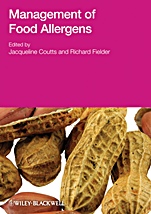
Management of Food Allergens
ISBN 9781405167581
Autor: Jacqueline Coutts, Richard Fielder
Wydawca: Wiley
Dostępność: 3-6 tygodni
Cena: 926,10 zł
Przed złożeniem zamówienia prosimy o kontakt mailowy celem potwierdzenia ceny.
ISBN13: |
9781405167581 |
ISBN10: |
1405167580 |
Autor: |
Jacqueline Coutts, Richard Fielder |
Oprawa: |
Hardback |
Rok Wydania: |
2009-09-11 |
Ilość stron: |
272 |
Wymiary: |
246x175 |
Tematy: |
PN |
Approximately 2–4% of western adults and up to 10% of children are currently thought to be sensitive to food allergens, and the issue is of major importance to the food manufacturing industry. This book provides an overview of the important emerging topic in food safety of food allergens. It examines the risk management systems and practices being adopted by the food industry to tackle the growing hypersensitivity of consumers to a range of food proteins. The various aspects of the subject are addressed from a range of perspectives including that of researcher, food manufacturer, enforcement officer, clinician and consumer. There will be an emphasis on the scientific analysis of food and environmental samples when used in verifying in–process controls and finished–product labelling claims.
The book aims to provide a critical analysis of the latest information available to the various stakeholders in food allergen management, consolidating the currently diffuse literature into a single, convenient reference source. It is directed at food scientists and technologists based in industry and research, quality assurance personnel and public health officials.
Spis treści:
Contributors.
Preface.
PART I: RISK ASSESSMENT.
1 The reality of food allergy: the patients’ perspective (David Reading).
1.1 Background.
1.2 Consumer reaction.
1.3 Supporting consumers.
1.4 Allergy services.
1.5 Teenagers and young adults.
1.6 Food labelling.
1.7 Allergen thresholds.
1.8 Food alerts.
1.9 Our work with industry.
1.10 The work of the FSA.
1.11 Schools.
1.12 Eating out.
1.13 Daily life with a food allergy.
1.14 Hopes for the future.
References.
2 Clinical incidence of food allergy (Zsolt Szépfalusi and Thomas Eiwegger).
2.1 Introduction.
2.2 Case 1 – Severe anaphylaxis to an unknown food product.
2.3 Case 2 – Idiopathic
anaphylaxis.
2.4 Case 3 – Cross–reactivity or contamination?
2.5 Case 4 – To vaccinate or not in egg allergy.
2.6 Case 5 – Adrenalin auto–injector for all egg–allergic patients?
2.7 Case 6 – Immunotherapy for oral allergy syndrome?
2.8 Conclusion.
References.
3 Identification and characterisation of food allergens (E.N. Clare Mills, Philip Johnson, Yuri Alexeev, and Heimo Breiteneder).
3.1 Introduction.
3.2 Classification of food allergens.
3.3 Plant food allergens.
3.4 Animal food allergens.
3.5 Conclusions.
References.
4 Coeliac disease: allergy or intolerance? (Norma McGough).
4.1 Introduction.
4.2 About coeliac disease.
4.3 Prevalence and diagnosis.
4.4 What is gluten?
4.5 The gluten–free diet.
4.6 Gluten–free foods.
4.7 Prescriptions.
4.8 Allergen labelling.
4.9 Food production.
4.10 The Codex standard.
4.11 Gluten testing.
4.12 Gluten–free catering.
4.13 Cross–contamination.
4.14 Nutritional adequacy.
4.15 Lactose intolerance.
4.16 Coeliac UK.
References.
PART II: RISK MANAGEMENT.
5 Risk management – the principles (René Crevel).
5.1 Introduction.
5.2 Allergen management: the issues.
5.3 Development of allergen management plans: principles and considerations.
5.4 Objectives.
5.5 Application.
5.6 Concluding remarks.
References.
6 Risk management – operational implications (Anton J. Alldrick).
6.1 Introduction.
6.2 Identifying the hazard.
6.3 Managing the hazard.
6.4 Conclusion.
References.
7 Choices for cleaning and cross–contact (Steve Bagshaw).
7.1 Allergen management and cleaning.
7.2 The cleaning process.
7.3 Principles of cleaning.
7.4 Open plant cleaning.
7.5 Dry cleaning.
7.6 Manual cleaning.
7.7 Foam and gel cleaning.
7.8 Cross–contamination.
7.9 Floor
cleaning.
7.10 Tray and rack washing machines.
7.11 Cleaning–in–place.
7.12 Management of allergen cross–contamination.
7.13 Cleaning management.
7.14 The cleaning programme.
References.
8 Validation of cleaning and cross–contact (Helen M. Brown).
8.1 Introduction.
8.2 Validation of a cleaning regime.
8.3 Sampling to validate cleaning.
8.4 What to measure to validate cleaning.
8.5 Summary.
References.
9 Validation, standardisation and harmonisation of allergen activities in Europe and worldwide (Bert Popping).
9.1 Analytical methods.
9.2 Method validation.
9.3 Standardisation of methods.
9.4 Harmonisation.
References.
10 Standardisation of analytical methodology with special reference to gluten analysis (Ingrid Malmheden Yman).
10.1 Introduction.
10.2 Methods and standards.
10.3 Gluten analysis.
10.4 Gluten determination.
11 Analytical choices (Marie–Claude Robert).
11.1 Development of allergen testing.
11.2 Test formats.
11.3 Commercial test kits.
11.4 Analytical issues specific to immunoassays.
11.5 Conclusions.
References.
12 Food allergen method development programme at Health Canada: support to standard setting and consumer protection (Samuel Benrejeb Godefroy, Michael Abbott, Terry Koerner, Dorcas Weber, and Theresa Paolisini).
12.1 Rationale to ACT on preventing food allergy incidents in Canada.
12.2 Health Canada’s food allergen methodology programme.
12.3 Conclusion.
References.
PART III: RISK COMMUNICATION.
13 Finished product labelling and legislation (Sue Hattersley).
13.1 Introduction.
13.2 Legislation on allergen labelling – European Directive 2003/89/EC and subsequent amendments.
13.3 Allergen cross–contamination and advisory labelling (such as ‘May Contain’ statements).
13.4 Provision of allergy information for foods t
hat are not pre–packed.
13.5 ‘Free from’ foods.
13.6 Conclusions.
References.
14 Guidelines for manufacturing and certification programmes (Neil Griffiths).
14.1 Preface.
14.2 Introduction.
14.3 The law.
14.4 Voluntary information.
14.5 Guidelines.
14.6 Certification schemes.
14.7 Training.
14.8 The use of risk assessment.
14.9 Management.
14.10 The environment.
14.11 Labelling and communication.
14.12 Thresholds.
14.13 Testing.
14.14 Conclusions.
References.
15 Risk communication – a manufacturer’s perspective (Clive Beecham).
15.1 Background.
15.2 The process of going ‘nut free’.
15.3 The factory changes.
15.4 People disciplines.
15.5 Verification.
15.6 Retailer reaction.
15.7 What is nut free? – the problem of evolving science.
15.8 The need for thresholds.
Appendix: Useful web links.
Index.
Nota biograficzna:
Jacqueline Coutts and Richard Fielder: BIOKITS Products, Gen–Probe Life Sciences Ltd., Deeside, Flintshire, UK
Okładka tylna:
Approximately 2–4% of western adults and up to 10% of children are currently thought to be sensitive to food allergens, and the issue is of major importance to the food manufacturing industry. This book provides an overview of the important emerging topic in food safety of food allergens. It examines the risk management systems and practices being adopted by the food industry to tackle the growing hypersensitivity of consumers to a range of food proteins. The various aspects of the subject are addressed from a range of perspectives including that of researcher, food manufacturer, enforcement officer, clinician and consumer. There will be an emphasis on the scientific analysis of food and environmental samples when used in verifying in–process controls and finished–product labelling claims.
The book a
Koszyk
Książek w koszyku: 0 szt.
Wartość zakupów: 0,00 zł
Informacje


Kontakt
Gambit
Centrum Oprogramowania
i Szkoleń Sp. z o.o.
Al. Pokoju 29b/22-24
31-564 Kraków
Siedziba Księgarni
ul. Kordylewskiego 1
31-542 Kraków
+48 12 410 5991
+48 12 410 5987
+48 12 410 5989
Subskrypcje
Administratorem danych osobowych jest firma Gambit COiS Sp. z o.o. Na podany adres będzie wysyłany wyłącznie biuletyn informacyjny.
Autoryzacja płatności

Informacje na temat autoryzacji płatności poprzez PayU.

© Copyright 2012: GAMBIT COiS Sp. z o.o. Wszelkie prawa zastrzeżone.
Projekt i wykonanie: Alchemia Studio Reklamy