


Wydawcy
Katalog tematyczny
- Archeologia (109)
- Ekonomia, finanse, business (13704)
- Filozofia (1445)
- Historia (3040)
- Języki i językoznawstwo (2356)
- Lifestyle, hobby i rozrywka (475)
- Medycyna (9704)
- Nauki humanistyczne (4)
- Nauki o Ziemi i środowisku (2638)
- Nauki ścisłe (20412)
- Astronomia (294)
- Biologia (5119)
- Chemia (6540)
- Chemia analityczna (361)
- Chemia fizyczna (346)
- Chemia nieorganiczna (137)
- Chemia organiczna (535)
- Krystalografia (27)
- Minerologia (46)
- Fizyka (3309)
- Matematyka (4574)
- Nauki ścisłe, ogólnie (503)
- Nauki społeczne (8486)
- Nauki techniczne (13450)
- Prawo (1696)
- Publikacje informacyjne i interdyscyplinarne (1288)
- Religia i wierzenia (917)
- Technika komputerowa (4067)
- Zdrowie, relacje międzyludzkie i rozwój osobisty (657)





Informacje szczegółowe o książce
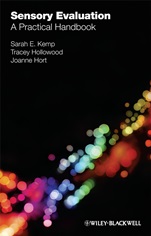
Sensory Evaluation: A Practical Handbook
ISBN 9781405162104
Autor: Sarah E. Kemp, Tracey Hollowood, Joanne Hort
Wydawca: Wiley
Dostępność: 3-6 tygodni
Cena: 464,10 zł
Przed złożeniem zamówienia prosimy o kontakt mailowy celem potwierdzenia ceny.
ISBN13: |
9781405162104 |
ISBN10: |
1405162104 |
Autor: |
Sarah E. Kemp, Tracey Hollowood, Joanne Hort |
Oprawa: |
Paperback |
Rok Wydania: |
2009-04-27 |
Ilość stron: |
208 |
Wymiary: |
213x165 |
Tematy: |
PN |
Sensory testing in the food, cosmetic and household product industries is integral to the development and manufacture of products that consumers want to buy. A greater understanding of the benefits of sensory science has lead to rapid development and growth in the profession over recent years, and the demand for more technical staff increases as the number and size of sensory departments continue to expand.
This book is a practical guide to sensory evaluation methods and techniques, explaining the suitability of different testing methods for different situations and offering step–by–step instructions on how to perform the various types of test. Covering a broad range of product applications including food, beverages, personal care and household products, the book is spiral bound to allow for easy reference in the testing environment.
The objectives of the book areto provide a practical guide and laboratory manual on how to carry out sensory evaluation techniquesto reach sensory practitioners, as well as sensory scientists, by using a simple, easy–to–read, easy–to–use formatto be affordable to a wide audience who would not ordinarily be able to afford to purchase standard sensory text books, including students, technicians and practitioners in developing countriesto cover the IFST PFSG accreditation scheme at foundation and intermediate levels
The book is suitable as a training manual, reference text, teaching aid and course book. Key audiences include sensory practitioners, junior sensory staff, sensory students and sensory trainers.
Also available from Wiley–Blackwell
Sensory and Consumer Research in Food Product Design and Development
H.R. Moskowitz, J.H. Beckley and A.V.A Resurreccion
ISBN 9780813816326
Flavor Perception
Edited by A.J. Taylor
ISBN 9781405116275
Spis treści:
1. INTRODUCTION .
2. PLANNING YOUR SENSORY PROJECT.
The human senses.
Sight, smell, taste, touch and hearing.
Factors influencing sensory measurements.
Psychological and physiological errors.
Factors influencing test design.
Defining your clients needs: identifying test objectives, application, budget, deadlines, setting action standards.
Hypothesis testing.
Experimental design: balancing, randomisation, blocking, Latin square, replication, size of sample/panel.
Statistical analysis.
Professional conduct, ethical issues and good laboratory practice.
Hygiene.
Safety.
Ethical handling of panellists (informed consent, ethical committee approval, employment law, panellist records, Data Protection Act).
Health consideration for panellists: Allergens, medications.
IP consideration.
.
3. REQUIREMENTS FOR SENSORY TESTING.
Testing Facilities.
Equipment, lighting, colour, temperature, humidity.
Purpose built facilities: sensory testing laboratory, consumer test facilities, specific applications.
Temporary facilities: portable booths, CLT.
Testing in the home.
Samples.
Preparation and presentation: palate cleansers, serving vessels, carriers, coding, order of presentation.
Reference and control samples.
Sample assessment procedures.
Disclosing ingredients.
Panellists.
Screening and Selection.
Training.
Motivation.
Monitoring performance.
Working with panels: setting up new panels, integrating new individuals into existing panels.
Good working practices for panellists: Smoking, personal hygiene, perfume..
Data Capture.
Pen and paper.
Computerised systems.
Video cameras.
Portable systems.
4. SENSORY TEST METHODS.
Each test is described using the same format including – objective and rationale, experimental design, procedure, example of worksheet, data analysis, conclusion, a worked example and ‘dos and don’ts’.<
br>.
Discrimination tests.
Introduction.
Overall difference Tests: Triangle, Duo–Trio, Difference from control, Similarity.
Attribute specific: Paired comparison (2 AFC), 3AFC, Ranking.
Other tests: same/difference (with surety rating = R–index), Threshold tests.
Descriptive tests.
Introduction.
General procedure: qualitative attribute generation, quantitative analysis (inc scale options) etc.
Specific methodology: QDA, Spectrum, QFP, Free Choice Profiling, Consensus.
Time Intensity.
Affective/Consumer tests.
Introduction\.
Qualitative methods: focus groups.
Quantitative methods: preference, hedonic rating.
Questionnaire design.
Combining results from different tests.
Linking sensory and consumer data.
5. COMPLETING THE PROJECT.
Reporting.
Report format: title, abstract or summary, aims/objectives, action standard, introduction/background, method, results and discussion, insight, conclusions, recommended action, references..
Data storage.
Documentation.
.
GLOSSARY .
BIBLIOGRAPHY .
Appendix 1.
Considerations for sensory evaluation of specific product types.
Appendices 2–12.
Statistical tables.
INDEX
Nota biograficzna:
Dr Sarah E. Kemp was formerly Head of Global Sensory and Consumer Guidance, Cadbury Schweppes plc, Reading, UK.
Dr Tracey Hollowood is Associate Director: Sensory and Consumer Research, Sensory Dimensions Ltd, Bulwell, Nottinghamshire, UK.
Dr Joanne Hort is Associate Professor in Sensory Science, Nottingham University, UK.
Okładka tylna:
Sensory testing in the food, cosmetic and household product industries is integral to the development and manufacture of products that consumers want to buy. A greater understanding of the benefits of sensory science has lead to rapid development and
growth in the profession over recent years, and the demand for more technical staff increases as the number and size of sensory departments continue to expand.
This book is a practical guide to sensory evaluation methods and techniques, explaining the suitability of different testing methods for different situations and offering step–by–step instructions on how to perform the various types of test. Covering a broad range of product applications including food, beverages, personal care and household products, the book is spiral bound to allow for easy reference in the testing environment.
The objectives of the book areto provide a practical guide and laboratory manual on how to carry out sensory evaluation techniquesto reach sensory practitioners, as well as sensory scientists, by using a simple, easy–to–read, easy–to–use formatto be affordable to a wide audience who would not ordinarily be able to afford to purchase standard sensory text books, including students, technicians and practitioners in developing countriesto cover the IFST PFSG accreditation scheme at foundation and intermediate levels
The book is suitable as a training manual, reference text, teaching aid and course book. Key audiences include sensory practitioners, junior sensory staff, sensory students and sensory trainers.
Also available from Wiley–Blackwell
Sensory and Consumer Research in Food Product Design and Development
H.R. Moskowitz, J.H. Beckley and A.V.A Resurreccion
ISBN 9780813816326
Flavor Perception
Edited by A.J. Taylor
ISBN 9781405116275
Koszyk
Książek w koszyku: 0 szt.
Wartość zakupów: 0,00 zł
Informacje


Kontakt
Gambit
Centrum Oprogramowania
i Szkoleń Sp. z o.o.
Al. Pokoju 29b/22-24
31-564 Kraków
Siedziba Księgarni
ul. Kordylewskiego 1
31-542 Kraków
+48 12 410 5991
+48 12 410 5987
+48 12 410 5989
Subskrypcje
Administratorem danych osobowych jest firma Gambit COiS Sp. z o.o. Na podany adres będzie wysyłany wyłącznie biuletyn informacyjny.
Autoryzacja płatności

Informacje na temat autoryzacji płatności poprzez PayU.

© Copyright 2012: GAMBIT COiS Sp. z o.o. Wszelkie prawa zastrzeżone.
Projekt i wykonanie: Alchemia Studio Reklamy