


Wydawcy
Katalog tematyczny
- Archeologia (109)
- Ekonomia, finanse, business (13704)
- Filozofia (1445)
- Historia (3040)
- Języki i językoznawstwo (2356)
- Lifestyle, hobby i rozrywka (475)
- Medycyna (9704)
- Nauki humanistyczne (4)
- Nauki o Ziemi i środowisku (2638)
- Nauki ścisłe (20412)
- Astronomia (294)
- Biologia (5119)
- Chemia (6540)
- Chemia analityczna (361)
- Chemia fizyczna (346)
- Chemia nieorganiczna (137)
- Chemia organiczna (535)
- Krystalografia (27)
- Minerologia (46)
- Fizyka (3309)
- Matematyka (4574)
- Nauki ścisłe, ogólnie (503)
- Nauki społeczne (8486)
- Nauki techniczne (13450)
- Prawo (1696)
- Publikacje informacyjne i interdyscyplinarne (1288)
- Religia i wierzenia (917)
- Technika komputerowa (4067)
- Zdrowie, relacje międzyludzkie i rozwój osobisty (657)





Informacje szczegółowe o książce
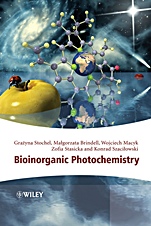
Bioinorganic Photochemistry
ISBN 9781405161725
Autor: Grazyna Stochel, Zofia Stasicka, Malgorzata Brindell, Wojciech Macyk, Konrad Szacilowski
Wydawca: Wiley
Dostępność: 3-6 tygodni
Cena: 830,55 zł
Przed złożeniem zamówienia prosimy o kontakt mailowy celem potwierdzenia ceny.
ISBN13: |
9781405161725 |
ISBN10: |
1405161728 |
Autor: |
Grazyna Stochel, Zofia Stasicka, Malgorzata Brindell, Wojciech Macyk, Konrad Szacilowski |
Oprawa: |
Hardback |
Rok Wydania: |
2009-04-09 |
Ilość stron: |
398 |
Wymiary: |
255x176 |
Tematy: |
PN |
The majority of enzymes in living cells rely on the presence of a central metal ion or ions, and similarly about 30% of all proteins are metalloproteins, where metals ions sit at the heart of an organic protein matrix. These metal ions are critical to the structure, stability and function of the protein or enzyme, to the point that without them, many biological processes would not be possible.
Bioinorganic photochemistry seeks to understand the interaction of these enzymes and proteins with light, and represents a significant challenge to chemists in many areas. For example, the most familiar reaction in this area is photosynthesis, with the development of artificial photosynthesis a significant challenge for chemists. An improved understanding of bioinorganic photochemistry also offers the hope of developing improved photodynamic therapies and photocatalytic reactions.
Bioinorganic photochemistry provides a thorough overview of this important and exciting area of research, covering the fundamental principles and concepts, and illustrating the applications in biological, medical, and environmental science.
Written as an authoritative guide all those involved in the investigation or development of bioinorganic photochemical processes, the book will also be a key reference source for advanced courses in inorganic chemistry.
Spis treści:
Part I. Introduction 1. Philosophy of bioinorganic photochemistry
Part II. Fundamentals
2. Light and matter
2.1. Nature of light
2.2. Accessible light sources
2.3. Interaction between light and matter
3. Formation and properties of electronic excited states
3.1. Wave mechanics and quantum numbers
3.2. Electronic excitation
4. Photophysical deactivation of electronic excited states
4.1. Spontaneous deactivation
4.2. Quenching
4.3. Coordination and organometallic compounds
5. Kinetics of the excited–state dec
ay
6. Photochemical reactions
6.1.Photochemical reaction channels
6.2. Intramolecular photoreactions
6.3. Intermolecular photoreactions
6.4. The coordination compound specificity
6.5. Photosensitization
6.6. Homogeneous photocatalysis
7. Photochemistry and photophysics of supramolecular systems and nanoassemblies
7.1. From molecules through clusters to crystals
7.2. Metallic nanoparticles: metals in the embryonic state
7.3. Formation and decay of the excited states of semiconductors
Part III. Natural photoprocesses involving inorganic compounds
8. From interstellar space to planetary atmospheres
8.1. Homogeneous systems: From interstellar space to planetary atmospheres and primitive soup models
8.2. Heterogeneous photochemistry in ice phases
9. Solar radiation and terrestrial environment
9.1. Solar radiation
9.2. Atmospheric photochemistry
9.3. Photochemistry in hydrosphere and lithosphere
9.4. Photochemical self–cleaning in the environment
10. Heretogeneous (photo)catalysis and biogenesis on Earth
10.1. (Photo)catalysis on chalcogenide semiconductors
10.2. Photocatalytic nitrogen fixation
10.3. Photocatalytic carbon dioxide fixation
10.4. „Fossils” of prebiotic catalysts: metal clusters in active centres of metalloenzymes
11. Foundation and evolution of photosynthesis
11.1. Photosynthetic structures
11.2. Oxygenic photosynthesis
11.3. Light harvesting antennas (LHC)
11.4. Electron transfer pathways in PSII and PSI
11.5. Oxygen evolving complex, OEC
Part IV. Photochemistry and photophysics in bioinspired systems. Studies and modeling
12. Photoenzymes
12.1. Natural photoenzymes
12.2. Modified natural proteins/enzymes
12.3. Artificial photoenzymes
12.4. Towards mimicking the photosynthetic processes
13. Photoinduced electron transfer in proteins
13
.1. Photochemical methodology
13.2. Biochemical applications
14. Nucleic acids photocleavage and charge transport
14.1. Mechanisms and strategies for advanced metallophotocleavers
14.2. Photoinduced DNA–mediated charge transport
Part V. Towards applications
15. Light and biomatter (molecules, cells and tissues)
16. Fluorescent and chromogenic sensing and labeling
16.1. Cations as targets in biochemical sensing
16.2. Fluorescent and chromogenic sensing of anions
16.3. Optical detection of neutral molecules
16.4. Nanoparticles in biochemical sensing and labeling
17. Therapeutic strategies
17.1. Photobiostimulation
17.2. Photoactivation of drugs
17.3. Photodynamic therapy
17.4. Nanomedicine methods
18. Photodynamic inactivation
19. Photodelivery and phototargeting
20. Phototoxicity and photoprotection
20.1. Chemical and physical photoprotection
20.2. Inorganic sunscreens
21. Photocatalysis in the environmental protection
21.1. Development of homo– and heterogeneous methods
21.2. Homogeneous photocatalysis
21.2. Heterogeneous systems
21.3.New ideas in pollution abatement
Nota biograficzna:
Dr Grazyna Stochel, Deputy Dean, Faculty of Chemistry, Jagiellonian University, Cracow, Poland
Okładka tylna:
The majority of enzymes in living cells rely on the presence of a central metal ion or ions, and similarly about 30% of all proteins are metalloproteins, where metals ions sit at the heart of an organic protein matrix. These metal ions are critical to the structure, stability and function of the protein or enzyme, to the point that without them, many biological processes would not be possible.
Bioinorganic photochemistry seeks to understand the interaction of these enzymes and proteins with light, and represents a significant challenge to chemists in many areas. For example, the most
familiar reaction in this area is photosynthesis, with the development of artificial photosynthesis a significant challenge for chemists. An improved understanding of bioinorganic photochemistry also offers the hope of developing improved photodynamic therapies and photocatalytic reactions.
Bioinorganic photochemistry provides a thorough overview of this important and exciting area of research, covering the fundamental principles and concepts, and illustrating the applications in biological, medical, and environmental science.
Written as an authoritative guide all those involved in the investigation or development of bioinorganic photochemical processes, the book will also be a key reference source for advanced courses in inorganic chemistry.
Koszyk
Książek w koszyku: 0 szt.
Wartość zakupów: 0,00 zł
Informacje


Kontakt
Gambit
Centrum Oprogramowania
i Szkoleń Sp. z o.o.
Al. Pokoju 29b/22-24
31-564 Kraków
Siedziba Księgarni
ul. Kordylewskiego 1
31-542 Kraków
+48 12 410 5991
+48 12 410 5987
+48 12 410 5989
Subskrypcje
Administratorem danych osobowych jest firma Gambit COiS Sp. z o.o. Na podany adres będzie wysyłany wyłącznie biuletyn informacyjny.
Autoryzacja płatności

Informacje na temat autoryzacji płatności poprzez PayU.

© Copyright 2012: GAMBIT COiS Sp. z o.o. Wszelkie prawa zastrzeżone.
Projekt i wykonanie: Alchemia Studio Reklamy