


Wydawcy
Katalog tematyczny
- Archeologia (109)
- Ekonomia, finanse, business (13704)
- Filozofia (1445)
- Historia (3040)
- Języki i językoznawstwo (2356)
- Lifestyle, hobby i rozrywka (475)
- Medycyna (9704)
- Nauki humanistyczne (4)
- Nauki o Ziemi i środowisku (2638)
- Nauki ścisłe (20412)
- Astronomia (294)
- Biologia (5119)
- Biochemia (575)
- Biologia człowieka (14)
- Biologia komórkowa (377)
- Biologia molekularna (398)
- Biologia rozwoju (130)
- Biologia, ogólnie (1277)
- Botanika (280)
- Hydrobiologia (92)
- Mikrobiologia (363)
- Mykologia (22)
- Zoologia (303)
- Chemia (6540)
- Fizyka (3309)
- Matematyka (4574)
- Nauki ścisłe, ogólnie (503)
- Nauki społeczne (8486)
- Nauki techniczne (13450)
- Prawo (1696)
- Publikacje informacyjne i interdyscyplinarne (1288)
- Religia i wierzenia (917)
- Technika komputerowa (4067)
- Zdrowie, relacje międzyludzkie i rozwój osobisty (657)





Informacje szczegółowe o książce
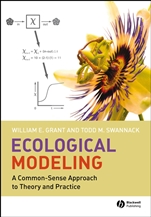
Ecological Modeling: A Common–Sense Approach to Theory and Practice
ISBN 9781405161688
Autor: William E. Grant, Todd M. Swannack
Wydawca: Wiley
Dostępność: 3-6 tygodni
Cena: 255,15 zł
Przed złożeniem zamówienia prosimy o kontakt mailowy celem potwierdzenia ceny.
ISBN13: |
9781405161688 |
ISBN10: |
140516168X |
Autor: |
William E. Grant, Todd M. Swannack |
Oprawa: |
Paperback |
Rok Wydania: |
2007-11-12 |
Ilość stron: |
176 |
Wymiary: |
244x170 |
Tematy: |
PS |
Ecological Modeling: A Common–Sense Approach to Theory and Practice is a down–to–earth guide for students, teachers, and professional ecologists.
The text candidly addresses the question “What do I really need to know to begin building and using ecological models in a responsible manner?” In addition to providing a common–sense introduction to the basic principles of systems modeling, the authors suggest a practical strategy for dealing with pitfalls commonly encountered during model development. The ties between theory and practice, which beginning modelers often find so elusive, are demystified via the step–by–step development of three models representing ecological systems of increasing complexity.
The coauthors infuse the text with complimentary perspectives from the first (Grant) and most recent (Swannack) generations of ecological modelers.
Spis treści:
Preface.
Acknowledgments.
1 Introduction.
1.1 Common–Sense Solutions: Three Exercises.
1.2 Modeling Theory.
1.3 Modeling Practice.
1.4 Theory, Practice, and Common Sense.
1.5 Intended Use of this Book.
Part 1 Common–Sense Solutions: Three Exercises.
2 Common–Sense Solutions.
2.1 Three Problems.
2.1.1 Harvesting Food for the Winter.
2.1.2 Estimating the Probability of Population Extinction.
2.1.3 Managing the Commons.
2.2 The Systems Approach to Problem Solving.
2.2.1 The Conceptual Model (Phase I).
2.2.2 The Quantitative Model (Phase II).
2.2.3 Model Evaluation (Phase IIII).
2.2.4 Model Application (Phase IV).
2.3 The Three Problems Revisited: The Systems Approach in Theory and Practice.
Part 2 Modeling Theory.
3 Theory I: The Conceptual Model.
3.1 State the Model Objectives (Ia).
3.2 Bound the System–of–Interest (Ib).
3.3 Categorize the Components within the System–of–Interest (Ic)
.
3.3.1 State Variables.
3.3.2 Material Transfers.
3.3.3 Sources and Sinks.
3.3.4 Information Transfers.
3.3.5 Driving Variables.
3.3.6 Constants.
3.3.7 Auxiliary Variables.
3.4 Identify the Relationships among the Components That Are of Interest (Id).
3.4.1 Submodels.
3.5 Represent the Conceptual Model (Ie).
3.5.1 Conceptual–Model Diagrams.
3.6 Describe the Expected Patterns of Model Behavior (If).
4 Theory II: The Quantitative Model.
4.1 Select the General Quantitative Structure for the Model (IIa).
4.2 Choose the Basic Time Unit for the Simulations (IIb).
4.3 Identify the Functional Forms of the Model Equations (IIc).
4.3.1 Information on Which to Base the Choice of Functional Forms.
4.3.2 Selecting Types of Equations to Represent the Chosen Functional Forms.
4.4 Estimate the Parameters of the Model Equations (IId).
4.4.1 Statistical Analyses within the Context of Simulation Model Parameterization.
4.4.2 Quantifying Qualitative Information.
4.4.3 Deterministic– versus Stochastic–Model Parameterization.
4.5 Execute the Baseline Simulation (IIe).
4.5.1 Baseline Simulations for Stochastic Models.
5 Theory III: Model Evaluation.
5.1 Assess the Reasonableness of the Model Structure and the Interpretability of Functional Relationships within the Model (IIIa).
5.2 Evaluate the Correspondence between Model Behavior and the Expected Patterns of Model Behavior (IIIb).
5.3 Examine the Correspondence between Model Projections and the Data from the Real System (IIIc).
5.3.1 Quantitative versus Qualitative Model Evaluation.
5.4 Determine the Sensitivity of Model Projections to Changes in the Values of Important Parameters (IIId).
5.4.1 Interpreting Sensitivity Analysis within a Model Evaluation Framework.
6 Theory IV: Model Application.
6.1 Develop and Execute the Experimental Design for the Simulations (IVa).
6.2 Analyze and Interpret t
he Simulation Results (IVb).
6.3 Communicate the Simulation Results (IVc).
Part 3 Modeling Practice.
7 Some Common Pitfalls.
7.1 Phase I: Pitfalls: The Conceptual Model.
7.2 Phase II Pitfalls: The Quantitative Model.
7.3 Phase III Pitfalls: Model Evaluation.
7.4 Phase IV Pitfalls: Model Application.
8 The Modeling Process In Practice.
8.1 Preliminary Conceptual Model (CM).
8.1.1 How to Begin.
8.1.2 Adding New Components to the Model.
8.1.3 Describing Expected Patterns.
8.1.4 Describing the Plan of Attack.
8.2 Intermediate Developmental Models (IDMi).
8.2.1 Evaluate–Adjust Cycle for each Developmental Model.
8.2.2 Sensitivity Analysis of the Last Developmental Model.
8.3 Final Model (FM).
Part 4 Theory, Practice, and Common Sense.
9 The Common–Sense Problems Revisited.
9.1 Harvesting Food for the Winter.
9.1.1 The Preliminary Conceptual Model (CM).
9.1.2 The Last (only) Intermediate Developmental Model (IDMlast).
9.1.3 The Final Model (FM).
9.2 Estimating the Probability of Population Extinction.
9.2.1 The Preliminary Conceptual Model (CM).
9.2.2 The Intermediate Developmental Models (IDMi).
9.2.3 The Final Model (FM).
10 Reflections.
10.1 The Systems Approach as a Complement to Other Methods of Problem Solving.
10.2 Ecological Modeling as a Problem–Solving Process.
10.3 Expectations for Ecological Models.
10.4 A Final Thought.
References.
Appendix A: Introduction To The Ecological Modeling Literature.
Appendix B: Scientific Reports For The Examples in Chapter 2.
B.1: Effect of Deforestation on Rate of Food Harvest.
B.2: Effect of Hurricane Frequency on Probability of Population Extinction.
B.3: Effect of Stocking Rate on Forage and Animal Production.
Index
Nota biograficzna:
Bill Grant has taught ecological modeling in the Department of Wil
dlife and Fisheries Sciences (WFSC) at Texas A&M University since 1976, has served on the Board of Governors and as President of the International Society for Ecological Modeling, and has been Associate Editor of the international journal Ecological Modelling since 1997.
Todd Swannack also has taught ecological modeling in WFSC at Texas A&M University, and has been modeling the population dynamics of endangered species since 2002.
Okładka tylna:
Ecological Modeling: A Common–Sense Approach to Theory and Practice is a down–to–earth guide for students, teachers, and professional ecologists.
The text candidly addresses the question “What do I really need to know to begin building and using ecological models in a responsible manner?” In addition to providing a common–sense introduction to the basic principles of systems modeling, the authors suggest a practical strategy for dealing with pitfalls commonly encountered during model development. The ties between theory and practice, which beginning modelers often find so elusive, are demystified via the step–by–step development of three models representing ecological systems of increasing complexity.
The coauthors infuse the text with complimentary perspectives from the first (Grant) and most recent (Swannack) generations of ecological modelers.
Koszyk
Książek w koszyku: 0 szt.
Wartość zakupów: 0,00 zł
Informacje


Kontakt
Gambit
Centrum Oprogramowania
i Szkoleń Sp. z o.o.
Al. Pokoju 29b/22-24
31-564 Kraków
Siedziba Księgarni
ul. Kordylewskiego 1
31-542 Kraków
+48 12 410 5991
+48 12 410 5987
+48 12 410 5989
Subskrypcje
Administratorem danych osobowych jest firma Gambit COiS Sp. z o.o. Na podany adres będzie wysyłany wyłącznie biuletyn informacyjny.
Autoryzacja płatności

Informacje na temat autoryzacji płatności poprzez PayU.

© Copyright 2012: GAMBIT COiS Sp. z o.o. Wszelkie prawa zastrzeżone.
Projekt i wykonanie: Alchemia Studio Reklamy