


Wydawcy
Katalog tematyczny
- Archeologia (109)
- Ekonomia, finanse, business (13704)
- Filozofia (1445)
- Historia (3040)
- Języki i językoznawstwo (2356)
- Lifestyle, hobby i rozrywka (475)
- Medycyna (9704)
- Nauki humanistyczne (4)
- Nauki o Ziemi i środowisku (2638)
- Nauki ścisłe (20412)
- Nauki społeczne (8486)
- Nauki techniczne (13450)
- Prawo (1696)
- Publikacje informacyjne i interdyscyplinarne (1288)
- Religia i wierzenia (917)
- Technika komputerowa (4067)
- Zdrowie, relacje międzyludzkie i rozwój osobisty (657)





Informacje szczegółowe o książce
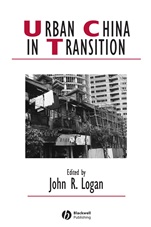
Urban China in Transition
ISBN 9781405161466
Autor: John Logan
Wydawca: Wiley
Dostępność: 3-6 tygodni
Cena: 152,25 zł
Przed złożeniem zamówienia prosimy o kontakt mailowy celem potwierdzenia ceny.
ISBN13: |
9781405161466 |
ISBN10: |
1405161469 |
Autor: |
John Logan |
Oprawa: |
Paperback |
Rok Wydania: |
2007-12-18 |
Ilość stron: |
378 |
Wymiary: |
229x152 |
Tematy: |
KC |
China is rapidly becoming a world power. No longer a developing country, China’s cities are undergoing transformations of historic proportions. This book, in the Studies in Urban and Social Change series, evaluates these multi–dimensional changes. With input from professionals in a variety of fields, including Sociology, Geography, Economics, Demography, Planning, Architecture, and Anthropology, Urban China in Transition analyzes Chinese trends in diverse topics including:MigrationCrimeGated CommunitiesNeighborhood AssociationsSuburbanizationWomen’s status
Chapters are co–authored by experts on urban Chinese life together with others whose expertise is on the particular topic. Comparisons to urban areas in the United States, Eastern Europe, Asia, and South America pose thoughtful questions about the possible trajectory of Chinese urban development, while underscoring its uniqueness. The result is a broad theoretical and historical perspective that sharply focuses the Chinese experience through alternative prisms, thus enriching theoretical discussion and debate.
Spis treści:
Notes on Contributors.
Series Editors’ Preface.
Acknowledgments.
Introduction: Urban China in Comparative Perspective (John R. Logan, Brown University and Susan S. Fainstein, Harvard University).
Part I: Market Transition in Work Units and the Labor Market:.
1. Two Decades of Reform: The Changing Organization Dynamics of Chinese Industrial Firms (Shahid Yusuf and Kaoru Nabeshima, World Bank).
2. The Myth of the ‘New Urban Poverty’? Trends in Urban Poverty in China, 1988––2002 (Simon Appleton and Lina Song, Nottingham University).
3. Class Structure and Class Inequality in Urban China and Russia: Effects of Institutional Change or Economic Performance? (Yanjie Bian, University of Minnesota and Theodore P. Gerber, University of Wisconsin–M
adison).
4. Gender and the Labor Market in China and Poland (C. Cindy Fan, UCLA and Joanna Regulska, Rutgers University).
Part II: Changing Places:.
5. Urbanization, Institutional Change, and Spatial Inequality in China: 1990–2001 (Michael J. White, University of Cardiff; Fulong Wu, Brown University; and Yiu Por (Vincent) Chen, DePaul University).
6. Growth on the Edge: The New Chinese Metropolis (Yixing Zhou, Peking University and John R Logan, Brown University).
7. Mirrored Reflections: Place Identity Formation in Taipei and Shanghai (Jennifer Rudolph, Worcester Polytechnic Institute and Hanchao Lu, Georgia Institute of Technology).
8. Is Gating Always Exclusionary? A Comparative Analysis of Gated Communities in American and Chinese Cities (Youqin Huang, University at Albany and Setha M. Low, CUNY Graduate Center).
Part III: Impacts of Migration:.
9. Urbanization in China in the 1990s: Patterns and Regional Variations (Zai Liang, University at Albany; Hy Van Luong, University of Toronto; and Yiu Por (Vincent) Chen, DePaul University).
10. Trapped in Neglected Corners of a Booming Metropolis: Residential Patterns and Marginalization of Migrant Workers in Guangzhou (Min Zhou, UCLA and Guoxuan Cai, Sociology Institute of Guangzhou Academy of Social Sciences).
11. Migration and Housing: Comparing China with the United States (Weiping Wu, Virginia Commonwealth University and Emily Rosenbaum, Fordham University).
Part IV: Social Control in the New Chinese City:.
12. Economic Reform and Crime in Contemporary Urban China: Paradoxes of a Planned Transition (Steven Messner, University at Albany; Jianhong Liu, Rhode Island College; and Susanne Karstedt, Keele University).
13. Migration, Urbanization, and the Spread of Sexually Transmitted Diseases: Empirical and Theoretical Observations in China and Indonesia (Christopher J. Smith, University at Albany and Graeme Hugo, University of
Adelaide).
14. The State’s Evolving Relationship with Urban Society: China’s Neighborhood Organizations in Comparative Perspective (Benjamin L. Read, University of Iowa and Chun–Ming Chen, Shih Hsin University).
Subject Index.
Author Index.
Nota biograficzna:
John R. Logan is Professor of Sociology and Director of the initiative on Spatial Structures in the Social Sciences at Brown University. Founder of the Urban China Research Network, supported by the Andrew W. Mellon Foundation, Dr. Logan is also a member of the editorial boards of Journal of Urban Affairs and City and Community. He was chosen Distinguished Professor of Sociology at the University at Albany, SUNY, as well as Director of the Lewis Mumford Center for Comparative Urban and Regional Research. In April 2003 he was selected by American Demographics magazine as one of five social demographers whose work has most influenced his field in the last 25 years.
Okładka tylna:
China is rapidly becoming a world power. No longer a developing country, China’s cities are undergoing transformations of historic proportions. This book, in the Studies in Urban and Social Change series, evaluates these multi–dimensional changes. With input from professionals in a variety of fields, including Sociology, Geography, Economics, Demography, Planning, Architecture, and Anthropology, Urban China in Transition analyzes Chinese trends in diverse topics including:MigrationCrimeGated CommunitiesNeighborhood AssociationsSuburbanizationWomen’s status
Chapters are co–authored by experts on urban Chinese life together with others whose expertise is on the particular topic. Comparisons to urban areas in the United States, Eastern Europe, Asia, and South America pose thoughtful questions about the possible trajectory of Chinese urban development, while underscoring its uniquen
ess. The result is a broad theoretical and historical perspective that sharply focuses the Chinese experience through alternative prisms, thus enriching theoretical discussion and debate.
Koszyk
Książek w koszyku: 0 szt.
Wartość zakupów: 0,00 zł
Informacje


Kontakt
Gambit
Centrum Oprogramowania
i Szkoleń Sp. z o.o.
Al. Pokoju 29b/22-24
31-564 Kraków
Siedziba Księgarni
ul. Kordylewskiego 1
31-542 Kraków
+48 12 410 5991
+48 12 410 5987
+48 12 410 5989
Subskrypcje
Administratorem danych osobowych jest firma Gambit COiS Sp. z o.o. Na podany adres będzie wysyłany wyłącznie biuletyn informacyjny.
Autoryzacja płatności

Informacje na temat autoryzacji płatności poprzez PayU.

© Copyright 2012: GAMBIT COiS Sp. z o.o. Wszelkie prawa zastrzeżone.
Projekt i wykonanie: Alchemia Studio Reklamy